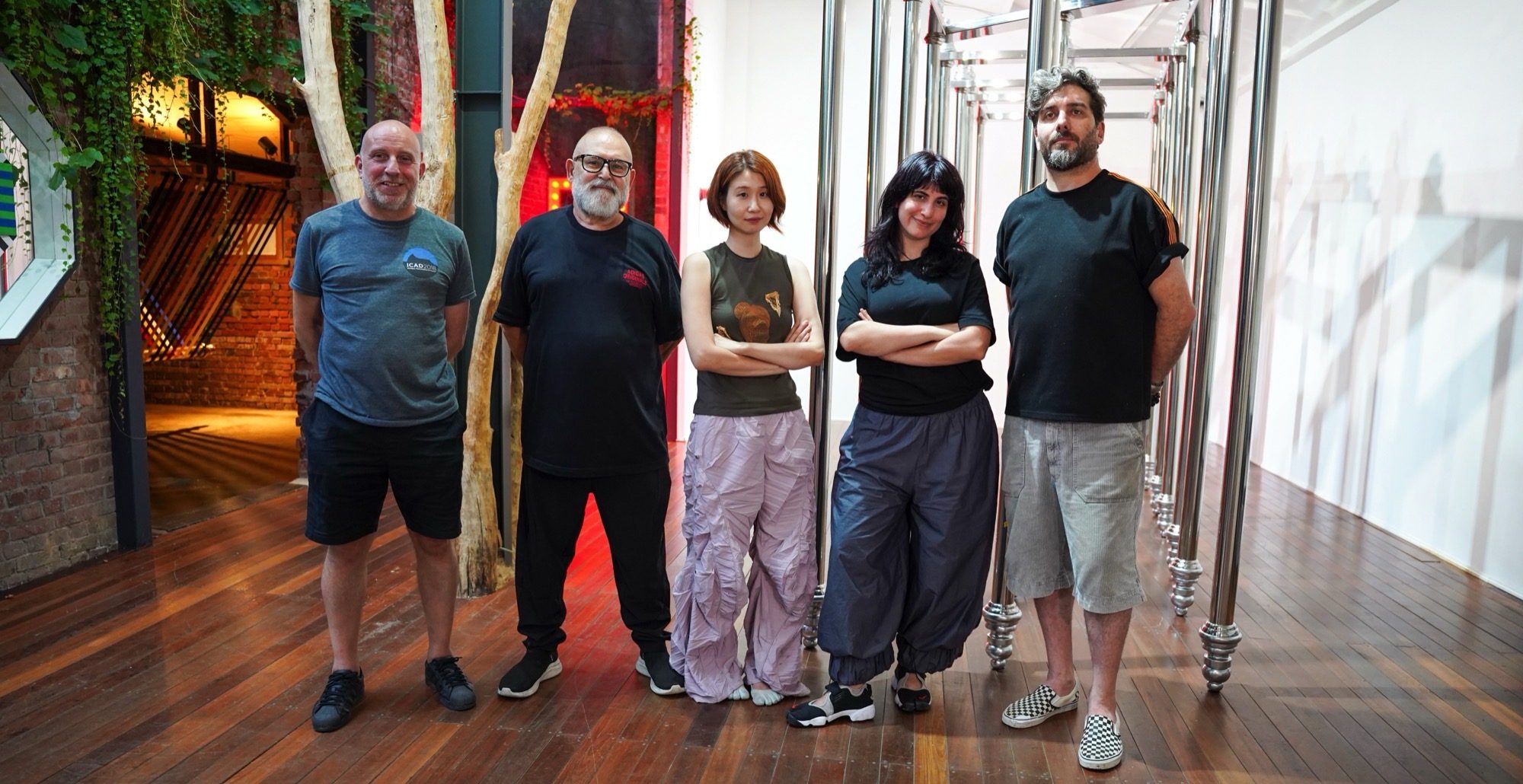
In Gwangju, South Korea, the anticipated biennial for contemporary art is currently underway with a thought-provoking theme titled ‘You Must Change your Life’ – one that explores the power of art in response to the urgencies of our time.
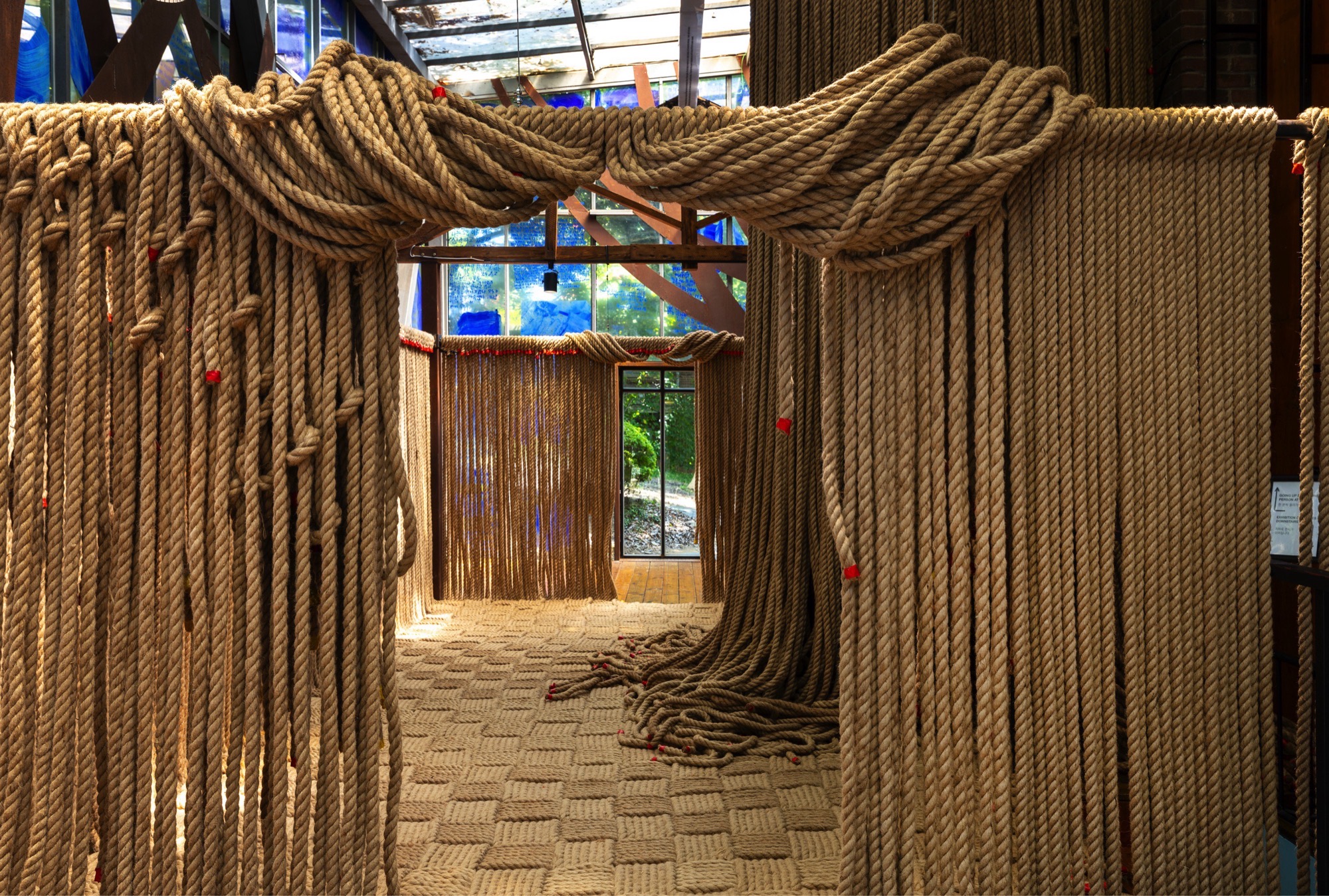
Rope Temple by PONKS for BEJN / In-Between, the Malta Pavilion at the Gwangju Biennale 2026. Commissioned by Arts Council Malta. Photo credit: Daniel Schembri
For the first time since its inaugural edition in 1995, the Gwangju Biennale is hosting a team of Maltese artists – composed of visual artist Norbert Francis Attard, the artistic collective PONKS and sound artist Michael Quinton – investigating the theme BEJN/IN-BETWEEN.
The Malta pavilion, commissioned by Arts Council Malta, inaugurated this week and open until 15th November, comprises three interconnected spaces that allow visitors to experience a “living threshold”; an in-between space that evolves and explores connections between the two cultures of Malta and Korea.
BEJN / In-Between, the Malta Pavilion at the Gwangju Biennale 2026, commissioned by Arts Council Malta. Commissioned by Arts Council Malta. Photo credit: Daniel Schembri
Through poetry, installation and sound, the artists of BEJN tackle the question: what is an in-between, and what does it mean to be in-between? We spoke to the artists to find out.
The peristyle as a space for provocation
Multi-disciplinary artist Norbert Francis Attard, also the founder of Valletta Contemporary art gallery, describes his starting point for this exhibition as two interconnected ideas. He utilises the Maltese festa, paired with the Korean colour philosophy ‘Obangsaek’, meaning ‘five colours’, as the core basis for his site-specific work.
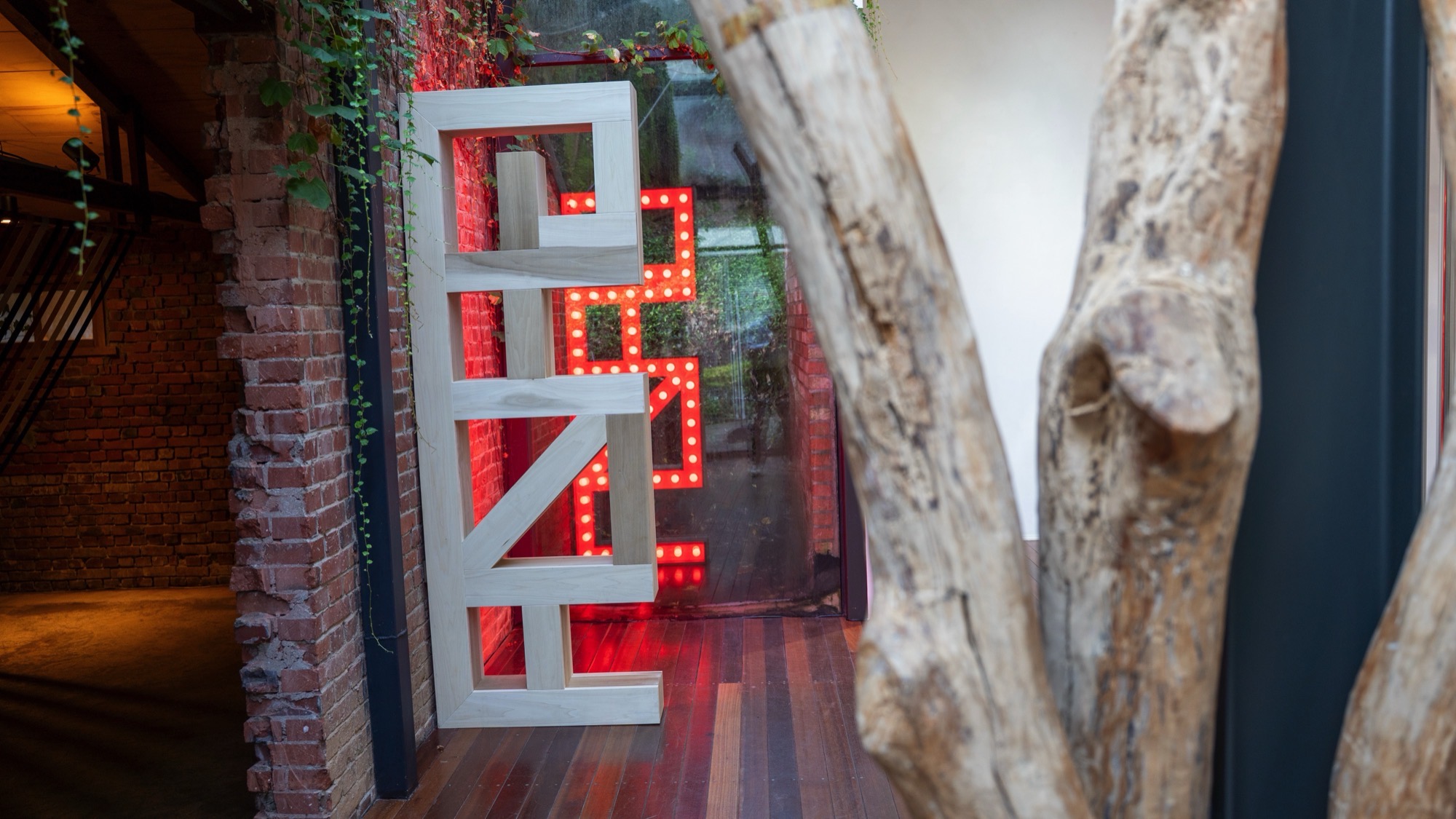
Festa by Norbert Francis Attard for BEJN / In-Between, the Malta Pavilion at the Gwangju Biennale 2026. Commissioned by Arts Council Malta. Photo credit: Daniel Schembri
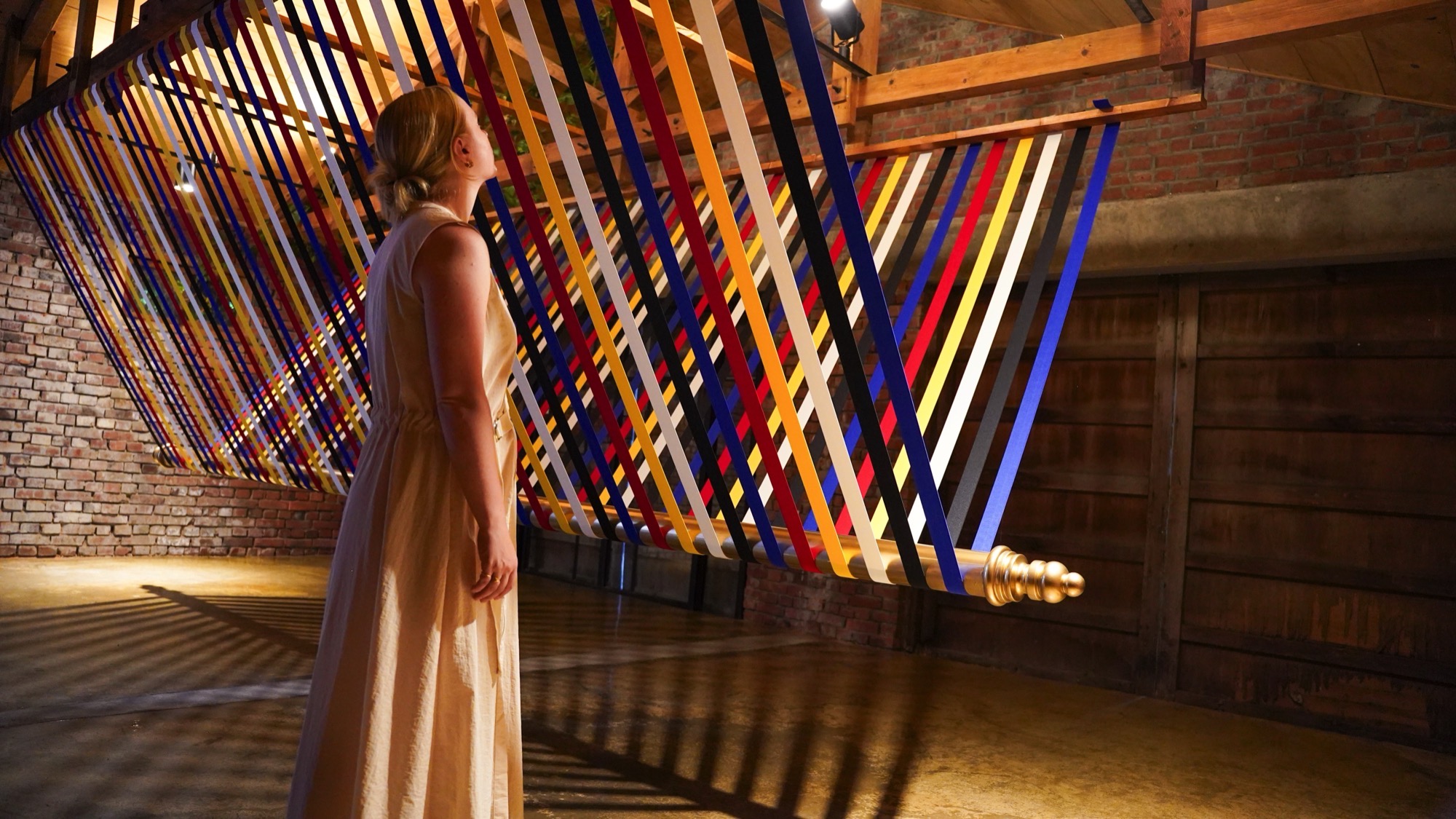
“In Obangsaek I was interested in the meeting and clash of the exuberance of the Maltese festa with the philosophical minimalism and harmony of the Korean Obangsaek principle and bringing these two contrasting traditions into dialogue through an interplay of structure, light and colour,” says Norbert.
Using a vibrant constellation of elastic bands tied together by columns, the artist is replicating the bandalori, typically found hanging Maltese festa banners. He reutilises the bandalori motif to create his second work, Peristyle, while a colonnade constructed out of metal bandalori shapes a spatial in-between.
Festa by Norbert Francis Attard for BEJN / In-Between, the Malta Pavilion at the Gwangju Biennale 2026. Commissioned by Arts Council Malta. Photo credit: Daniel Schembri
Its starting point was inspired by a presidential speech drawing parallels between the 15th of August and 8th of September memorials in Malta and Gaza, “underscoring the universality of both suffering and resilience,” says Norbert.
The viewer is encouraged to take their time, look closer and discover the word ‘Gaza’ embedded within the peristyle, disguised by the same bandalori. “When seeing becomes understanding, I am hoping it disturbs the viewer into remembering the ongoing conflict of Gaza.”
Intertwining poetry with material
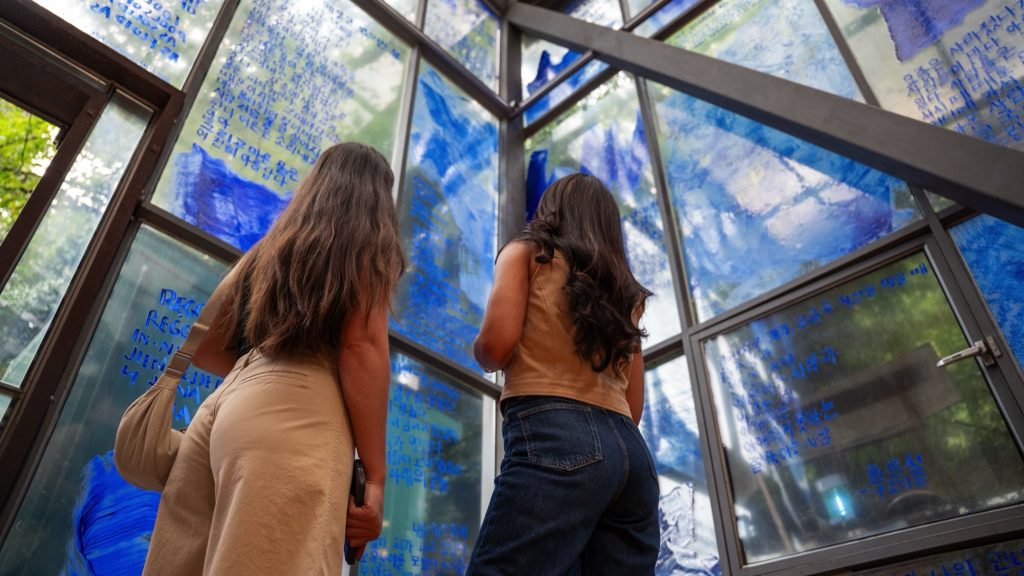
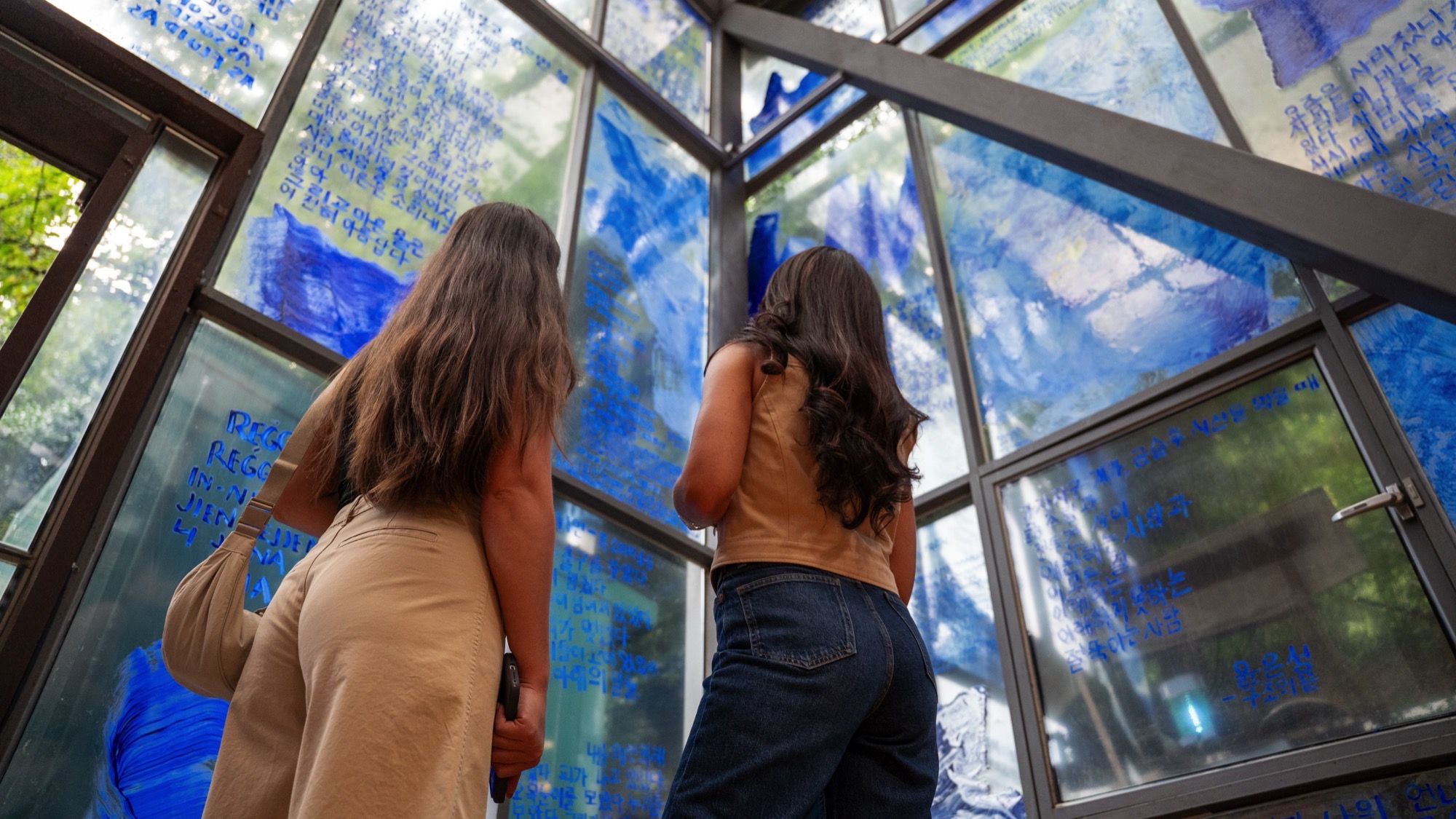
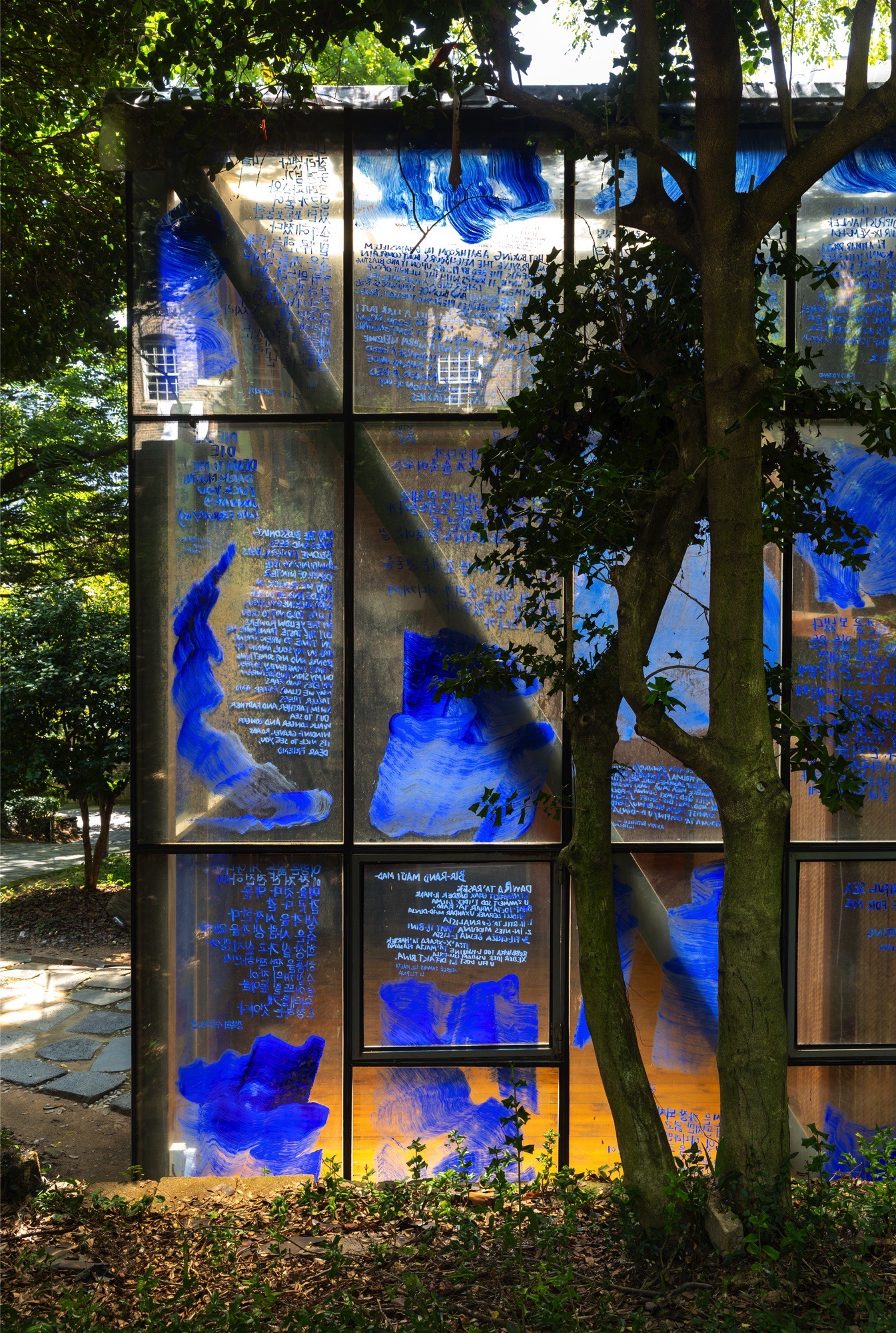
PONKS, composed of Sam Alekksandra and Julien Vinet, focus on the in-betweenness found in Maltese and Korean poetry. “For us, poetry is embedded in our artistic practice. We use it as a landscape through which to explore and understand the world; it is a way to connect to contemporary art and a natural starting point for how we think and create,” they explain.
Rope Temple by PONKS for BEJN / In-Between, the Malta Pavilion at the Gwangju Biennale 2026. Photo credit: Ahina Archive
The linguistic, poetic and spiritual interconnectedness found within the poems served as a springboard for a physical installation using rope, which “offered a physical and tactile language through which to explore ideas around ritual and tradition. It carries, protects and marks passage, and has deep cultural significance in both Malta and Korea.”
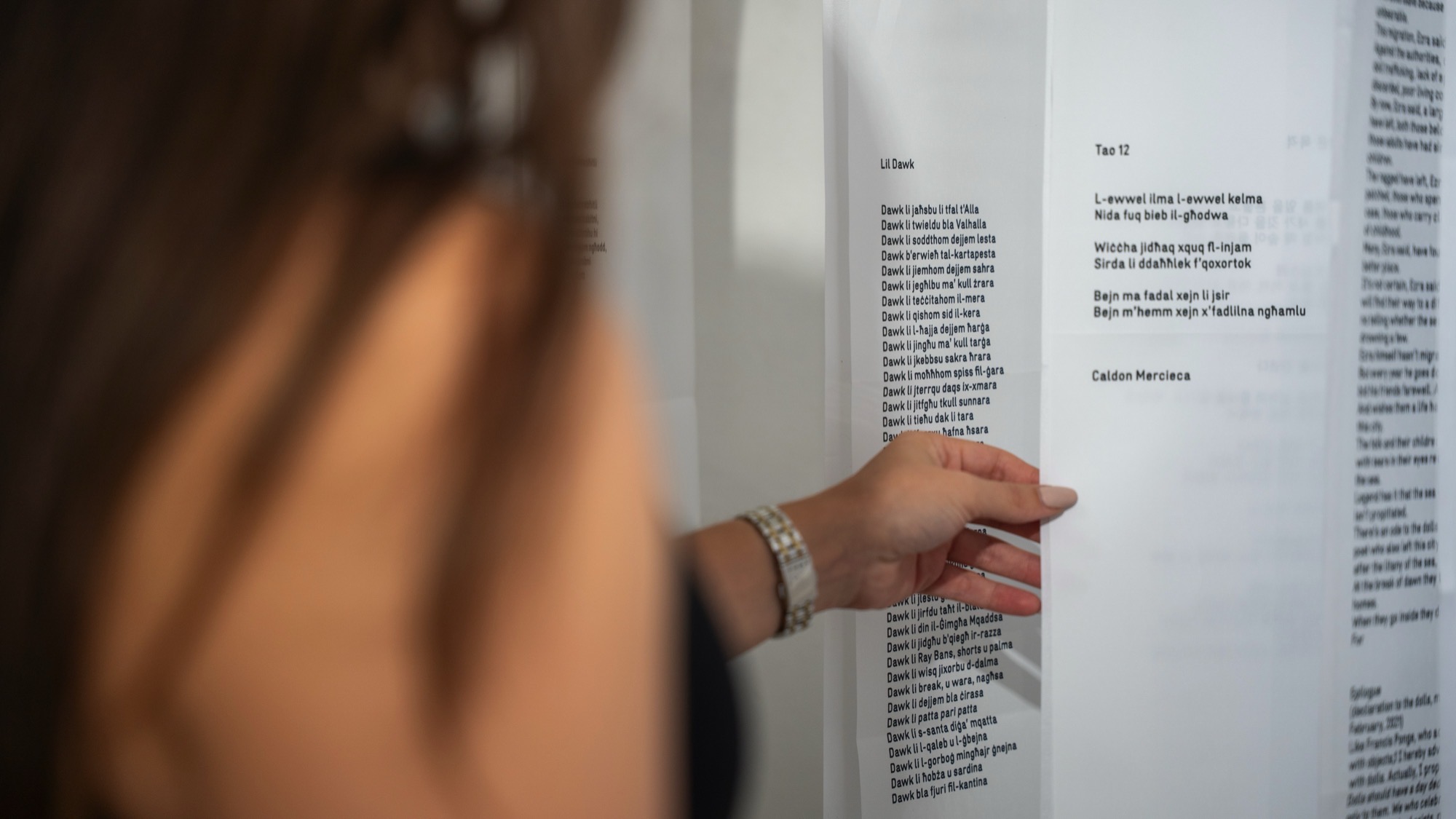
Collaboration was an essential part of this display, which features the work of 120 contemporary poets from Malta and Korea. “We wanted to create a fluid site where each poem inhabits its own world, while the rope installation gives physical form to the space between them.”
Trans/cription by PONKS for BEJN / In-Between, the Malta Pavilion at the Gwangju Biennale 2026. Commissioned by Arts Council Malta. Photo credit: Daniel Schembri
Sam and Julien consider how finding a way for these different voices to coexist while allowing each to retain its own narrative and presence was one of the greatest challenges of this project. “This became an important part of the work itself: creating connections between these worlds without collapsing their differences. What excites us most is seeing how audiences will move through the work, encounter these different voices and draw their own connections between them.”
A soundscape of subtleties
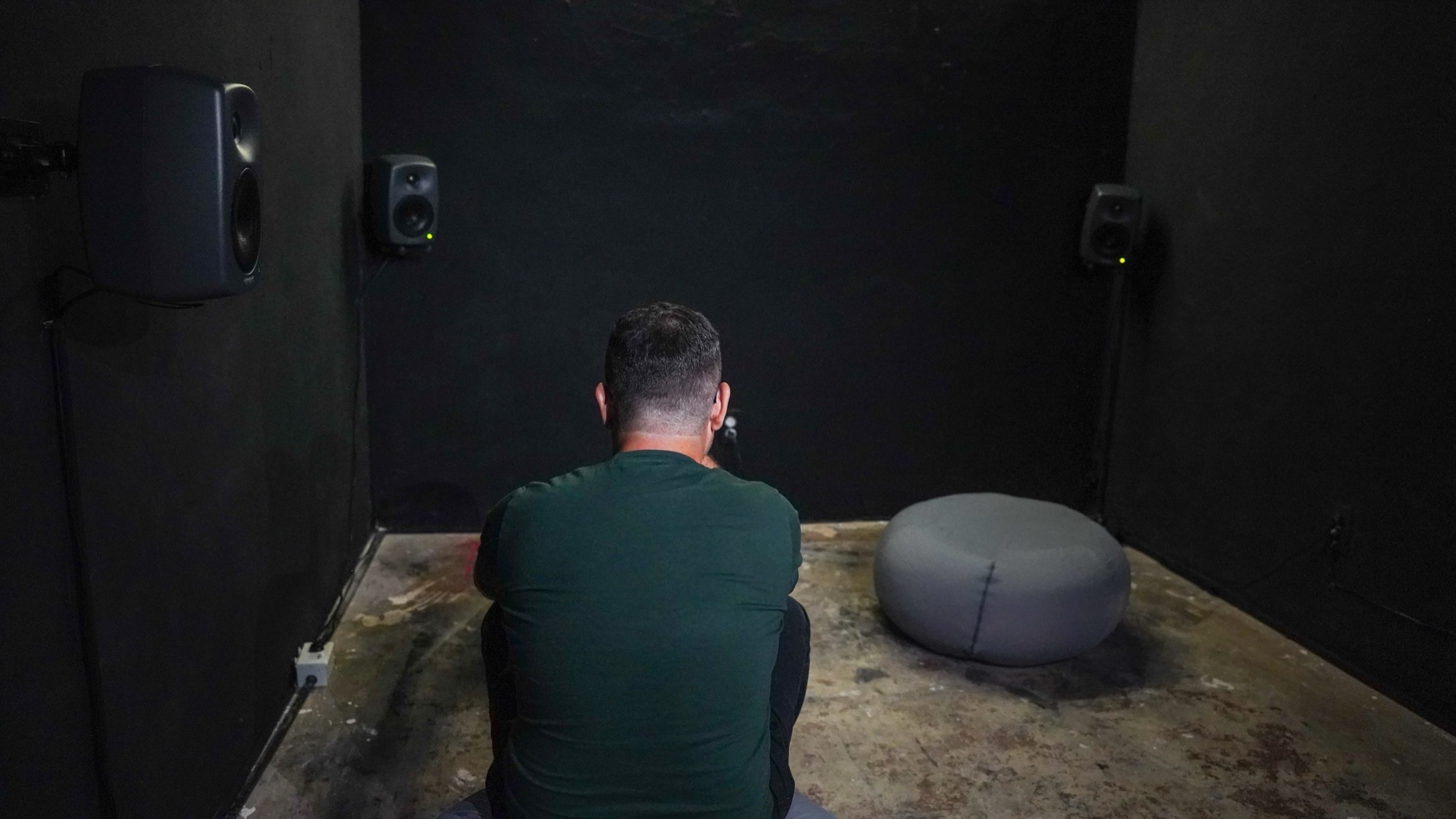
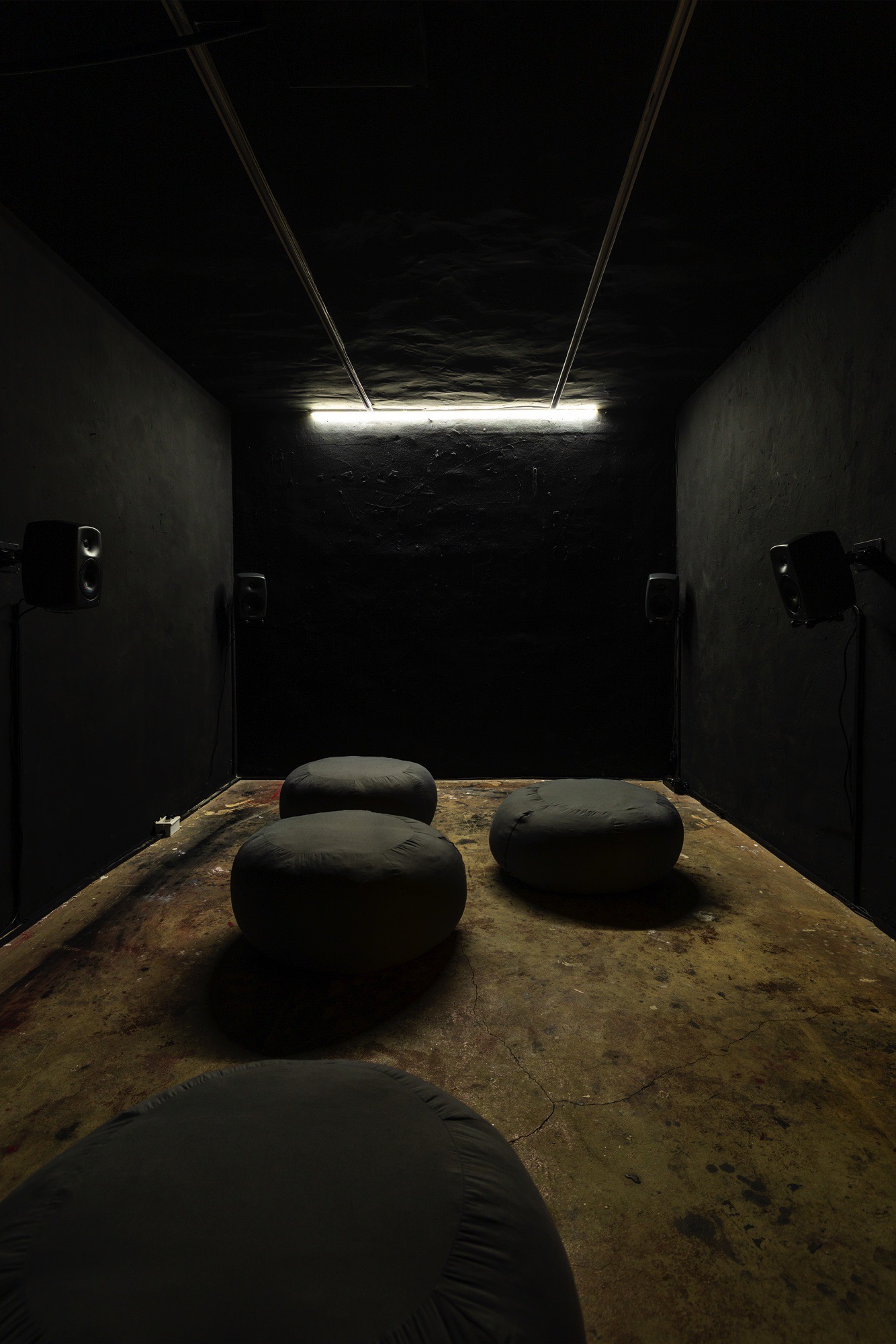
Sound designer Michael Quinton investigated the idea of BEJN through a series of field recordings collected in both countries that reflect different places, moments and times of day.
KOINOIA by Michael Quinton for BEJN / In-Between, the Malta Pavilion at the Gwangju Biennale 2026. Commissioned by Arts Council Malta. Photo credit: Daniel Schembri
“In the recordings themselves, there are already in-between moments between instances, or happenings,” Michael says. “I then went a step further and listened to very specific moments that happen between footsteps, people’s words, a car passing, and started to cut these moments and to experiment with them.”
He notes how human instinct tends to focus attention on the sounds on the surface, adding that “when we are able to listen in detail, we become aware of the other sounds, in the background, of the in-between moments – and those tell a story in their own right,” says Michael. “By enhancing the in-between moments, the sonic environment becomes an exciting playground of possibility.”
KOINOIA by Michael Quinton for BEJN / In-Between, the Malta Pavilion at the Gwangju Biennale 2026. Photo credit: Ahina Archive
Rope Temple by PONKS for BEJN / In-Between, the Malta Pavilion at the Gwangju Biennale 2026. Photo credit: Ahina Archive
A core aspect of Michael’s work is bringing together two distinct cultures, languages, traditions and experience. Koinonia is one of his works and represents a key aspect of the pavilion: a common bond between the two cultures. “Based underground, dimly lit, it is an invitation to enter a world where Malta and Korea commune together. It is a place where the two cultures meet. It expresses similarities, distinctions and moments when the two cultures blur into one.”
BEJN / IN-BETWEEN is commissioned by Arts Council Malta, supported by the Ministry for the Arts, Culture and National Heritage, Visit Malta and the Cultural Diplomacy Fund managed by the Ministry for Foreign and European Affairs.
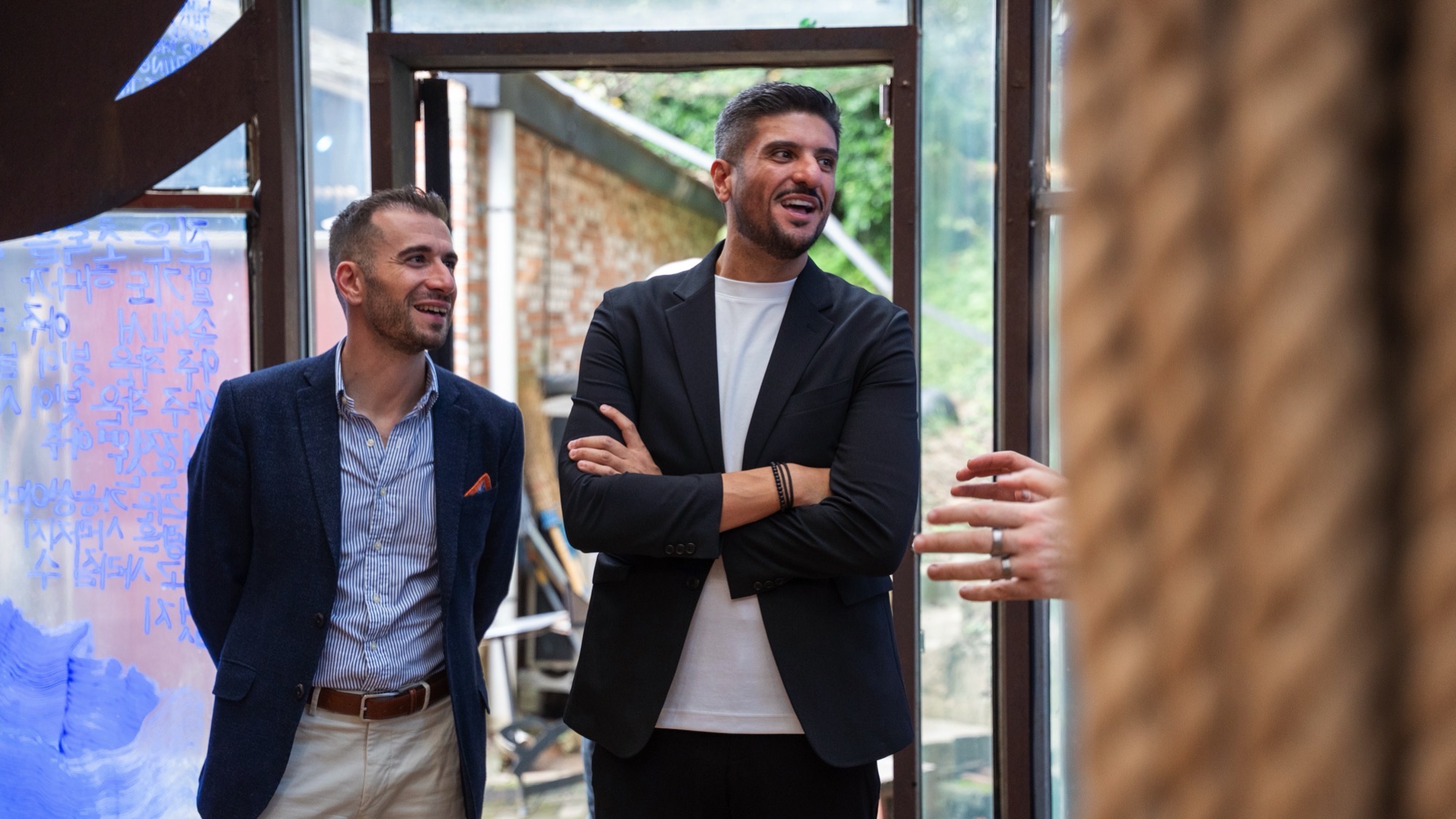
Main image: Left to right: Michael Quinton, Norbert Francis Attard, Moon Hyun Jeoung, Sam Alekksandra and Julien Vinet at BEJN / In-Between, the Malta Pavilion at the Gwangju Biennale 2026. Commissioned by Arts Council Malta. Photo credit: Daniel Schembri
Design Dispatch is a space for architecture and design buffs to delve into our coverage of current and upcoming design, product and interior trends, as well as the inspirational work of Malta’s architects and designers, from marvellous homes to striking public projects.