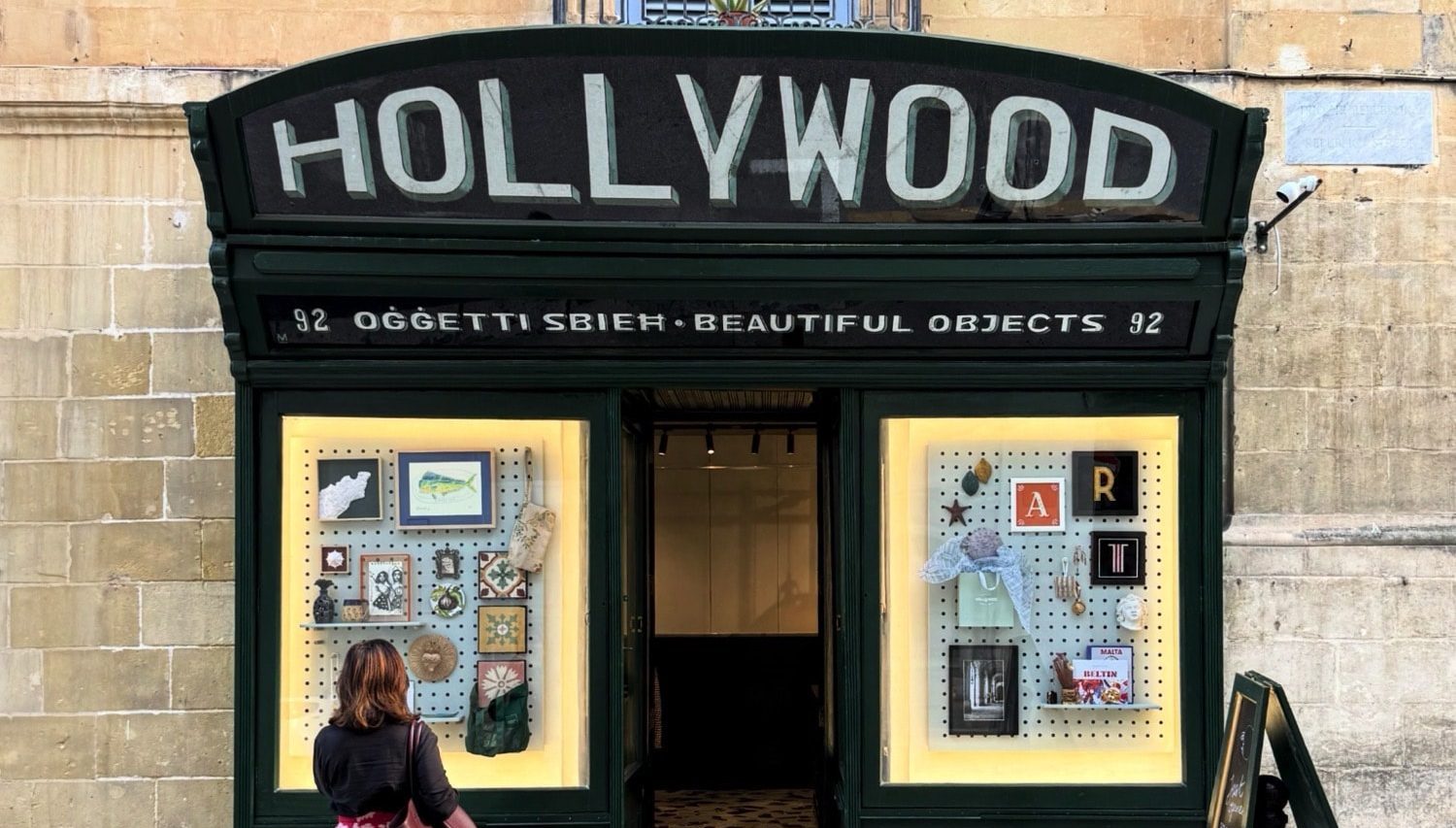
Hollywood, a shop in Valletta with a rich history, re-opened its doors last October with a new ethos; to reclaim Valletta’s identity amidst drastic change and, in the process, promote local artists and artisans.
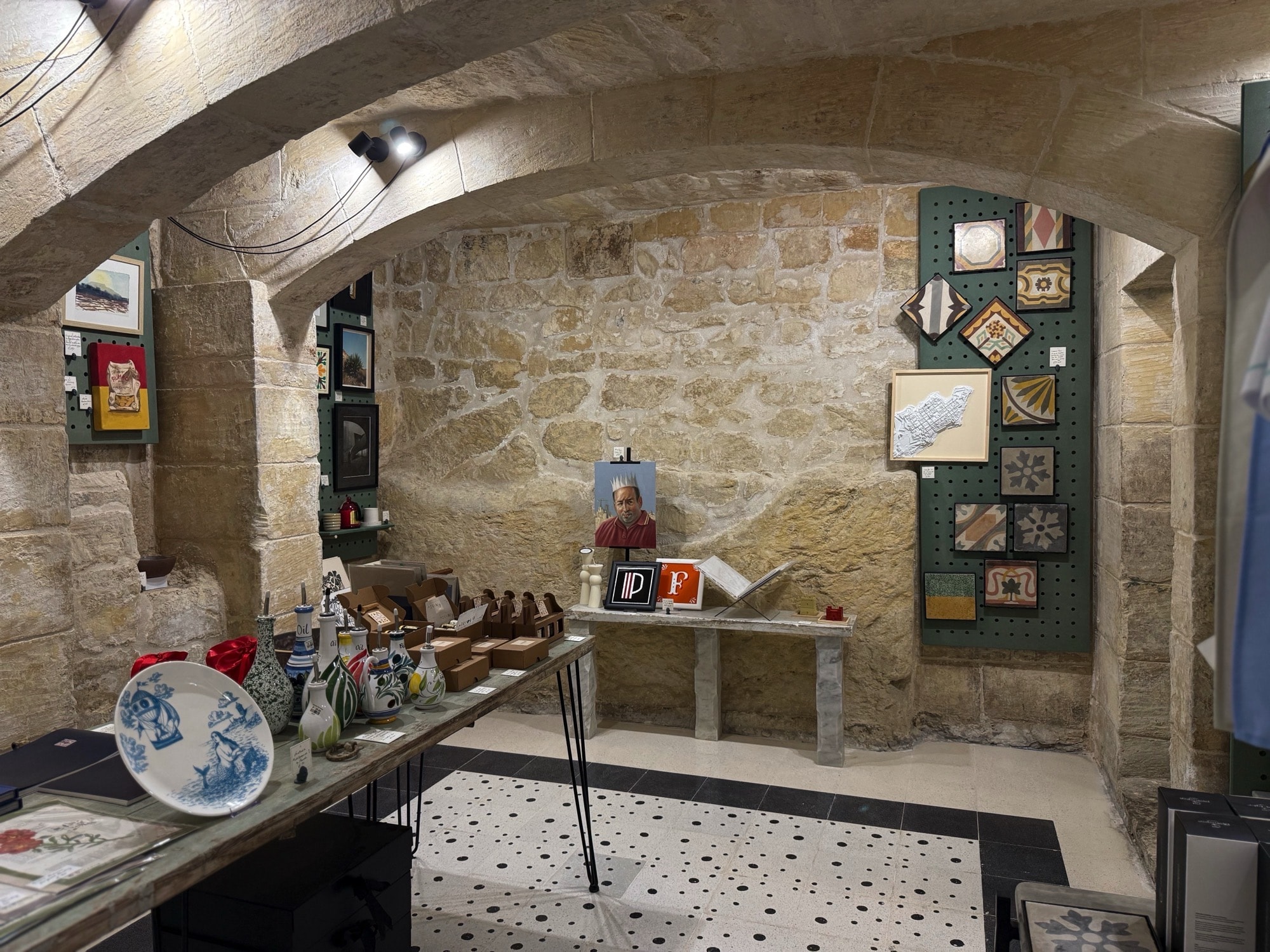
Its new owner, actor and revivalist Thomas Camilleri, tells us how he delved into the shop’s rigorous restoration process in collaboration with architects from A Collective, re-designing the space for a new era in its story.
A love for old objects
Thomas started his journey through his passion-project Lazarus Tiles, where he saves and restores old Maltese cement tiles, reclaiming them as visual artwork. His curated approach towards discarded objects shines as it physically manifests itself in Hollywood.
“It was actually while in my poky Lazarus Tiles workshop that my friend Ġanna gave me a call about Hollywood.” Thomas recounts. “It was peak COVID and she was walking through Valletta and spotted a ‘for sale’ sign on the facade and called me about it ‘because I know you like old stuff’ – stick that on my grave!”

“I’d known about the shop for years since it’s one of Valletta’s most beautiful shopfronts. I laughed off the notion of being able to afford it, but after meeting the owners and telling them about what I had in mind they were generous enough to meet me at what I could clobber together from loans, savings and family.”
Thomas explains how his experience with Lazarus Tiles helped create the foundations for Hollywood and share his vision with likeminded lovers of heritage and beautiful objects. “I always thought that it would be exciting to have a physical storefront for them,” Thomas says. “Paired with my love for supporting local, it soon developed into an idea where I would bring together a kaleidoscope of Maltese objects that represent contemporary arts and crafts.”
Echoes of history
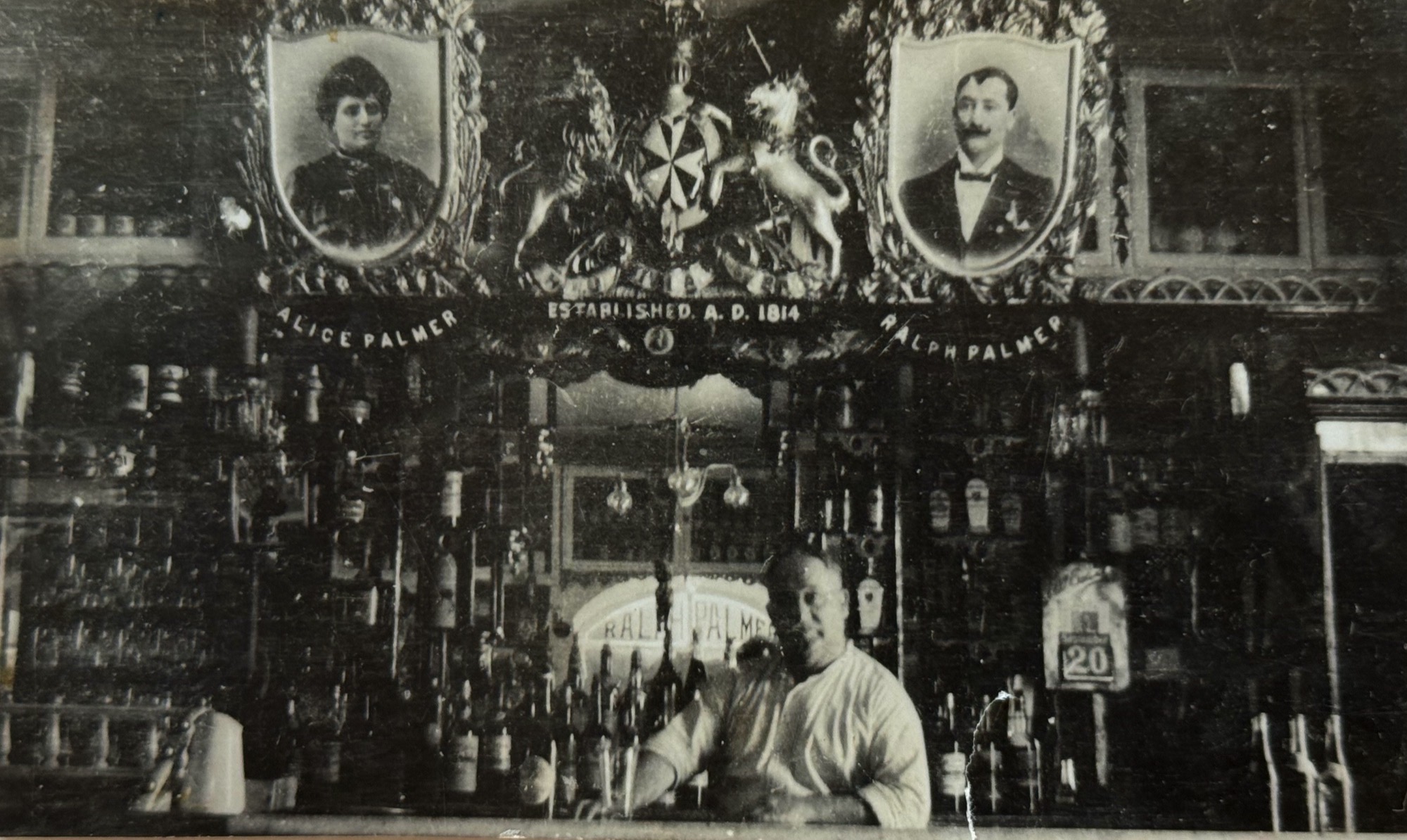
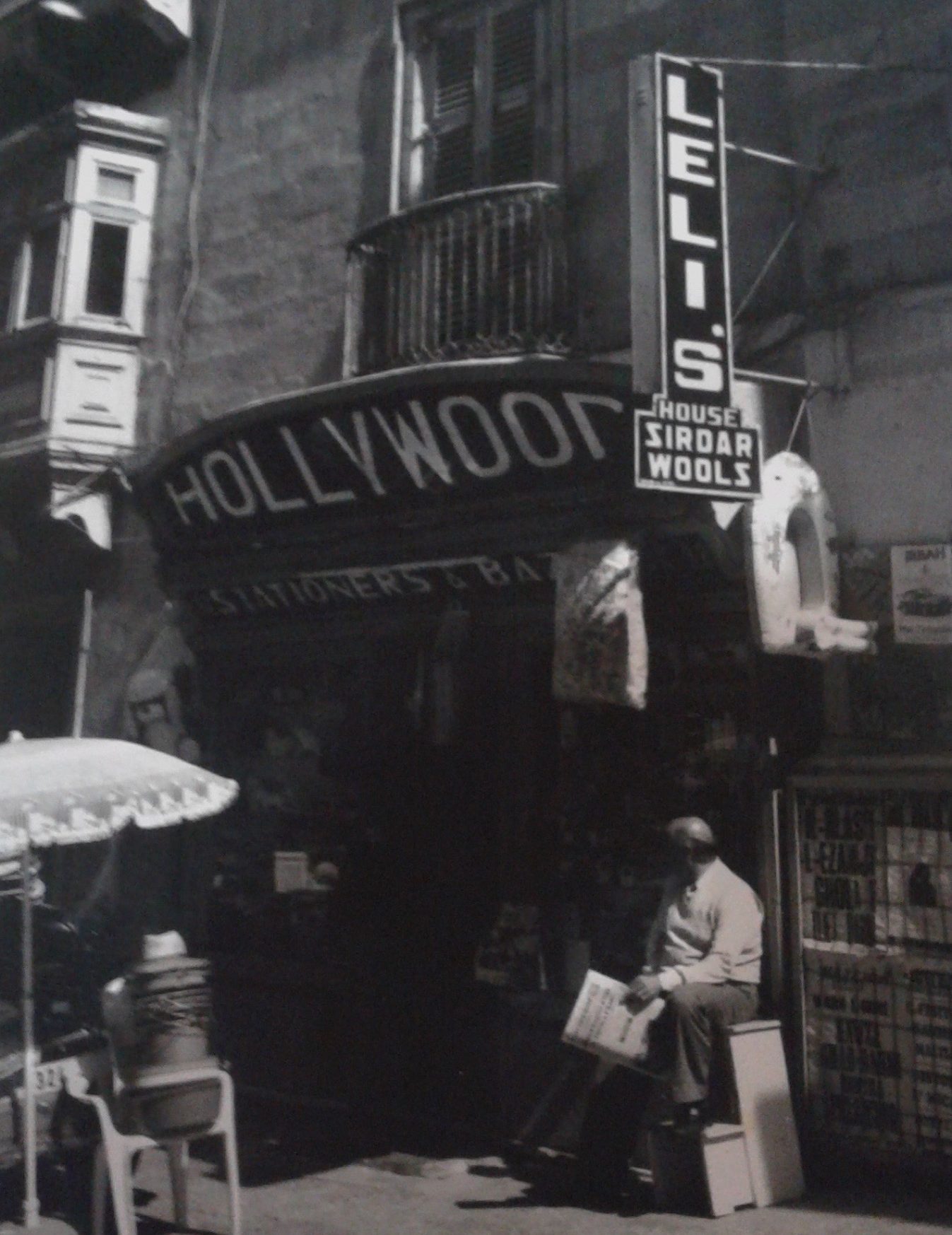
Hollywood has a vibrant history which Thomas honours in the shop. It dates to 1814 when the Palmier family ran it as the HMS Talavera bar before it closed its doors at the outbreak of the Second World War. The shop’s next era in Malta’s post-war period was defined by the Vellas, who ran it as a stationery and bazaar until 2014.
“I hope it has another long stretch ahead of it in its current form. I was lucky that we managed to restore the wooden post-war shopfront and the Hollywood sign as well as the carved wooden ceiling,” says Thomas.
The timber shop front was one of the biggest challenges of the restoration process. “Being a historic shopfront and scheduled for preservation meant we had to remove only what was absolutely unsalvageable.”
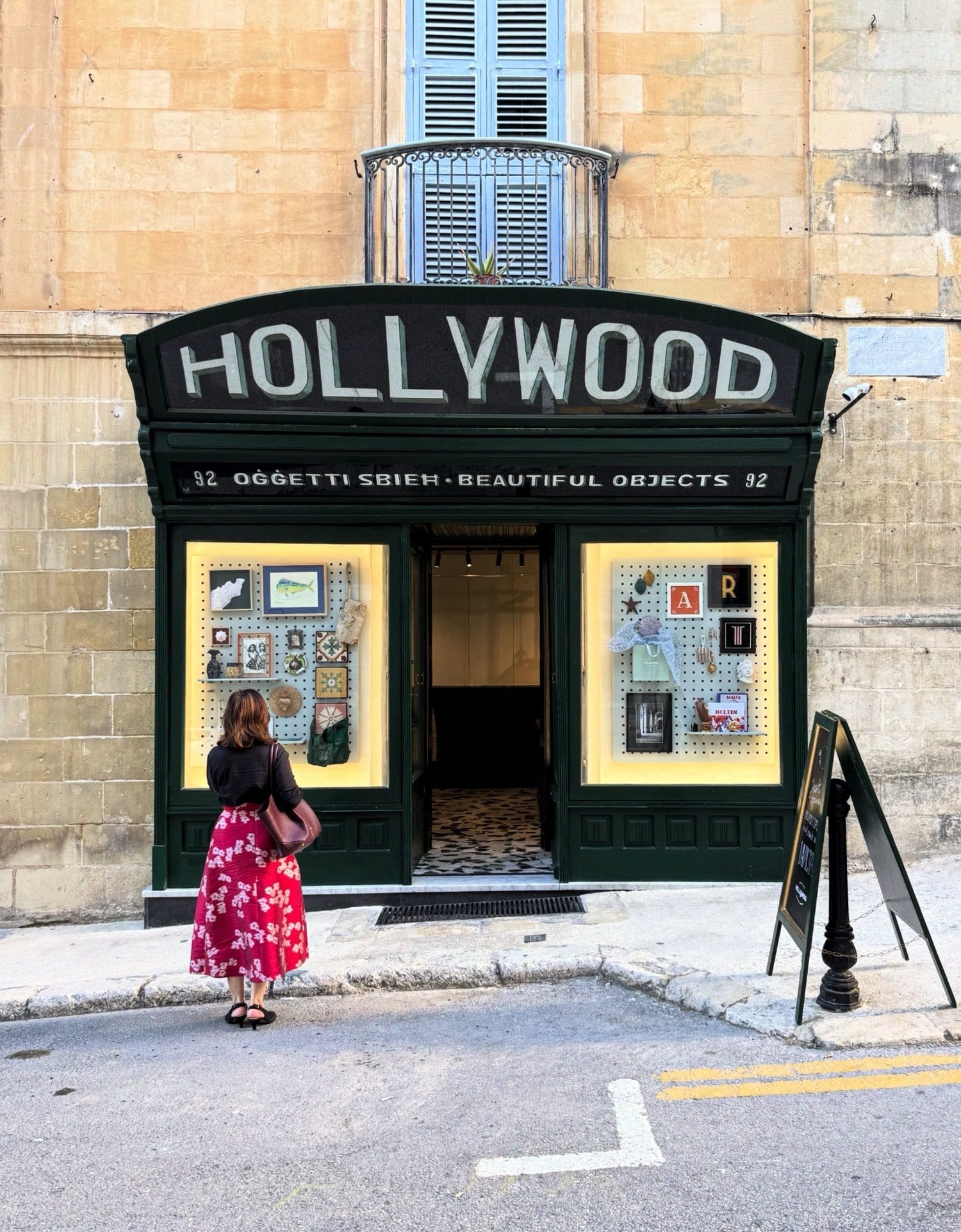
Luckily, while the sides and bottom were completely rotten, the original carved panels under the main display windows were saved along with their beautifully uneven glass panes.
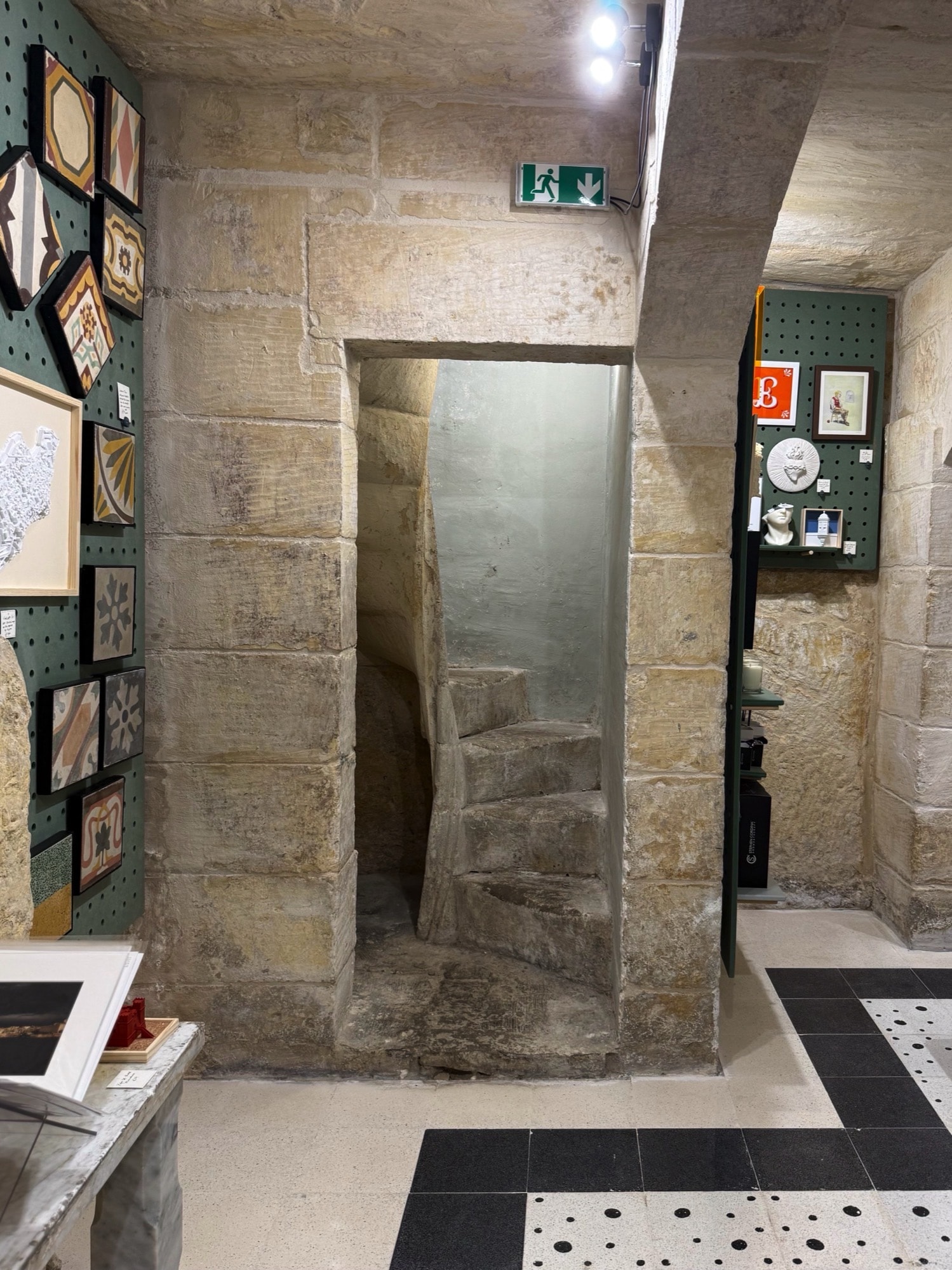
Part of the restoration meant uncovering other historic features of the space, which may have laid dormant for many years. “One of the best parts was re-opening the old side-door which dates to the 1800s. It had been shut for decades and I managed to find an old-school blacksmith who restored the old lock and fashioned a muftieħ for me to be able to use it as it was, without cutting into the wood to add a new lock.”
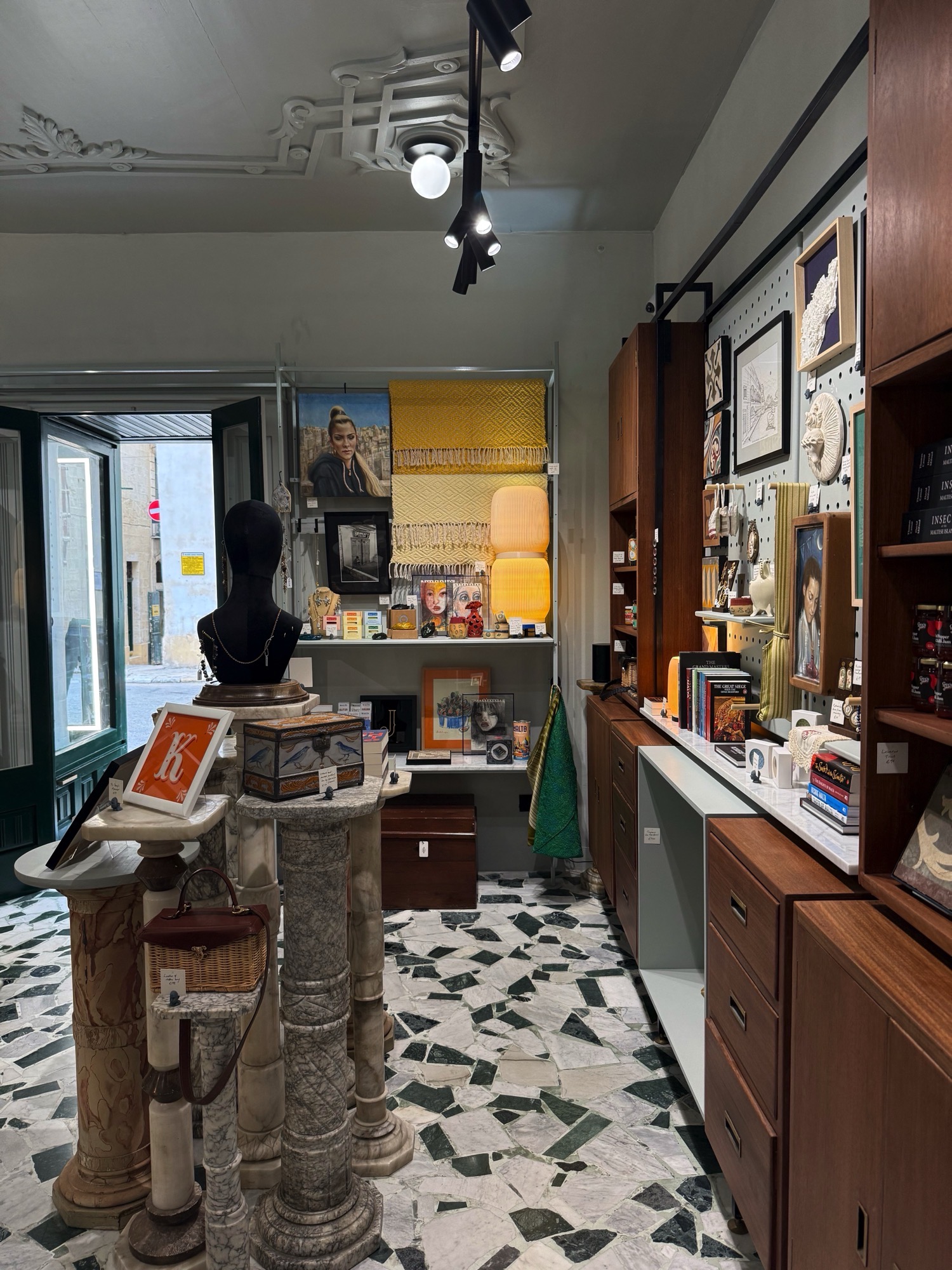
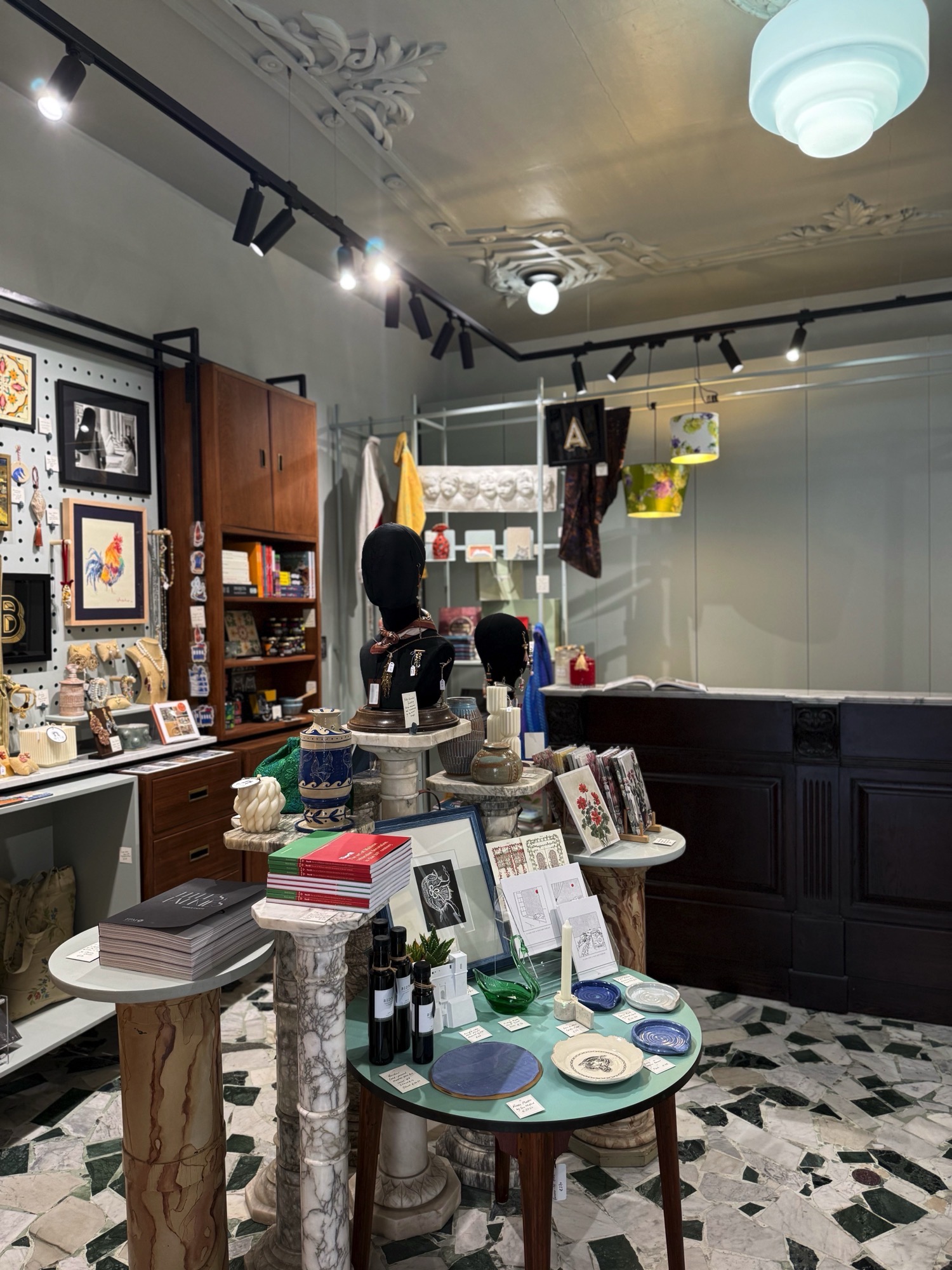
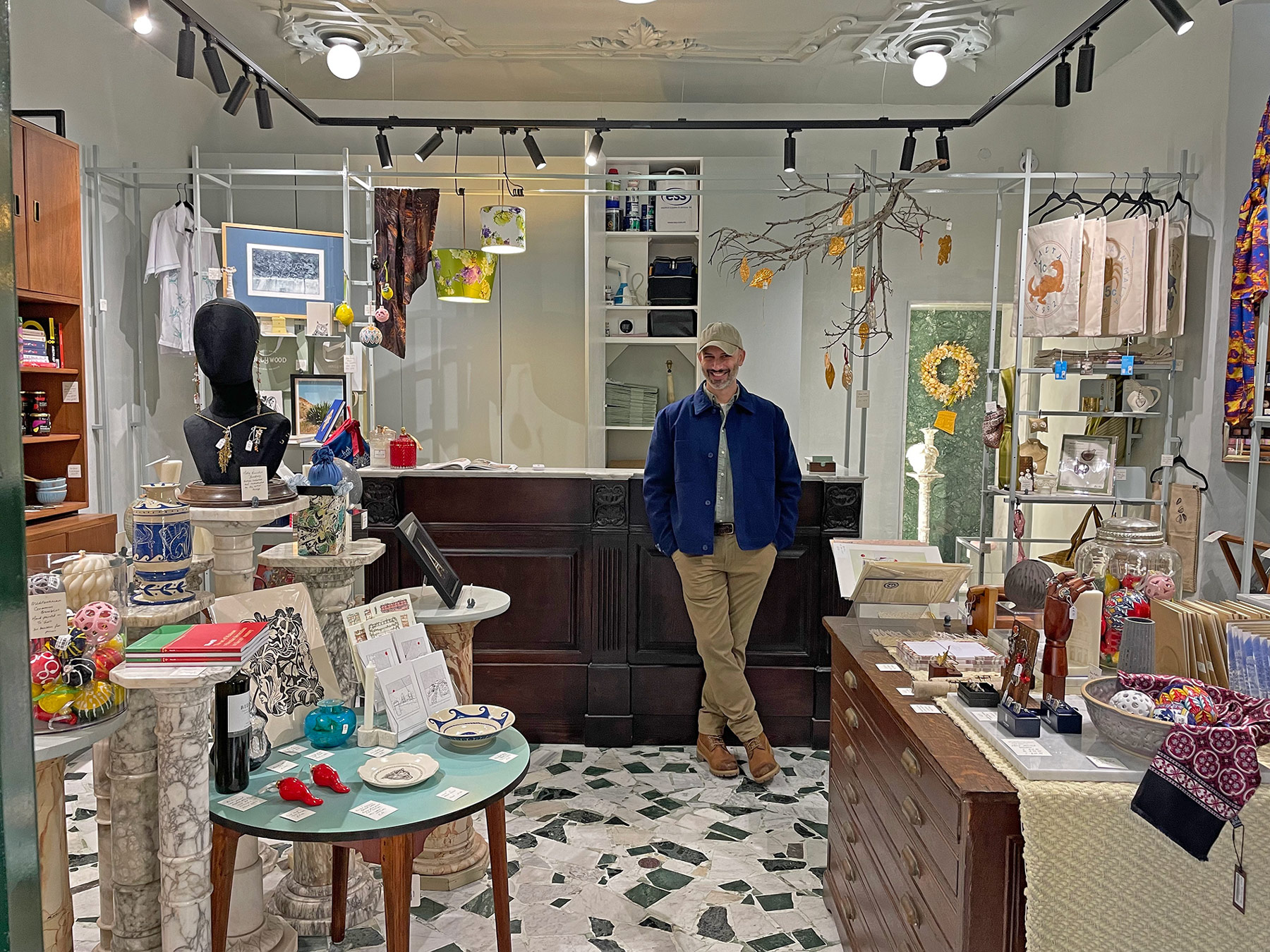
It was also essential for the design to incorporate vintage or old items, and Thomas credits his architects for integrating them into the design. These include a former TV unit found in a house in Ħamrun, and the counter sourced from an old bar in Senglea.
“It now sits where the original bar used to be which really brings things full circle. Going back to my brilliant architects Patty and Mike from A Collective, they did a super job of designing a metal shelving structure based on the shape of the vintage TV unit so it all fits in with harmony.”
A new era
For Hollywood, looking at both its history and Valletta’s needs, a sense of approachability was important. Not only to honour its past life as a bazaar, but to also create a space designed with quality in mind.
“I always say that I’d like the shop to sit somewhere between an art gallery and a souvenir shop. More accessible than a gallery and perhaps a little more meaningful in its offering than a shop selling trinkets,” Thomas says. His motivation comes from a desire to highlight local arts, but also to curate looks with objects that inspire clients.
Reflecting on Hollywood’s next era and its continued legacy, Thomas says “Valletta is undergoing a drastic change; too many new catering establishments are opening, which is harming the city’s identity and liveability. There is no master plan and little enforcement, with many merely focused on a quick buck with no thought to longevity,” he states.
His hope with Hollywood is to inspire others to pursue a similar path, “focused on anything locally-made and authentic, and which ultimately improves Valletta, which is already an incredible city.”