In the early 2000s, an undergraduate history student at the University of Malta walked into a palazzo on St Christopher Street, Valletta, known to be housing the Notarial Registers Archive (or copies of deeds that were faithfully transcribed from the original manuscripts at the same time the originals were written) to conduct research on the work of 16th century notary Placido Abela.
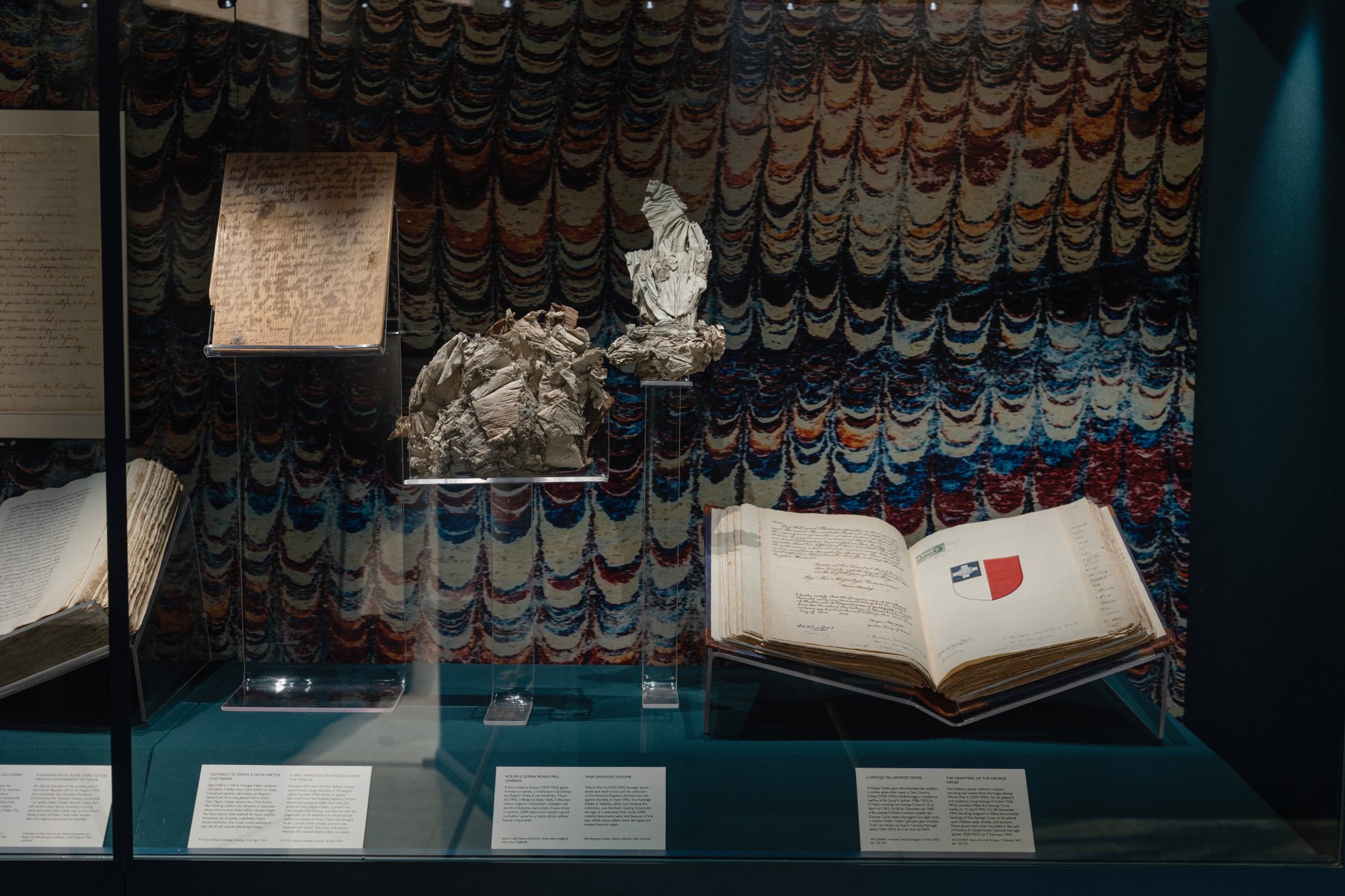
Yet what Dr Joan Abela witnessed was an archive of Maltese history decaying under dreadful conditions and at risk of being lost for good. Loose folios and dusty registers were stacked, strewn on the floor or packed into garbage bags, some even containing leftover debris from WWII between their pages.
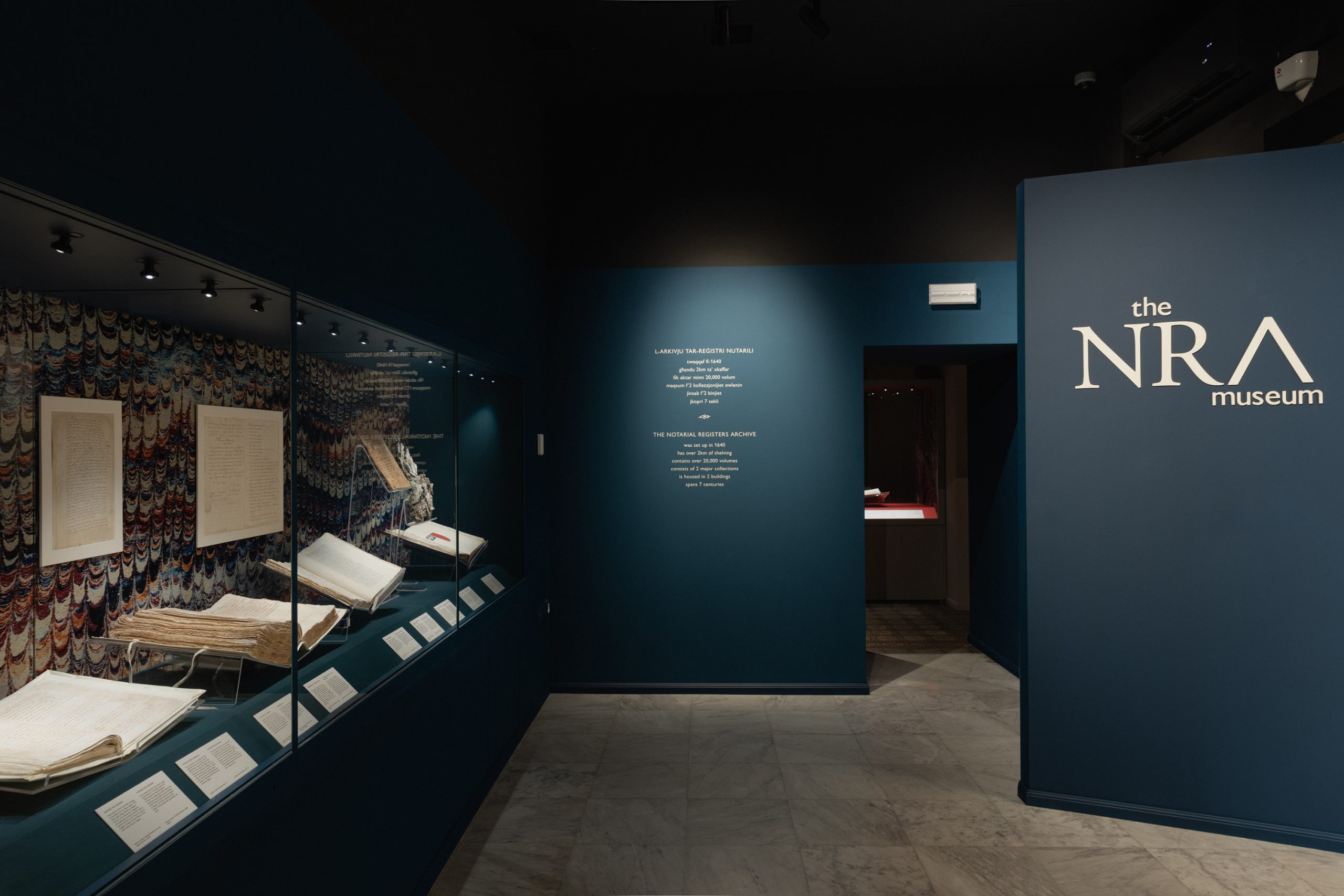
What ensued was a long and arduous process that would eventually see the establishment of the Notarial Registers Archive, Foundation and Museum – the latter presented as an engaging and informative insight into the notarial profession woven with significant episodes from Malta’s history, designed for the public by artist and art historian Francesca Balzan on behalf of Fondazzjoni Patrimonju Malti.
Finding a home
The Notarial Archives were originally established in 1640 by a decree issued by Grand Master Lascaris. Initially, half of the collection was housed in Mdina and the other half in Valletta. In 1850, the entire collection was moved to Valletta.
It continued to be moved around to avoid the ravages of WWII, until, by the 1960s, it was split into two: the original manuscripts found their home at the repository in Valletta’s Mikiel Anton Vassalli Street, where they still reside, while the registers and bastardelli (drafts of notarial deeds) were kept at the palazzo in St Christopher Street.
“The Notarial Archives can be viewed as an essential part of Malta’s paper heritage – an incredible collection of documents that provides a run-through of our history. From the Grandmaster to the peasant who wanted to leave a small dowry to his daughter, anybody and everybody needed to go to the notary at some point, so we really have a cross-section of society reflected in these deeds,” says Francesca.
“For each contract, there’s the original document and its copy, which is contemporaneous and by law meant to be kept in different buildings in case of disaster in one of the buildings, as so much relied on their preservation,” she adds. The copies, stored at the Notarial Registers Archive, would be kept by the notary and passed on to the Archives upon their death.

Combing through history
Inside the museum, visitors are presented with the larger historical context yet encouraged to focus on the collection at hand – for instance, a volume that contains contracts of Valletta when it was parceled out as virgin land is opened on the folio where the land of the very palazzo the archive is housed in was sold.
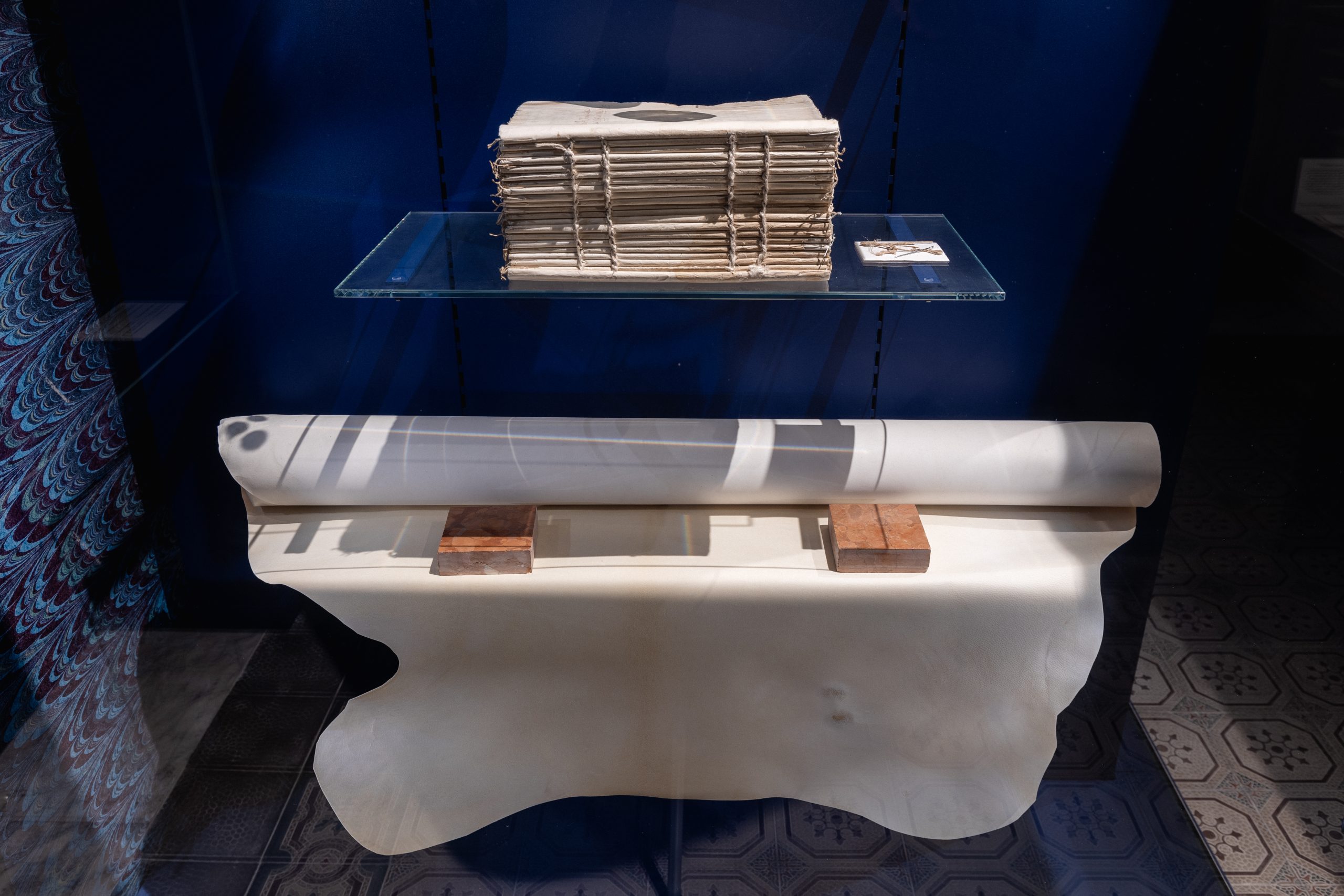
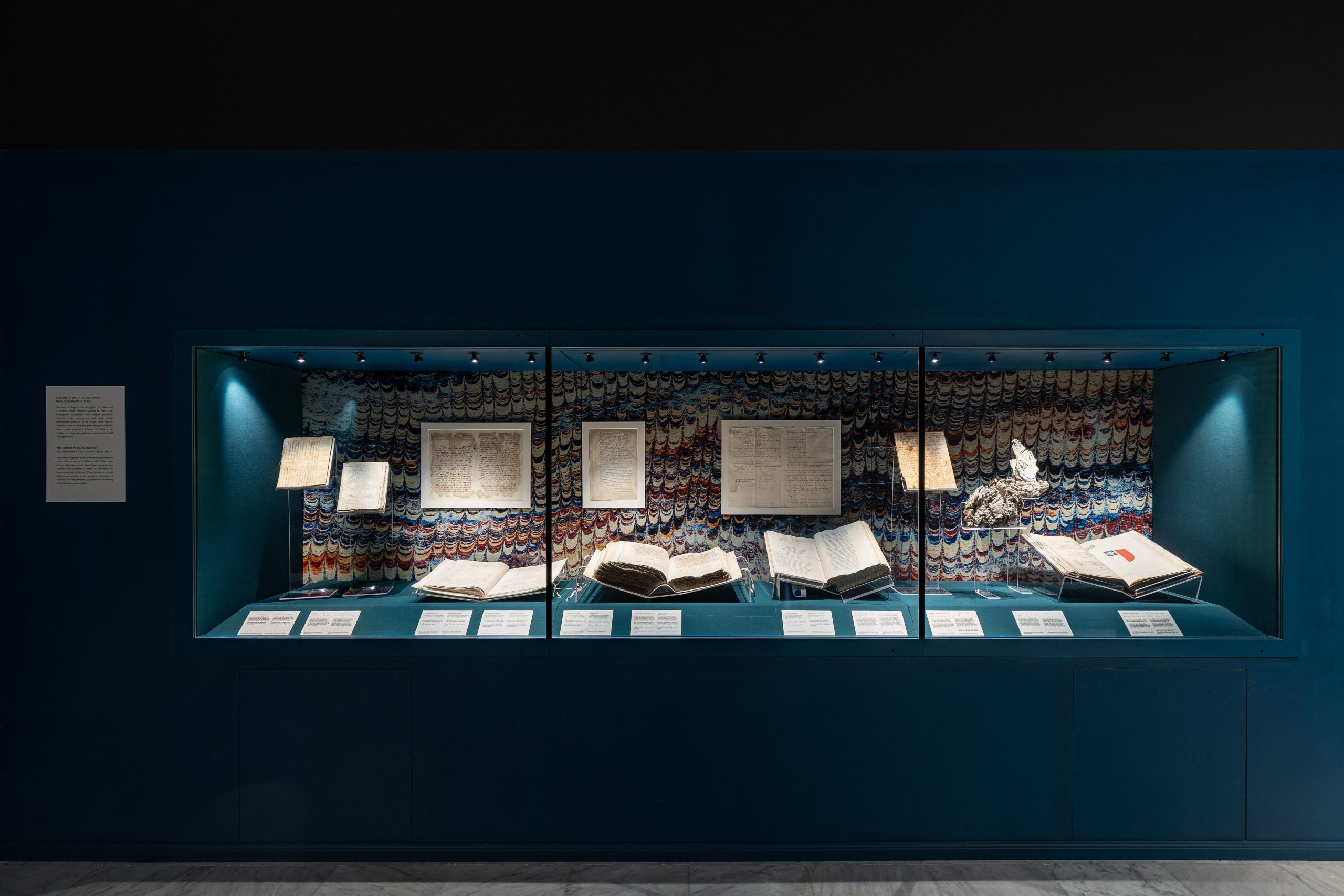
The team extracted volumes that recorded significant episodes in Maltese history – such as a volume that contains a notary’s description of the arrival of the Great Relief Force from Sicily on September 7th which marked the end of the Great Siege – or volumes dating from the 1500s that were bound in re-cycled parchment containing ancient Greek text which dates back to the 12th century, making them the oldest piece in the entire archive.
Aware of the challenge of presenting such findings to the public in an engaging way, Francesca turned to the power of colour. “We took the marbling found on the volume covers and blew it up to use as a background for the display cases, while complementing the walls of each room with a colour extracted from the marbling.”
As you move along, attention is drawn towards a centrepiece designed to denote reverence and awe – a display case containing the earliest piece of literature in Maltese, Il-Kantilena.
“Why is it in a notarial volume? The nephew of the man who sang this lament was a notary, and he wrote it down on the last page of his volume. It dates to the mid-1400s, but wasn’t transcribed until a century later,” says Francesca.
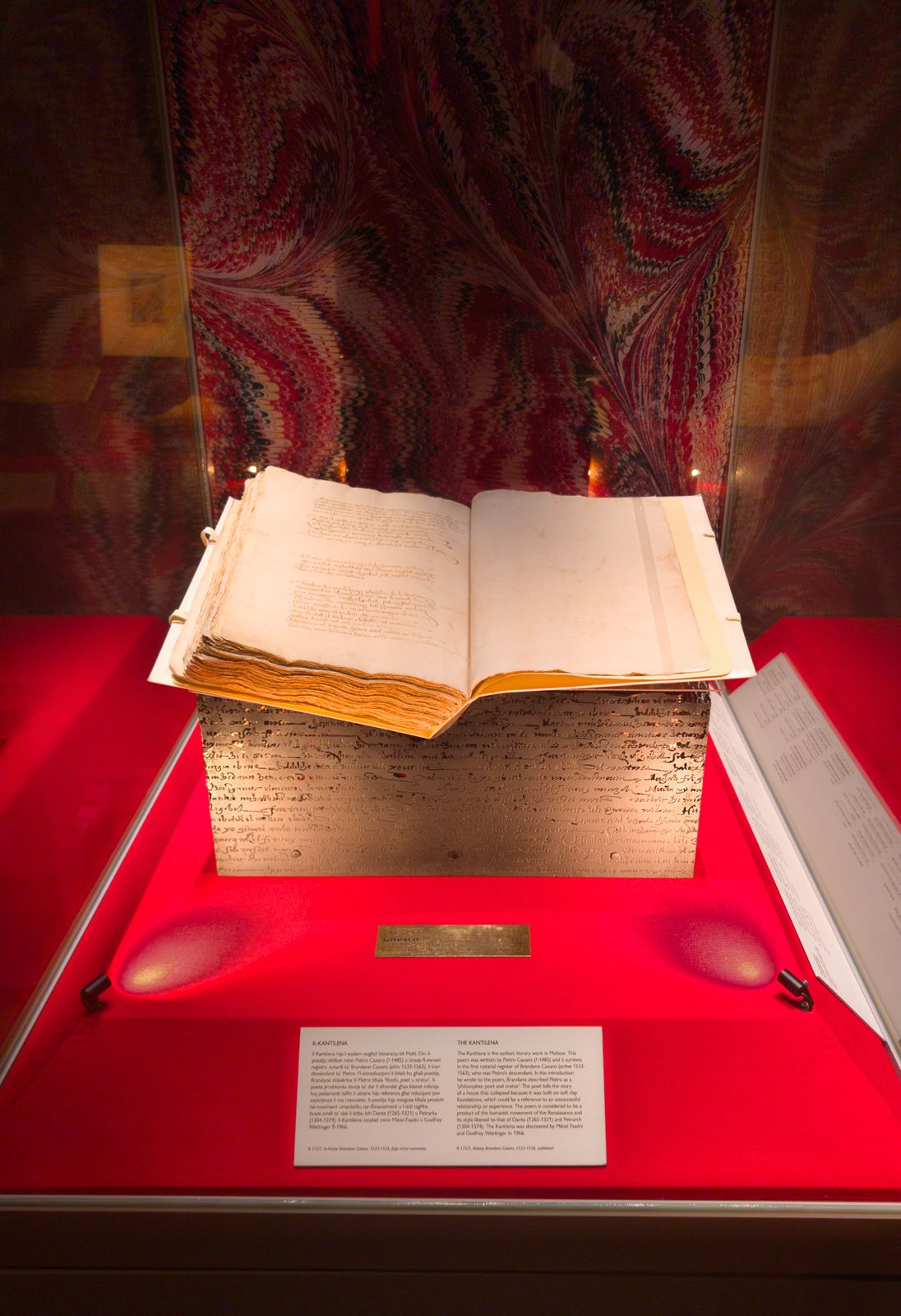
“I was inspired by Madonna and Child paintings and the cloth of honour to create an almost sacred set-up for this important work. We commissioned metal artist Marie Louise Kold to create the plinth for the Kantilena volume, and she etched words from the Kantilena into the metal using acid, delivering an outstanding piece of contemporary art for this museum.”
A museum of curiosities
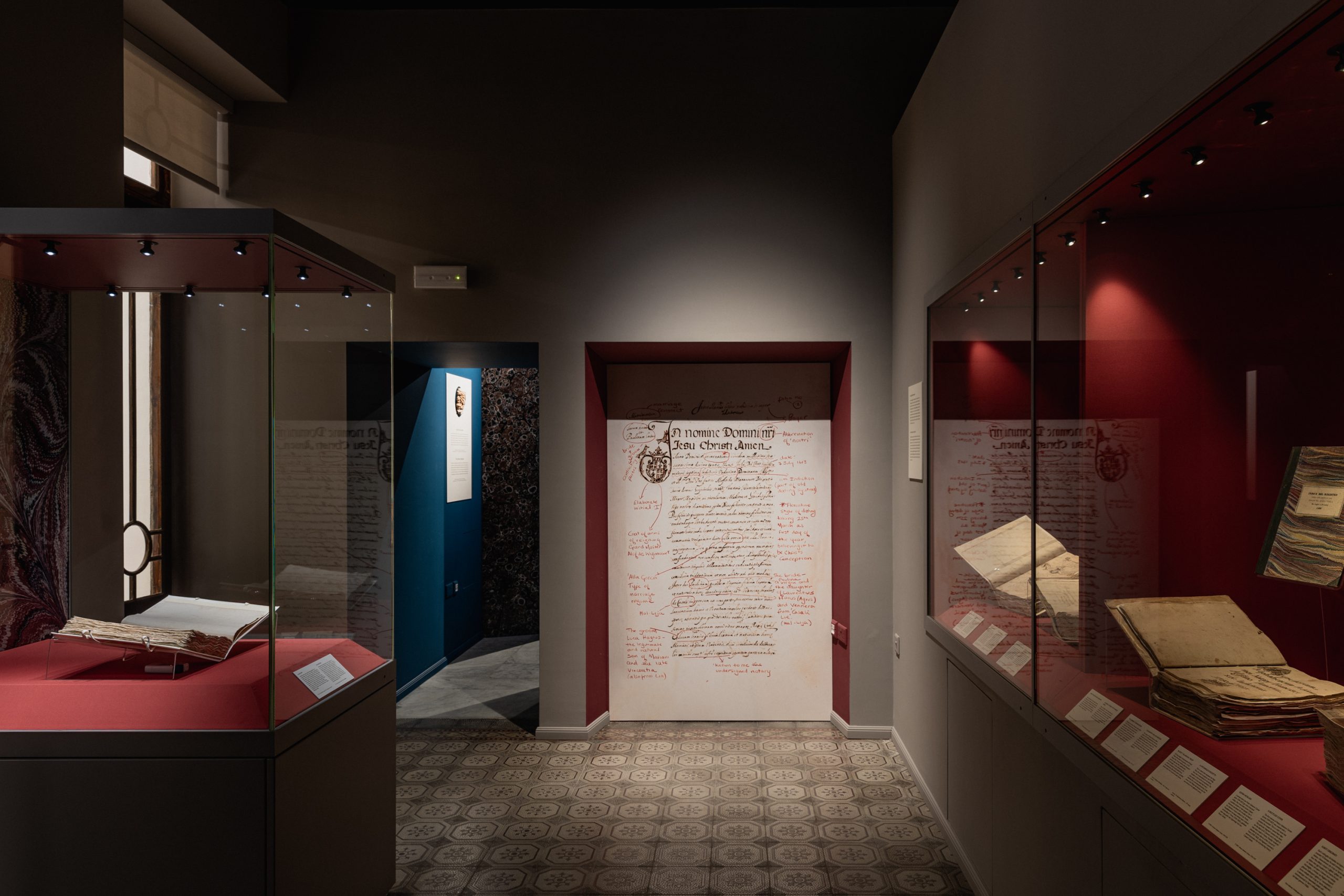
In this section, a deed is enlarged and marked with annotations in red – hand-written by Joan, who made this whole experience possible – to explain the minutiae of a contract, while another section delves into the meta-reality of the volumes, “focusing on the various bindings, unique artworks and stitching discovered in the collection.”
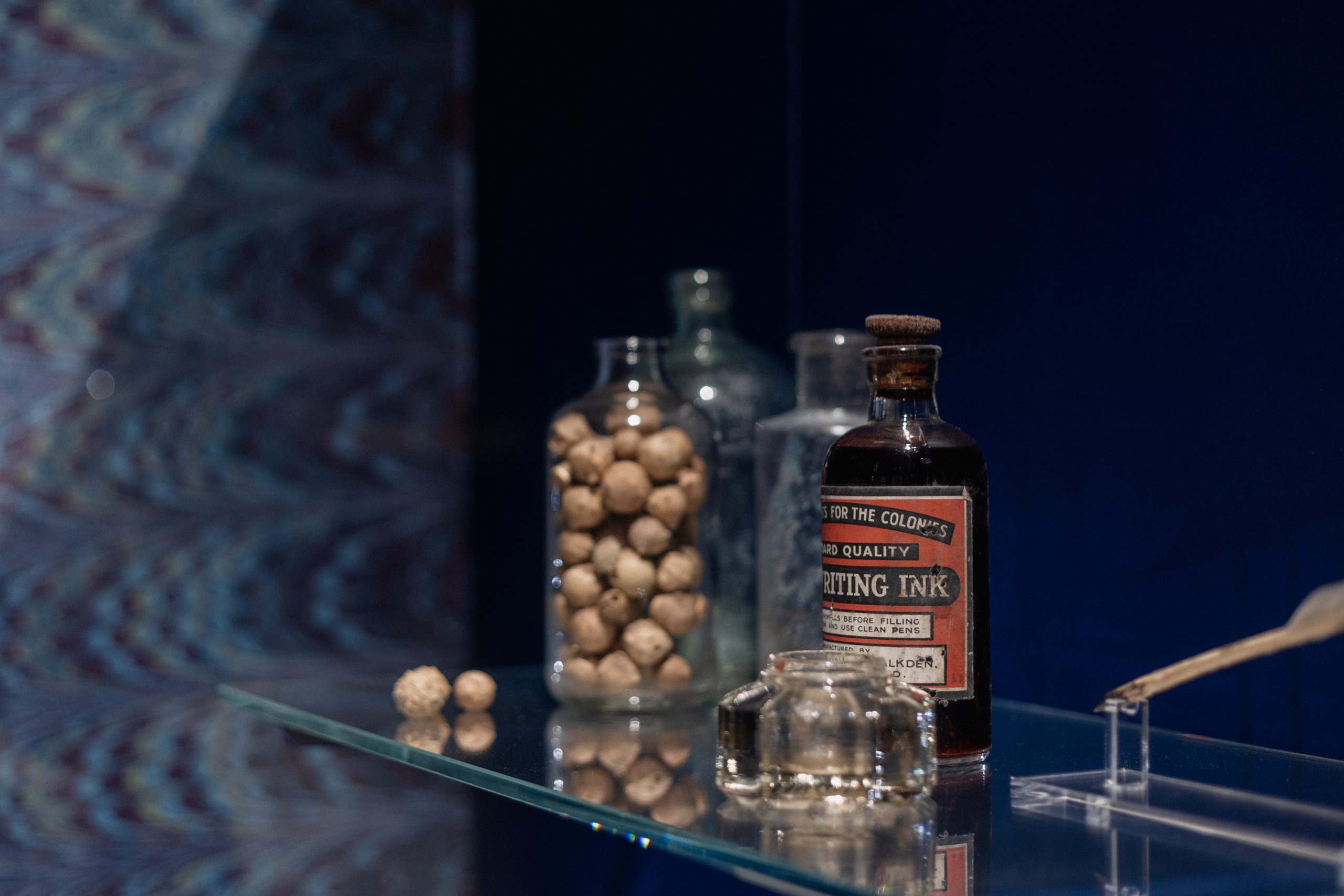
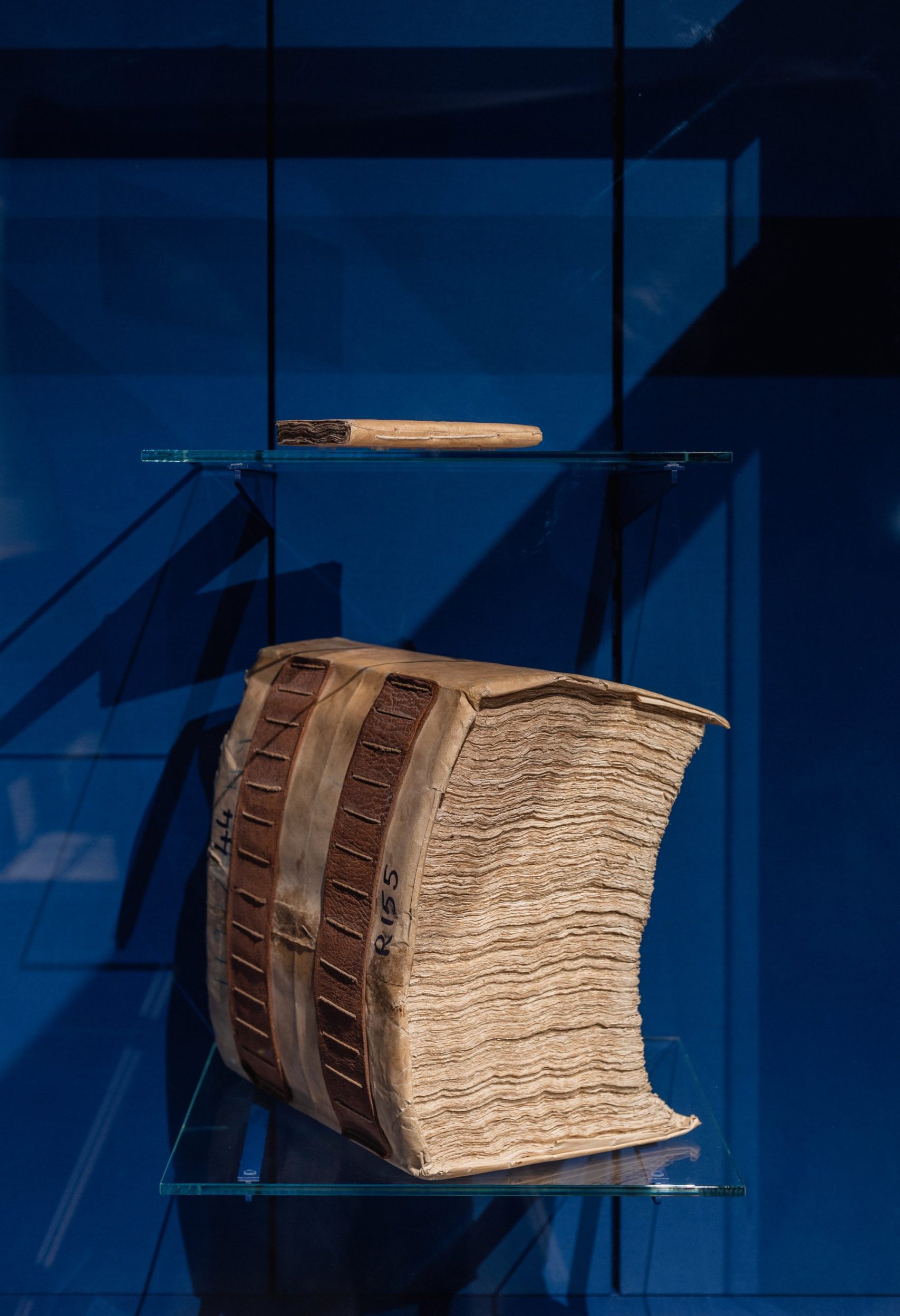
Original ink wells, parchment and feather quill pens are presented, along with a humorous contrast of the thickest and thinnest volumes in the archive.
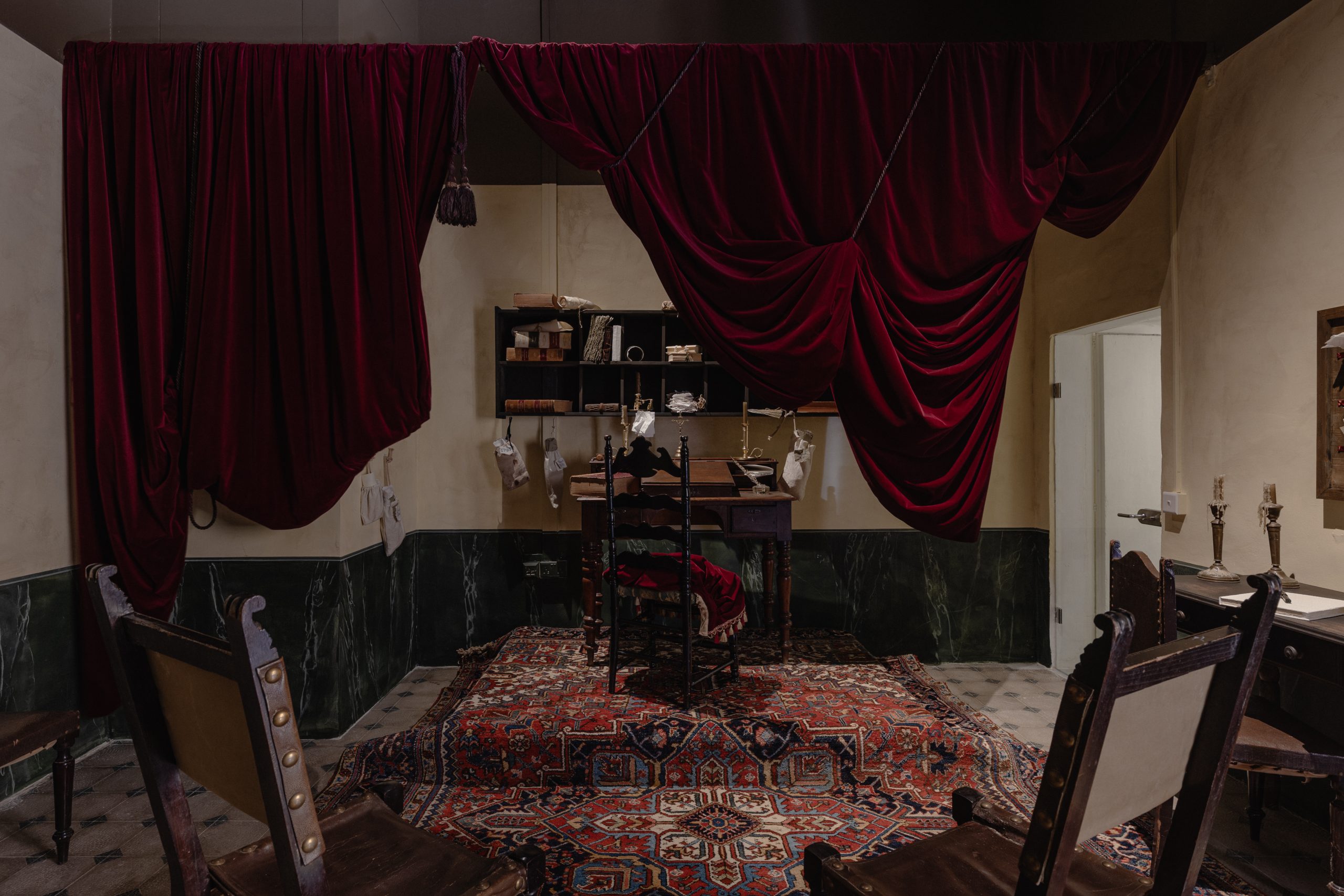
For the final set-up, Francesca unleashes her creativity by recreating a notary’s office, inspired by visual representations she found in her research. “We sourced old chairs, a desk for the notary and his scribe, fabric for the curtains that were always pulled up and never drawn, lamps and bits of paper and parchment.,” she notes.
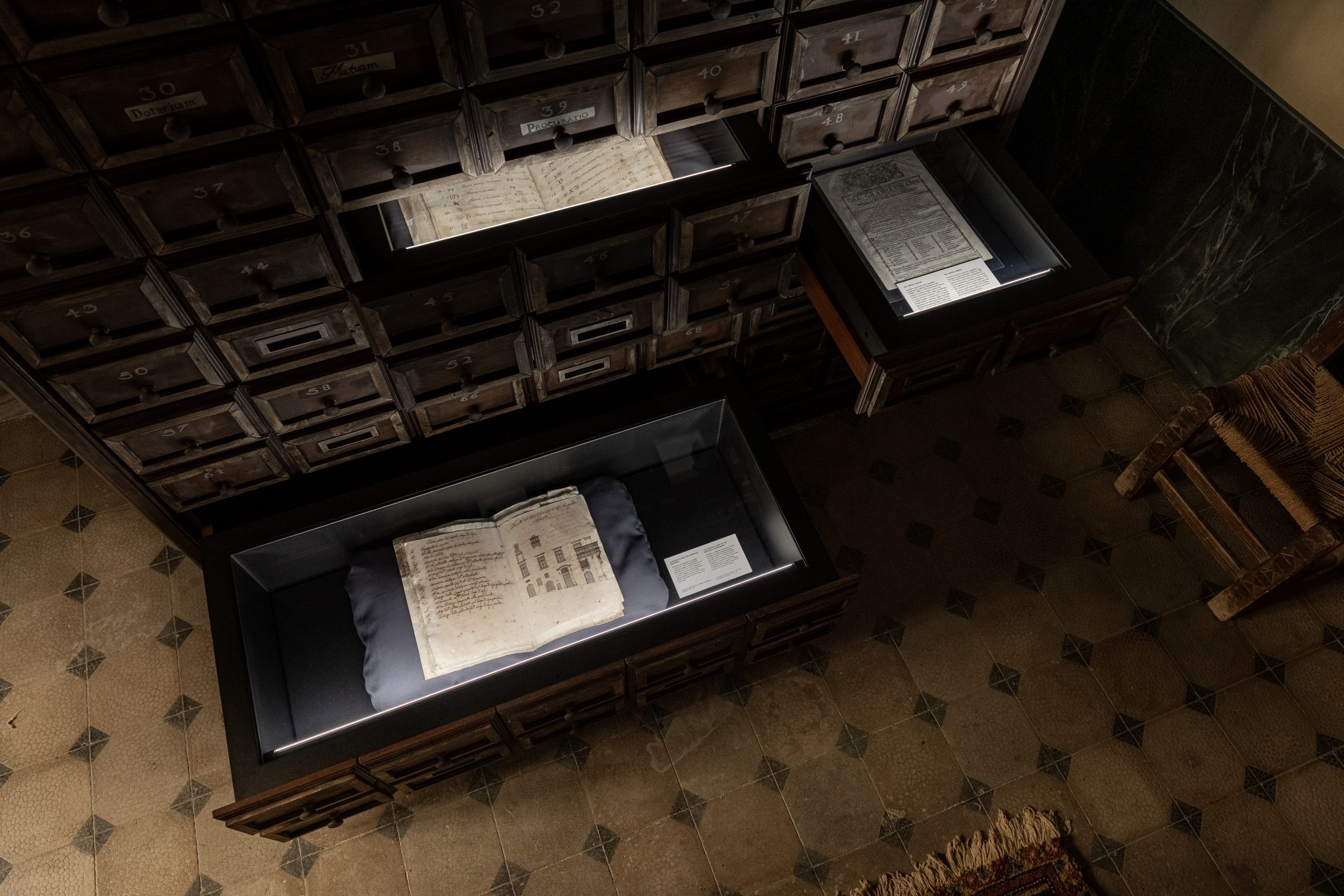
“The highlight here is a large cabinet that we commissioned to resemble those used by notaries to store deeds and documents, recreated using the motto of the Notarial Registers Archive,” says Francesca.
“The cabinet opens to reveal discoveries within the archive, such as a 17th century flyer that recommends the use of human fat for health benefits and cures. It is a cabinet of curiosities, much like the entire museum that pays homage to Malta’s rich history and the notarial profession alike.”
Main image: Lisa Attard