Halfway down the slower-paced St Paul Street in Valletta is a modest palazzo with a vaguely-known history, which, after decades of accommodating various occupants received a renovation of its own, leading to its transformation into the space it is today: a state-of-the-art gallery with a permanent exhibition by British artist Victor Pasmore.
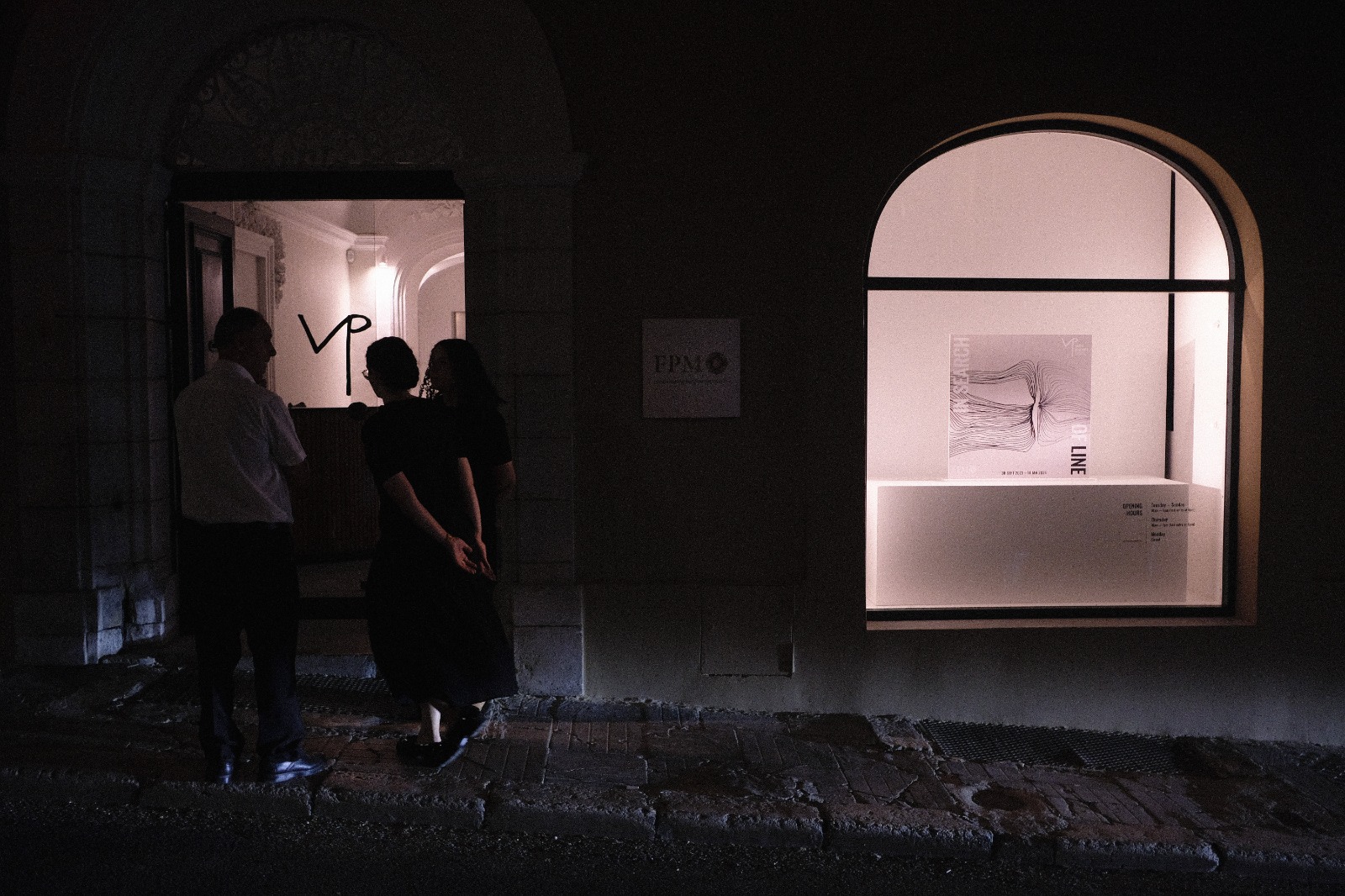
DesignDispatch caught up with Michael Lowell, CEO and Creative Director of Fondazzjoni Patrimonju Malti (FPM), a non-profit making organisation with a mission to spread awareness on Malta’s heritage through museums, exhibitions and publications, whose offices are now housed within the newly restored palazzo.
Sharing insight into the history and origins of the building, Michael asserts that information about its early history is sparce, “but its architectural language speaks to a building which has been around for several centuries.”
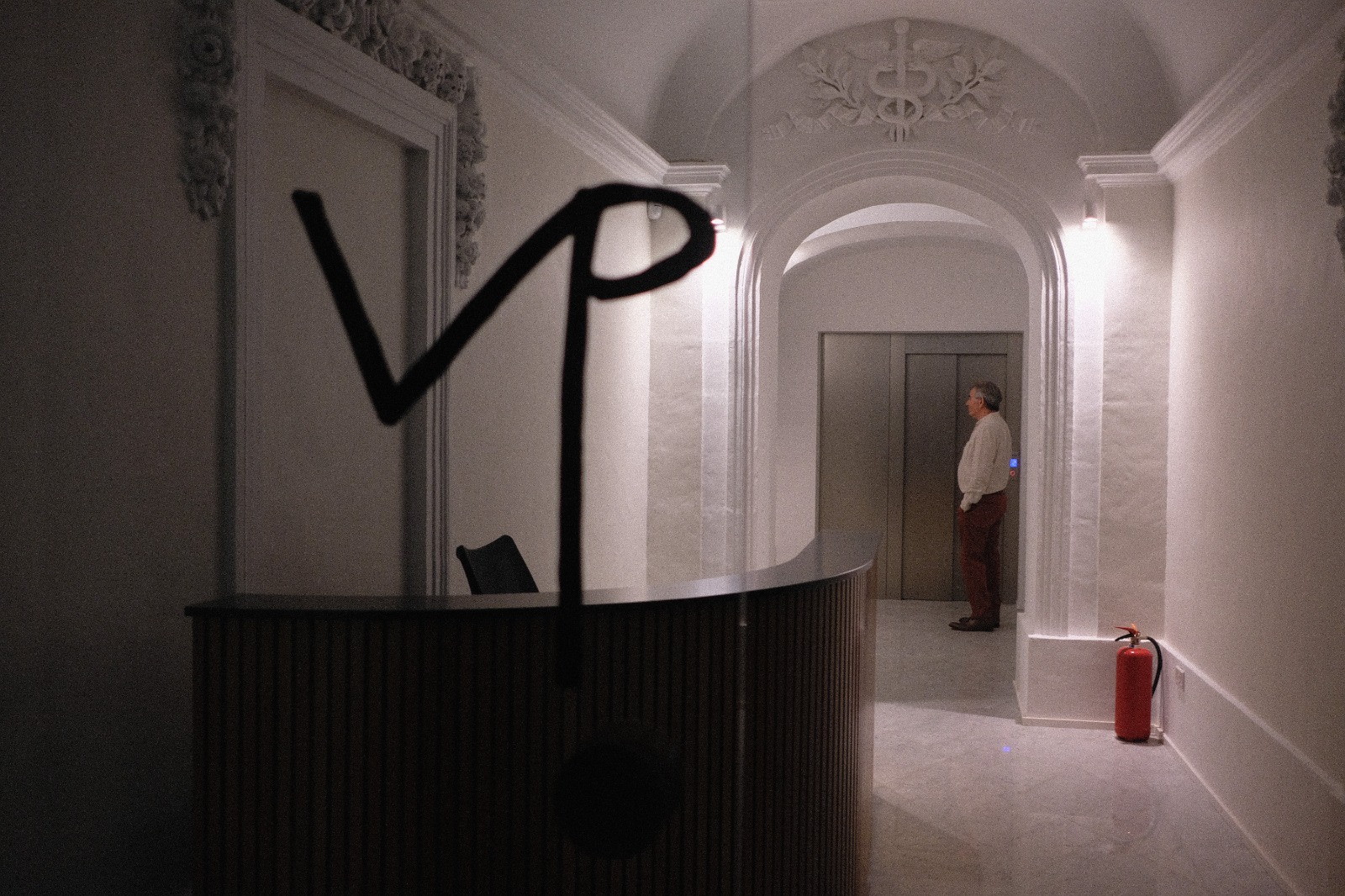
In 1914, the Unione Cattolica San Giuseppe moved its members’ club from Palazzo Caraffa on St Christopher Street in Valletta to a more centrally located space in the capital city on St Paul Street. Later in the 1980s, APS Bank moved its headquarters here, where the building would come to be known as APS House. The bank occupied the premises until the early years of this century, when it relocated its Valletta branch to Republic Street.

In 2021, APS entered into an agreement with FPM to transform their old headquarters into a gallery which would house a permanent collection of work by Victor Pasmore alongside an active programme of temporary exhibitions showcasing the work of Malta’s most significant 20th-century artists. Its ongoing inaugural exhibition ‘In Search of Line’ showcases the work of Josef Kalleya, Toni Pace and Isabelle Borg, among others.
“The exciting thing about this project is that the whole building was in dire need of a full renovation. As an organisation, we are no stranger to these kinds of projects. In the early 2000s, we restored Palazzo Falson Historic House Museum, the Medieval palace in Mdina,” says Michael.

“For this space, we worked in collaboration with the architectural firm, FS Design Ltd. Being that we had to start from scratch, we installed all new plumbing, electricity and the basic necessities while carefully navigating the historic importance of the building itself.”


The CEO lead the design aspect of the project, focusing primarily on how the space could lend itself to the gallery’s needs through specialised museum lighting, security measures to protect the artwork, exhibition panelling to accommodate an ever-changing display, and new flooring with sound proofing elements that respect the original architectural style of the building.
“The use of the ‘sale nobile’ as exhibition space was crucial to the project since these are always the larger rooms. With most palazzi in Valletta these rooms tend to be on the uppermost floors while the smaller rooms are closer to the ground floor.”

To this end, the first floor was identified as the sensible location for Patrimonju’s offices. “We created an open plan space, thus encouraging more communication between our staff. We also found room for a small board room and an internal reference library,” says Michael. “The ground floor now welcomes visitors with a reception desk, lockers and a bookshop with Patrimonju’s publications. The second and third floors house the gallery itself.”
Singling out stand-out architectural features of the building, Michael highlights its imposing facade, with its wooden balcony and impressive door that strikes and welcomes visitors.
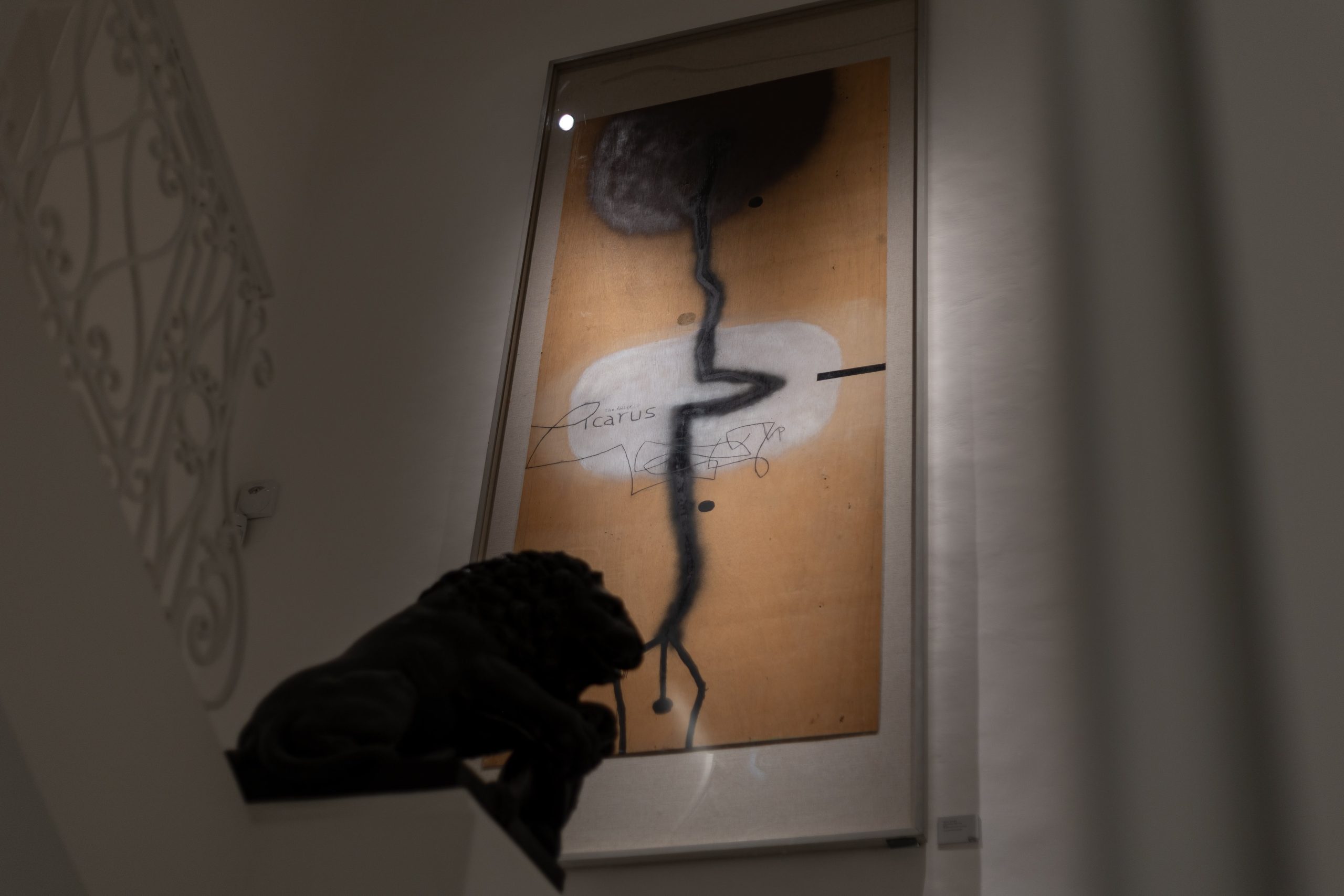
“As we began to navigate the exhibition space, we fell in love with the height of the wall space offered by the original staircase. This wall became the perfect home to showcase a work which is part of our permanent collection, The Fall of Icarus, by Victor Pasmore.”
In terms of the exhibition, “the real highlight is that several of the works on show are pieces we’ve unearthed from private collections, many of which are on public view for the very first time.”

“There are certainly some pieces which stand out more than others, for example the three impressive drawings for a Monument to the Unknown Soldier by Antonio Sciortino. Here, we chose to collaborate with the contemporary artist Matthew Attard who created original artwork in dialogue with Sciortino, which articulates one of the exhibition’s key concepts, ‘line of sight’.”
Patrimonju also collaborated with sound artist Christian Galea, who engaged with Victor Pasmore’s series of Linear Symphonies. “Galea produced an original soundscape which, like Pasmore did in his work, explores what it means to ‘abstract’ from nature.”
In Search of Line runs till 30th March 2024. The Gallery is open from Tuesday to Sunday 10:00-17:00 (last entry 16:00); Thursday 10:00-19:00 (last entry 18:00). Tickets can be purchased from the door. For more information visit www.victorpasmoregallery.com
If you enjoyed this article, you might also be interested in: Hamrun railway station ‘brought back to its former glory’ following restoration works