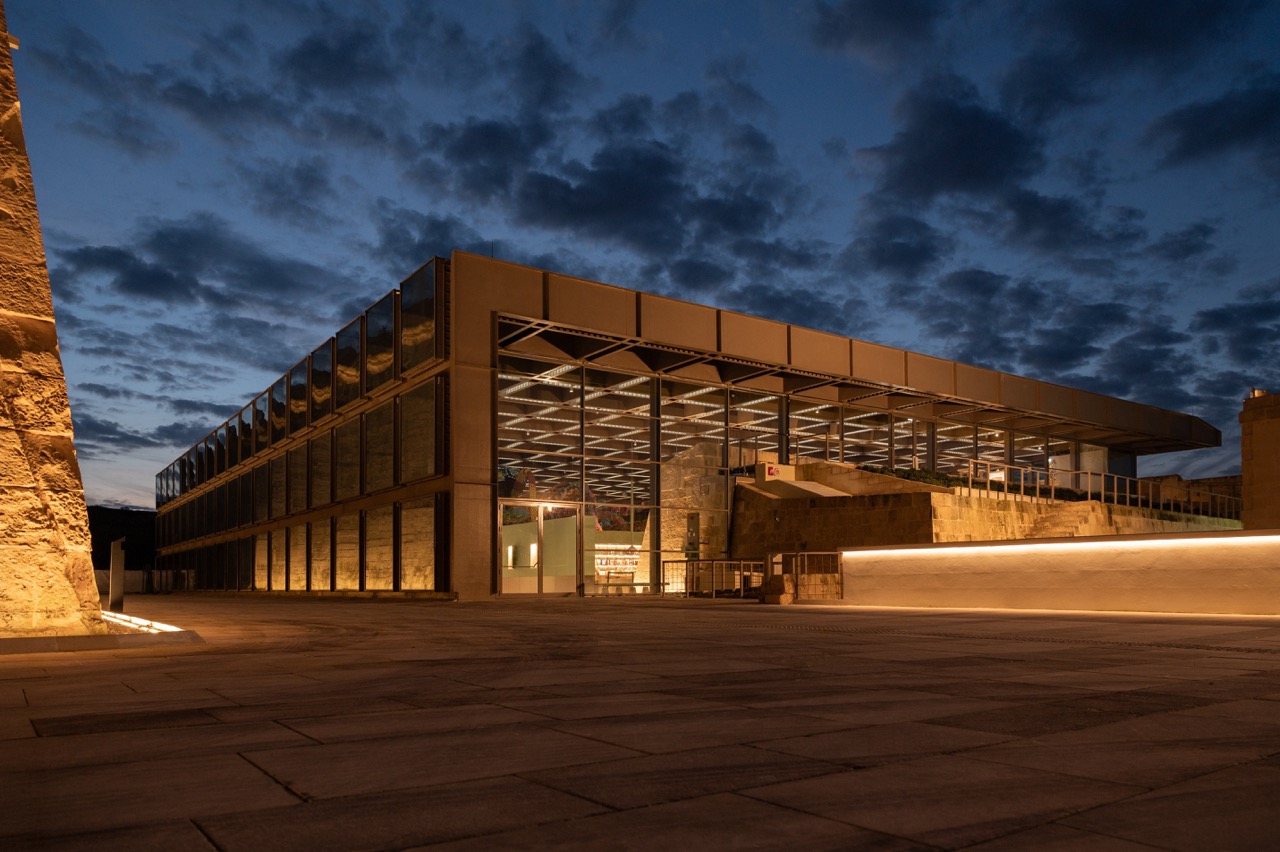
A year since its grand opening last October, the Malta International Contemporary Arts Space (MICAS), is set to host a new exhibition that looks inwards, with a curated display of photography and documentation on the genesis and development of this cultural destination.
Beyond The Bastions, which opens to the public on 20th September, will display historical documents from the National Archives and the Bibliotheca, photographic and audiovisual documentation, plans and drawings of the historic and present site, and scale models of MICAS.
Hosted on its first-floor gallery, the exhibition details the story-arc of an important military site that has now been repurposed into a welcoming, public space for Maltese and international contemporary art.
A journey of resilience
The idea for this project was conceived in 2013, when it became clear that the gap in Malta’s cultural landscape – where no dedicated national platform existed to consistently support, present, and contextualise contemporary art – had to be addressed, giving rise to the Coordinating Board for Cultural Projects.
This entity, chaired by Phyllis Muscat, was the first step in guiding the vision for MICAS in close collaboration with Malta’s Restoration Directorate, to balance international museum standards with the site that would eventually be chosen for this museum.
“Instead of pursuing the ‘Bilbao effect’ – a high-profile landmark strategy dependent on spectacle – we chose a more thoughtful model rooted in sustainability and local context,” says Dr Georgina Portelli, deputy chairperson of MICAS and chair of its education committee.
Recognising that many of Malta’s historic sites remain underused or unrestored, the board aimed for integration rather than reinvention.
Following the review of several potential sites, including Fort St Elmo and the old Powerhouse in Floriana, the final choice, the Ospizio complex within the Floriana Lines, was chosen for its generous space and layered historical setting, further enriched with panoramic views of Marsamxett Harbour.
The making of a cultural institution
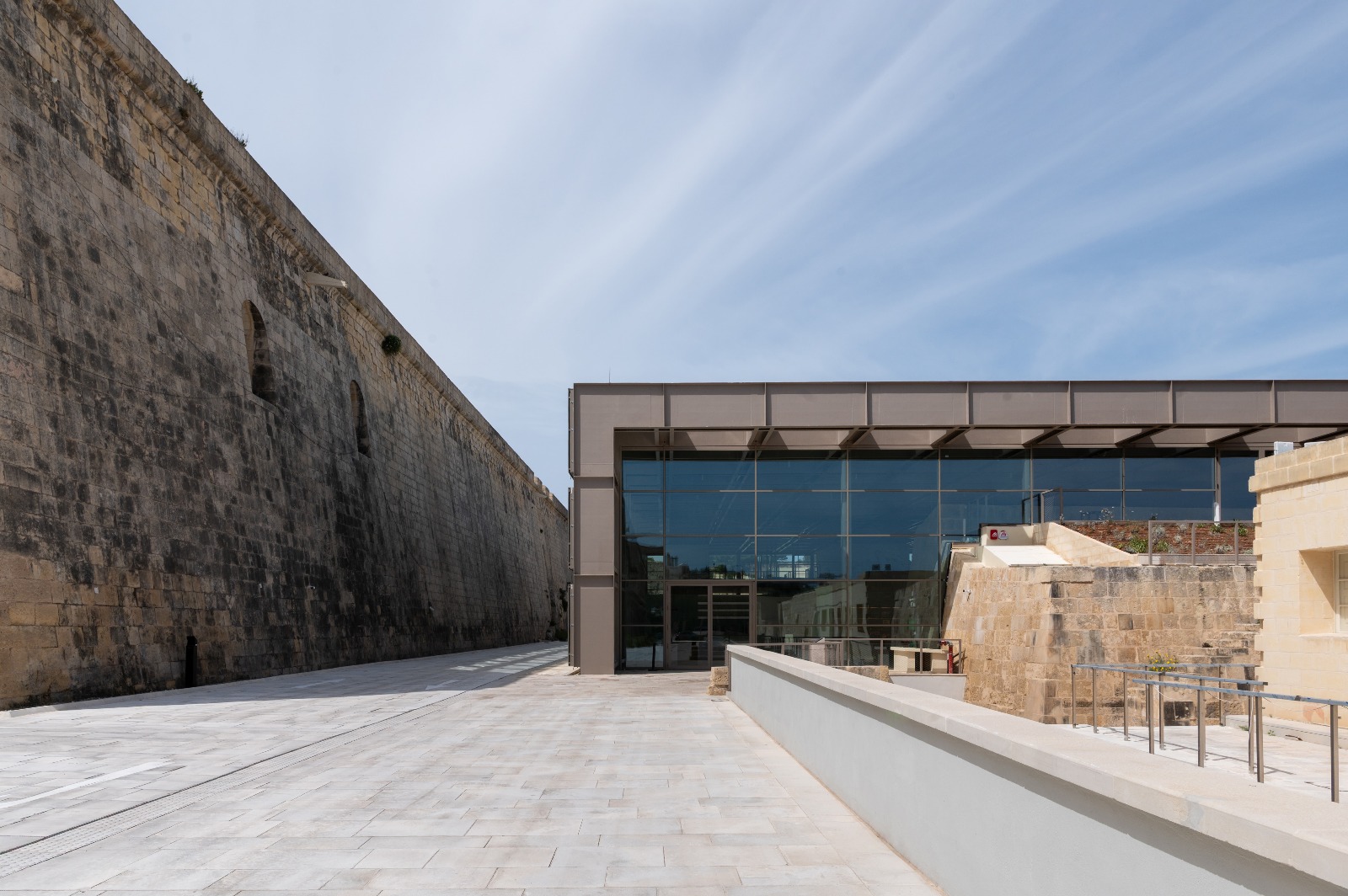
The site not only served as a canvas for this new project but also an inspiration, ultimately influencing the decision to not have the museum’s galleries as traditional, white-walled boxes. Embedded in the landscape and shaped by the historic architecture, MICAS’s expansive steel-and-glass roof envelopes the gallery spaces, which follow the terrain’s natural terracing.
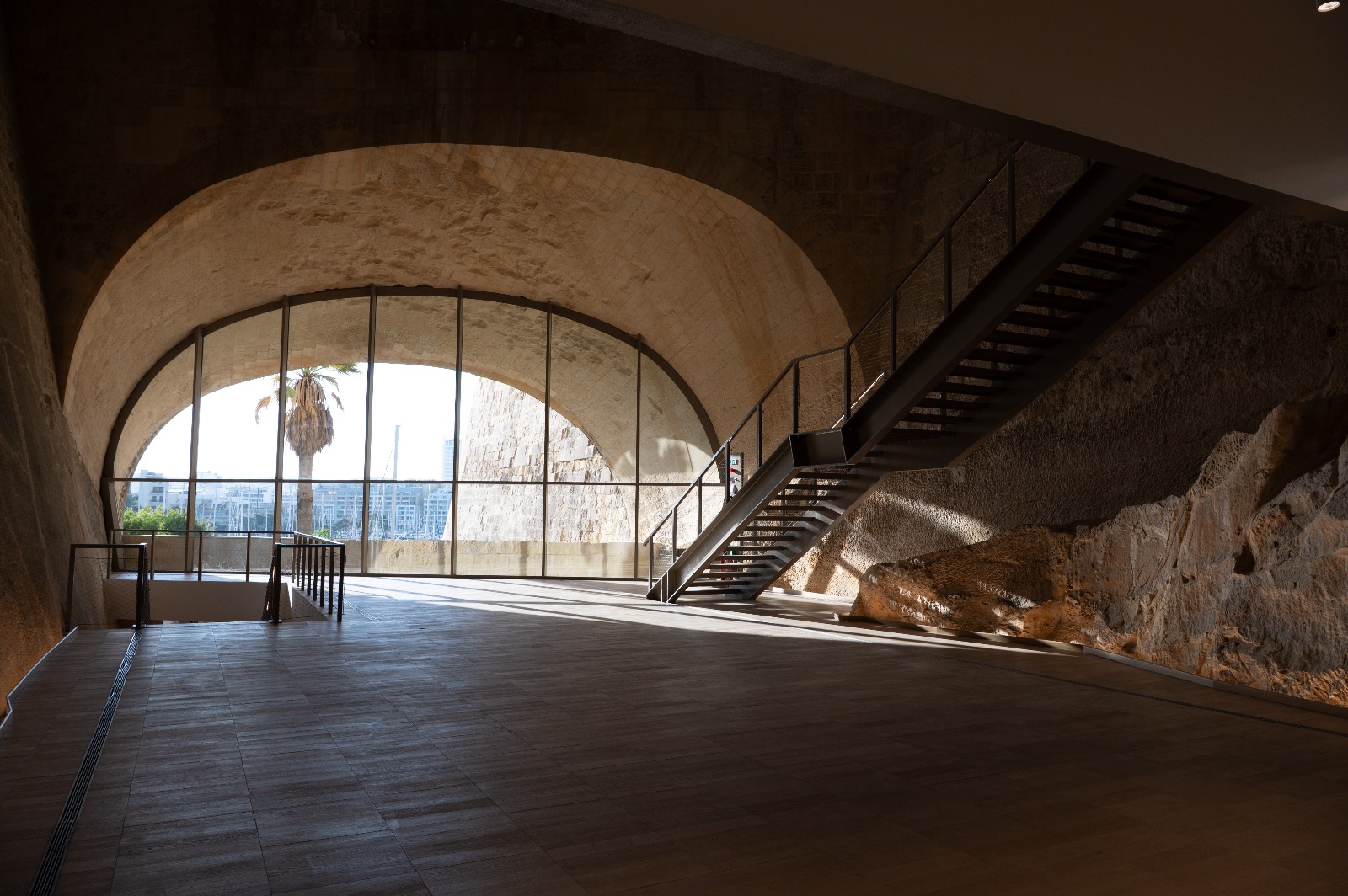
“The structure allows natural light and views of the surrounding bastions and harbour to filter in, creating a strong sense of place and openness. Rather than covering up the old stone walls, the museum showcases their raw textures and monumental scale: they are part of the visitor’s experience,” says Georgina.

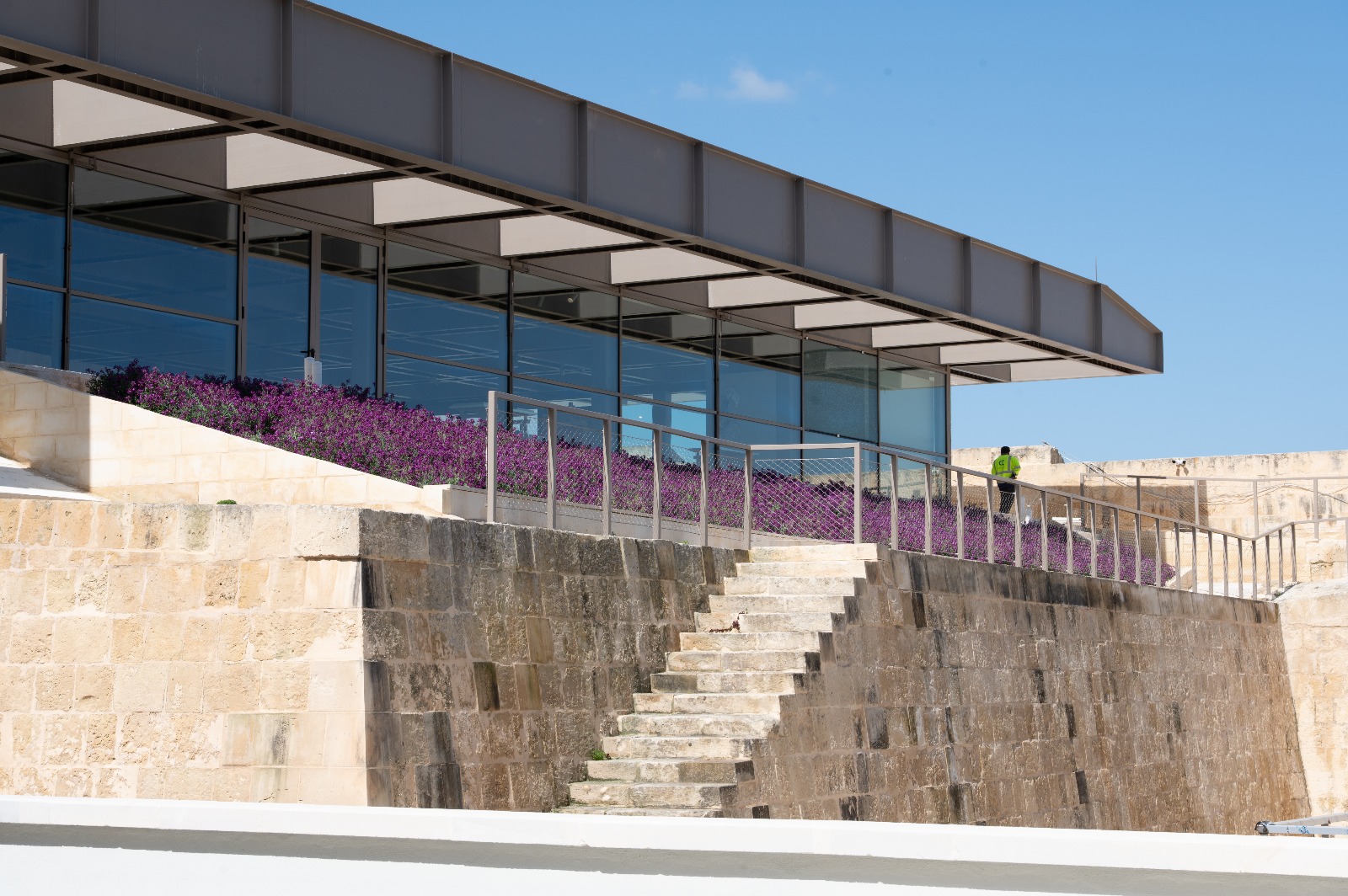
“The spatial layout is a dynamic environment that encourages movement and exploration, so that visitors don’t just look at art but navigate a layered space where architecture, history, and creativity intersect. And with outdoor spaces, exhibitions are blended with landscape, turning the whole site into an immersive cultural journey.”
An impressive architectural feature that bridges inside and out is Barbara’s Arch – a critical feature of the site’s military history that once marked the boundary between fortified land and sea. Today, it is a visual gateway that links the museum to Marsamxett Harbour, Georgina explains.
“Carlo Terpolilli and his team at IPO Studio understood this poetry of place,” she adds. “The glass and steel roof, and the contemporary galleries, embrace the ancient limestone, integrated within the terraces of the Ritirata itself.”
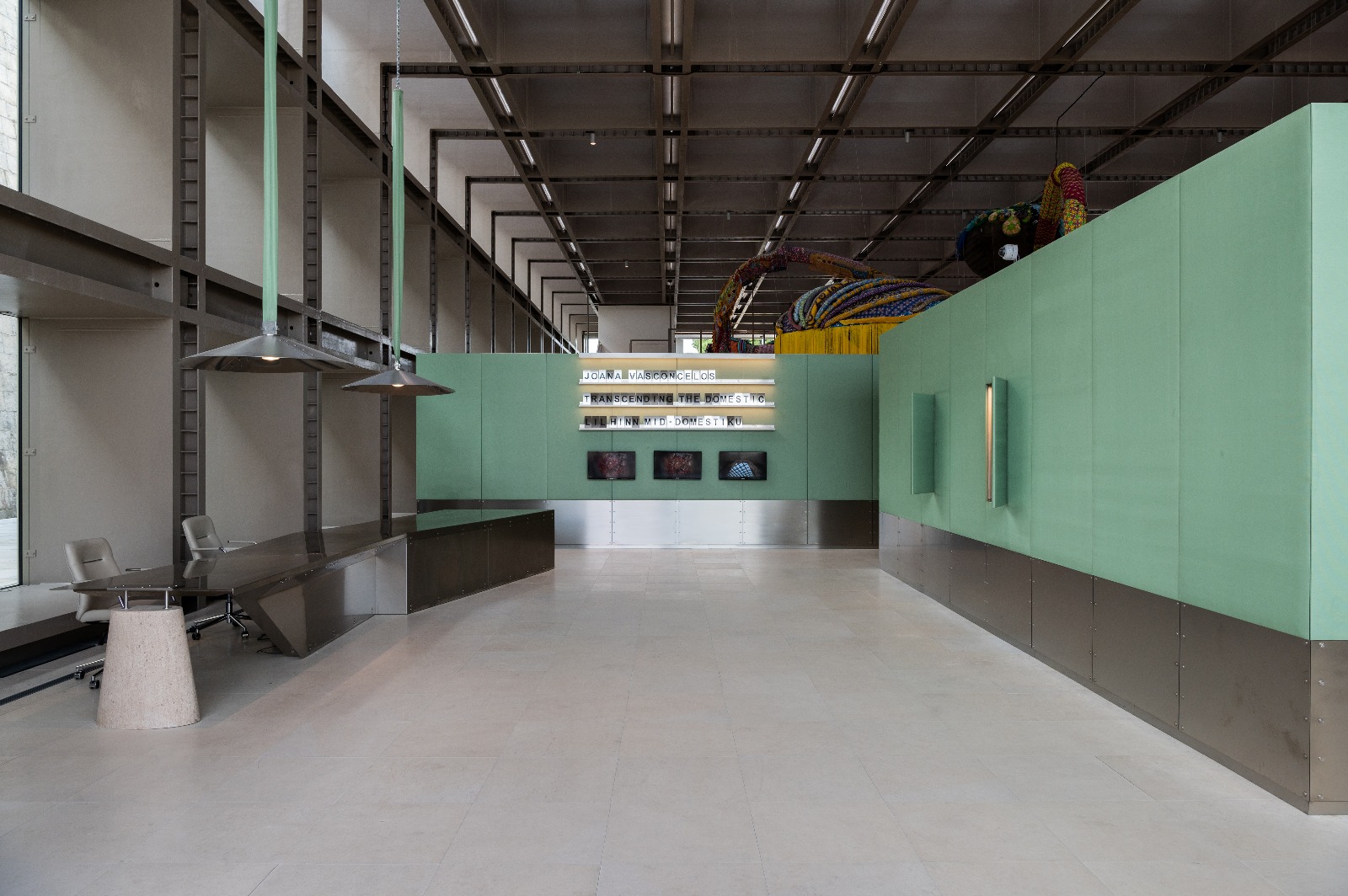
An exhibition for everyone
Phyllis Muscat, MICAS executive chairperson, says Beyond the Bastions celebrates not just the institution that honours Maltese contemporary art, but also the vision to turn the Floriana Lines into a new, creative space.
“These fortifications, once shaped by the logic of defence, beckoned for transformation into spaces of creative possibility. Today MICAS stands as proof that small nations can dream big, with Malta claiming its rightful place in the international cultural conversation.”
Beyond the Bastions – the third MICAS exhibition in 2025 following The Space we Inhabit and Ray Pitrè’s Figure in Rods – will delight those with a passion for history and architecture, but also the general public, who will learn how these ancient walls were brought to life once again.
A MICAS Art Talk will be hosted by Georgina on 20th September with a panel of speakers who have closely worked on the project’s development, including IPO Studio architects Stefano Combet and Prof. Carlo Terpolilli, architect Jean Frendo from the Restoration and Preservation Department, curator and architect Konrad Buhagiar, and MICAS Artistic Director Edith Devaney.
Photography: Sean Mallia