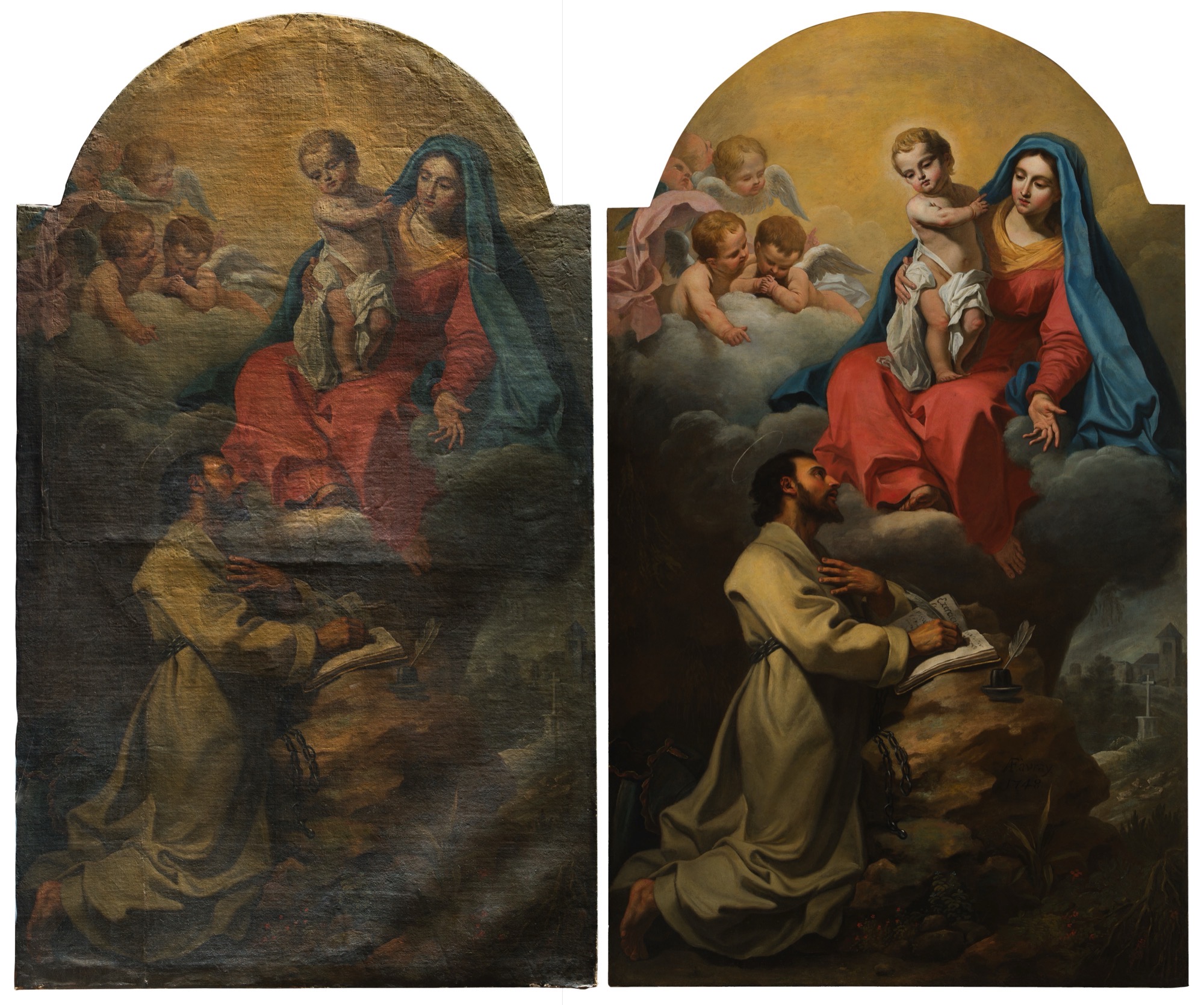
Within the Chapel of Our Lady of Manresa at Casa Manresa in Floriana, the historic Jesuit site founded as a retreat centre in the mid-18th century, is a masterpiece by French artist Antoine de Favray (1706-1798) depicting a now-luminous scene: St Ignatius of Loyola writing ‘The Spiritual Exercises’ during his time of discernment in Manresa, under the maternal gaze of the Virgin Mary and her son Jesus.
Antoine de Favray’s titular painting adorning the Chapel of Our Lady of Manresa, before (RAK) and after treatments carried out by ASC Conservation Centre Ltd / Photo by Manuel Ciantar and Suzanne Ciantar Ferrito o.b.o ASC Conservation Centre Ltd
The titular painting was recently restored by ASC Conservation Centre under the direction of founder, director and lead conservator Amy Sciberras, marking the 275th anniversary of the official inauguration and blessing of Casa Manresa as a retreat house on 16 March 1751 by the Bishop of Malta, Paul Alphéran de Bussan.
“The ceremony was attended by the Grand Master of the Order of St John, Manuel Pinto de Fonseca,” explains Michael Pace Ross, Administrative Secretary within the Archdiocese of Malta. “Later, the edifice, built under the care of the Jesuit Fra Pier Francesco Rosignoli, served as a seminary and a school, and today houses the Archbishop’s Curia.”
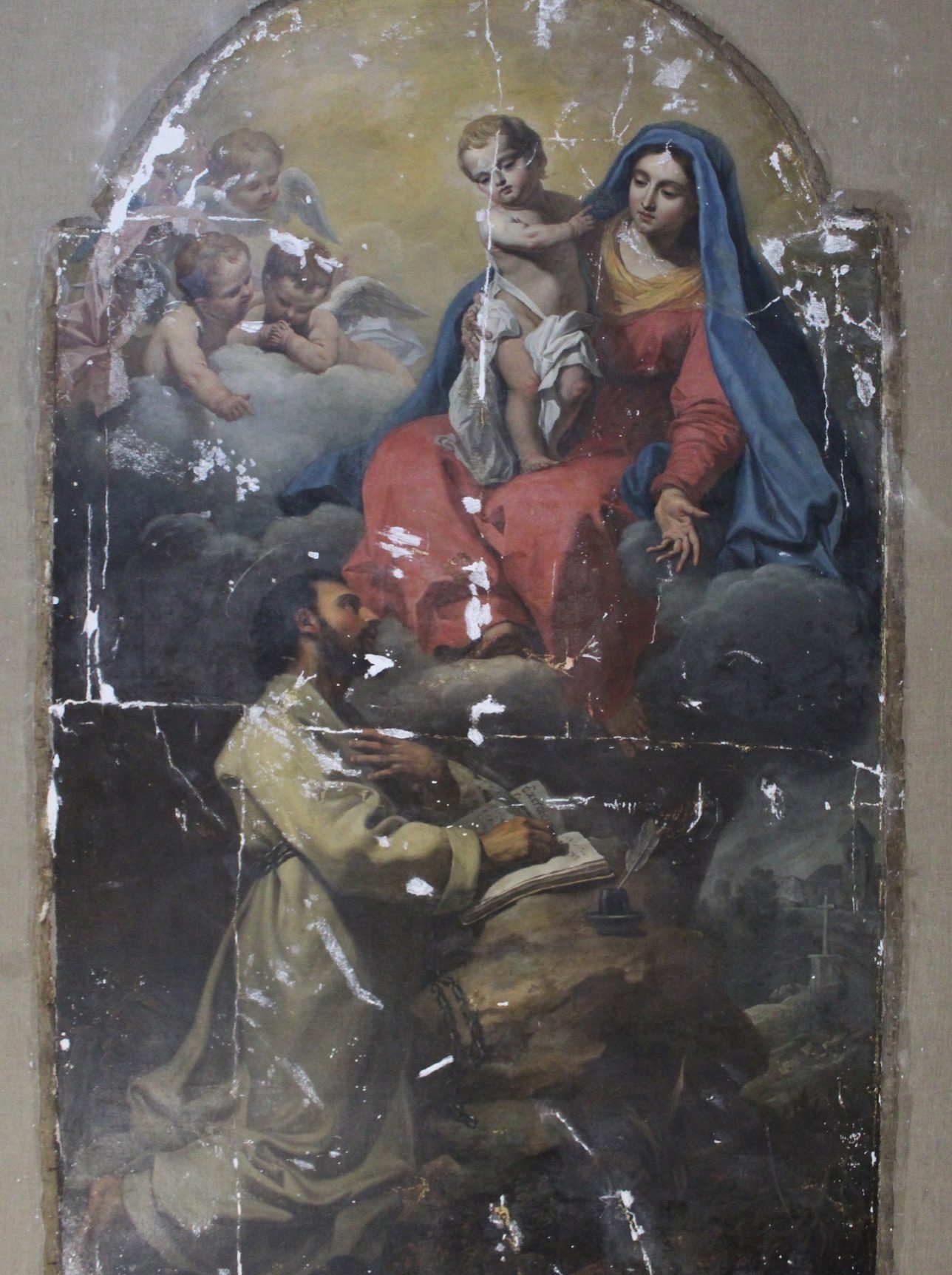
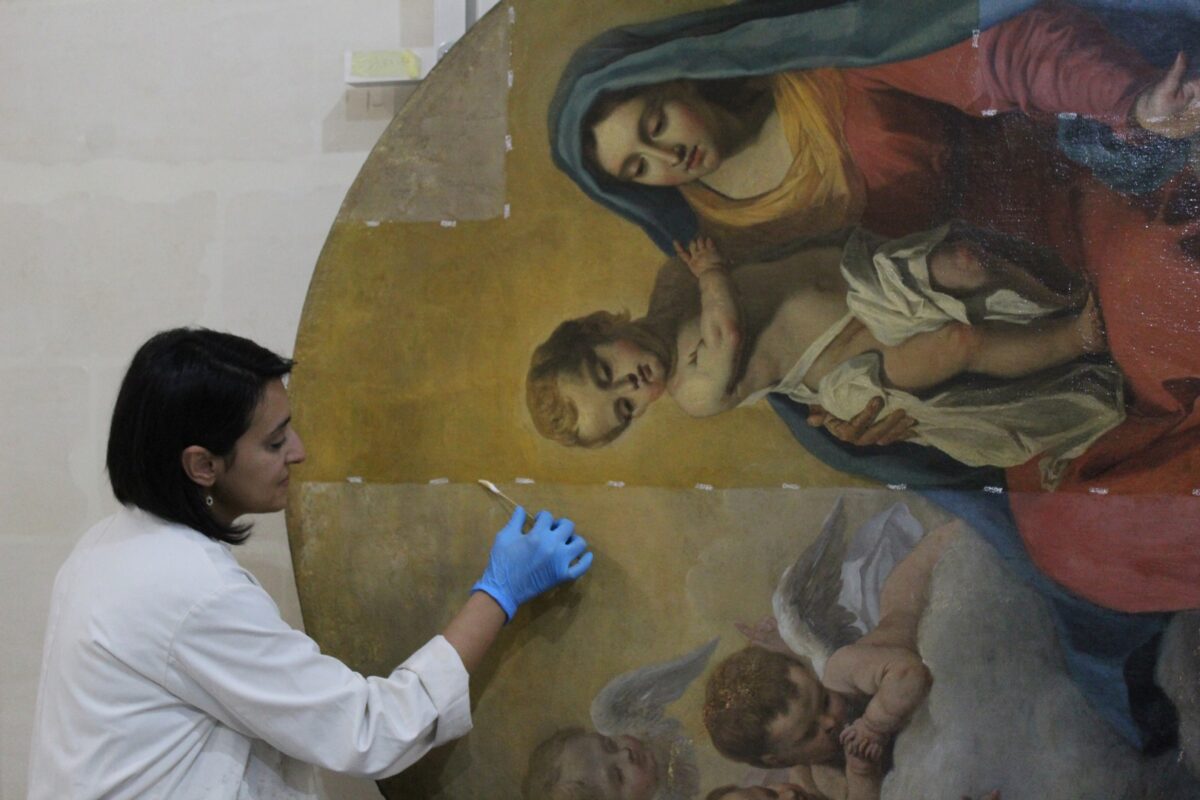
During infilling of losses in the ground layer / Photo by ASC Conservation Centre Ltd
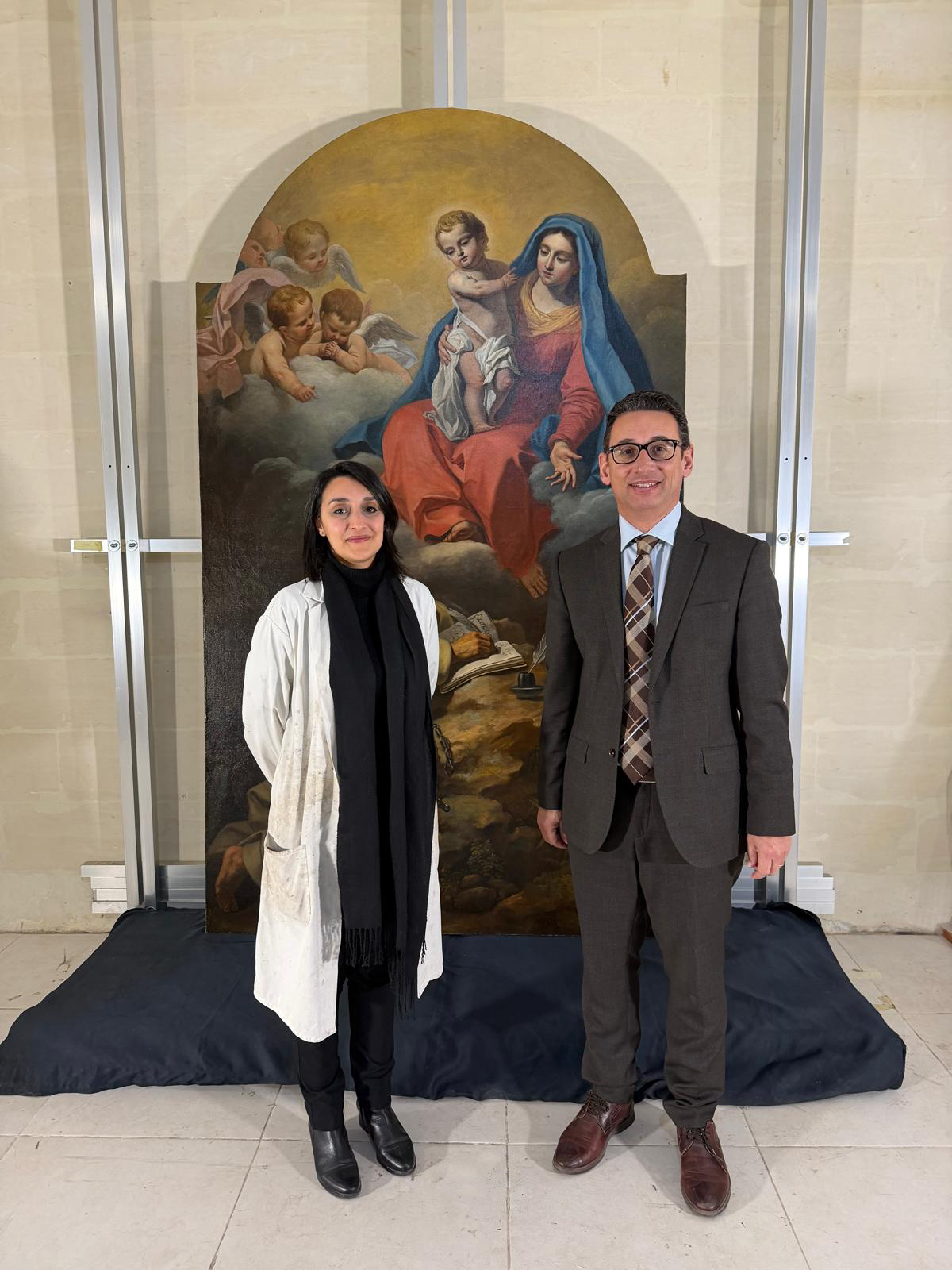
Administrative Secretary Michael Pace Ross and ASC Director Amy Sciberras during a visit at the conservators’ laboratory / Photo by ASC Conservation Centre Ltd
The painting’s restoration, carried out over the past year, was described by the Archdiocese as one that brought “renewed clarity and vibrancy to the artwork”, while also ensuring its longevity for generations to come.
A meticulous process
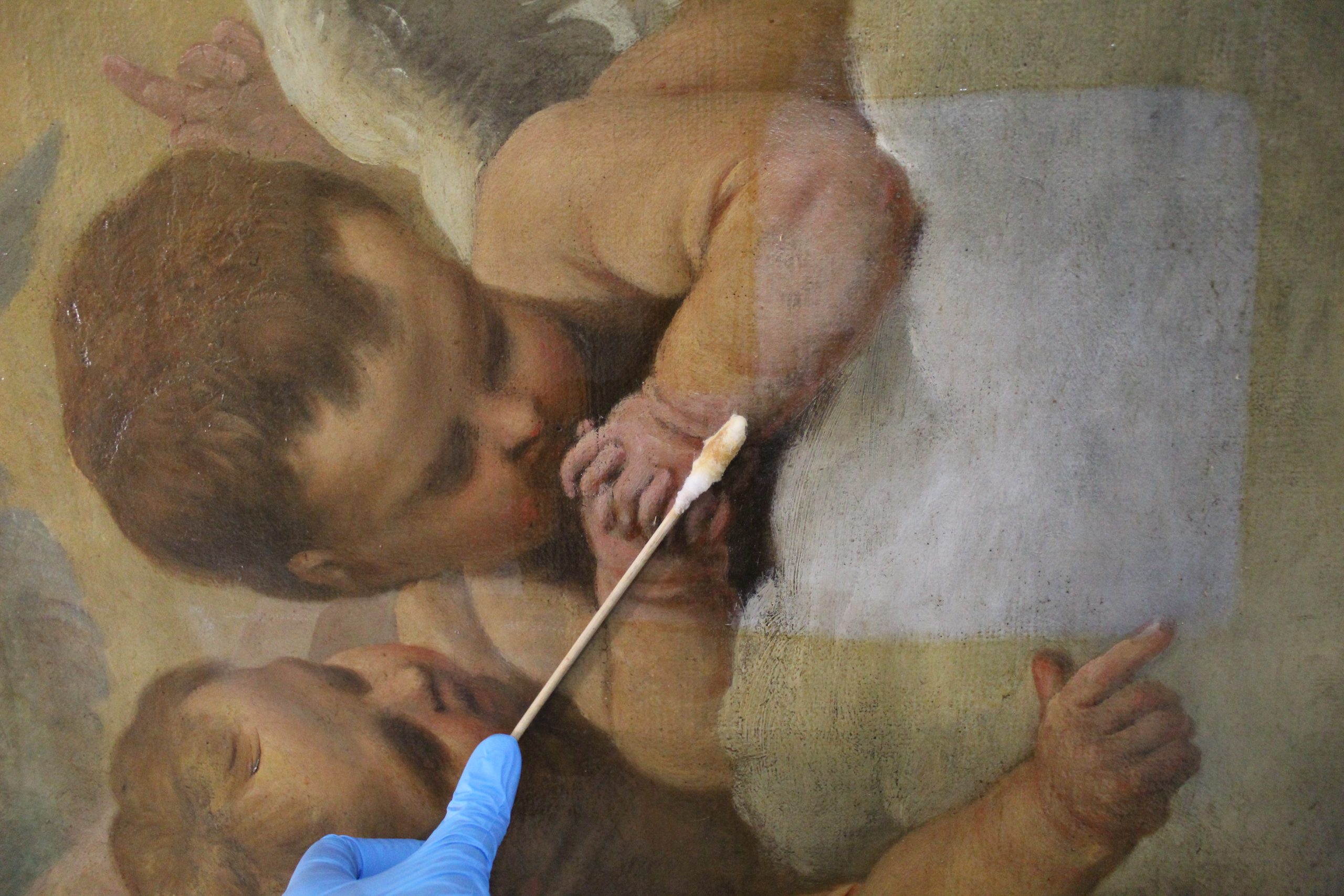
An initial, non-invasive, scientific study carried out within the laboratory of ASC Conservation Centre provided the team with a clear plan, beginning with the cleaning of the layers of aged and yellowed varnish, which were concealing the original tonalities of this painting.
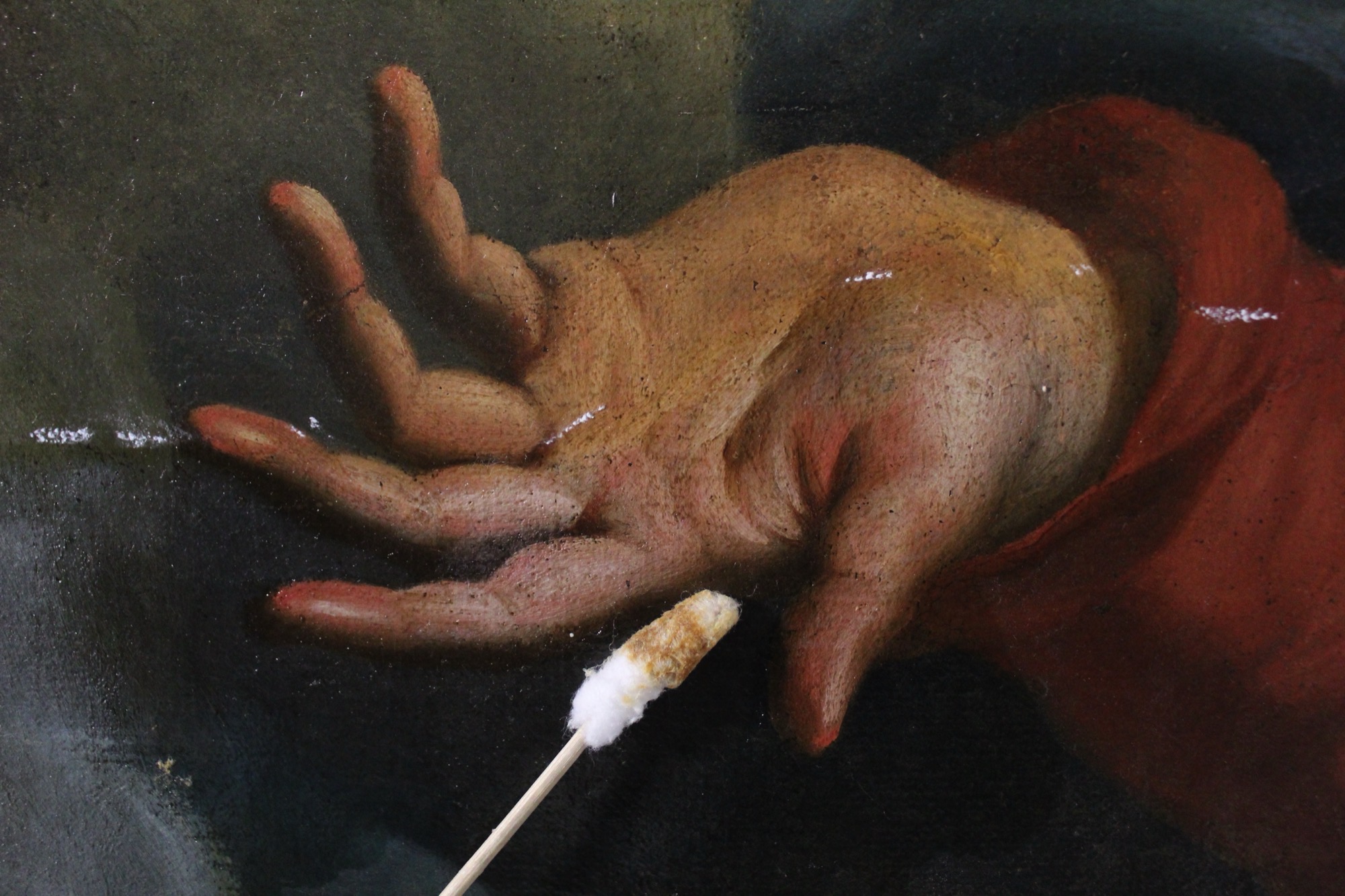
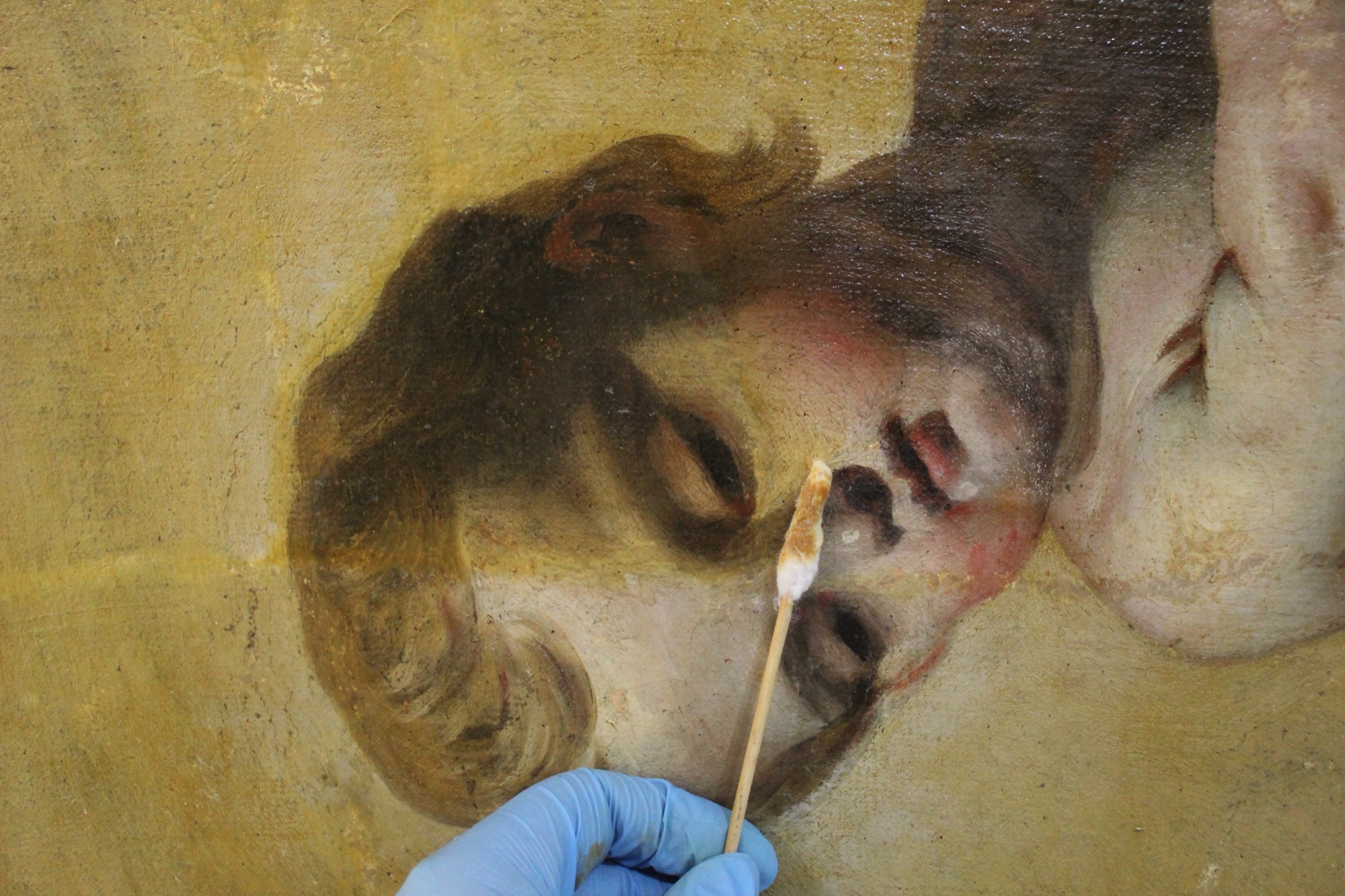
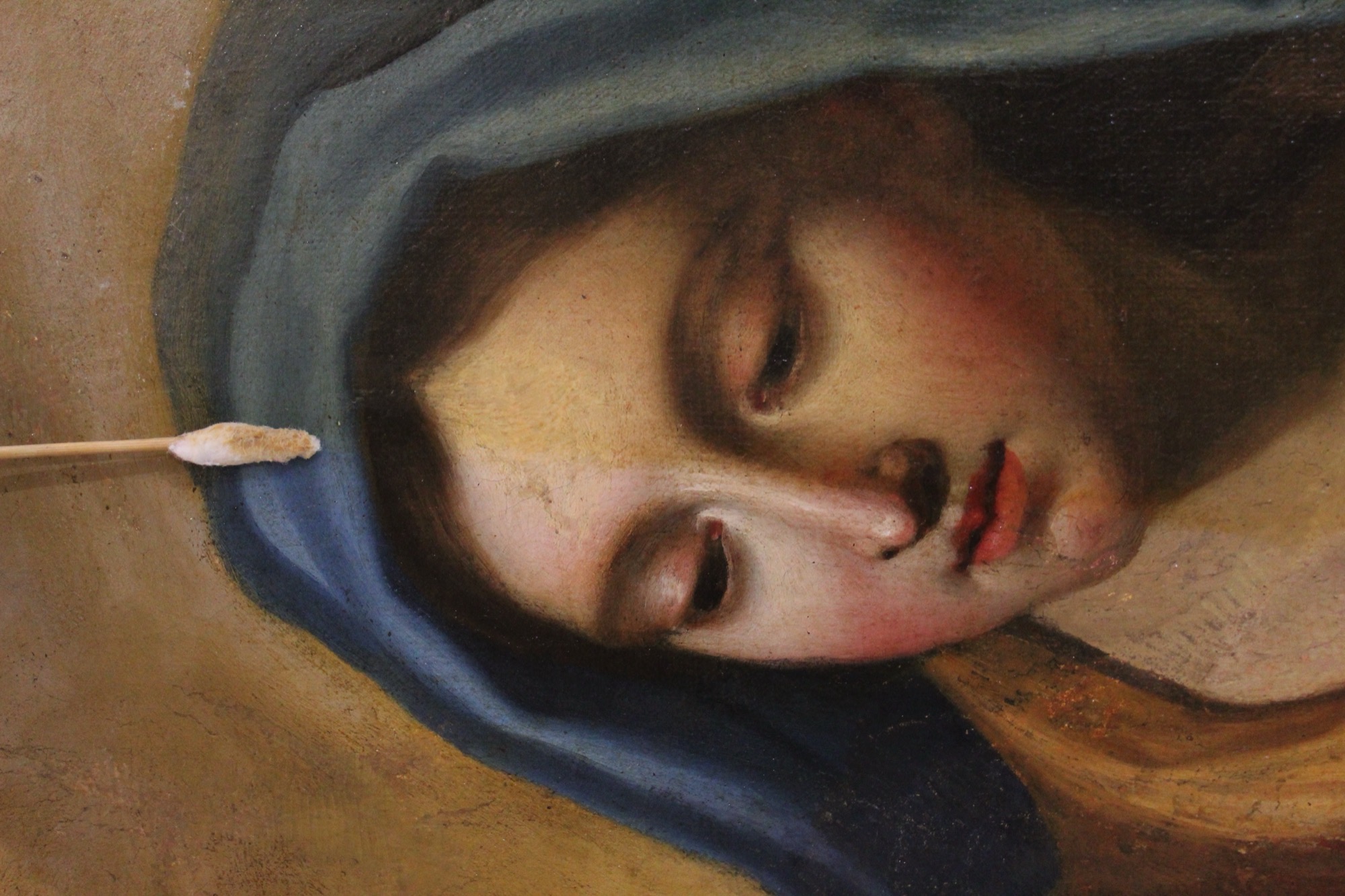
Details taken during the cleaning of varnish and overpaint / Photo by ASC Conservation Centre Ltd
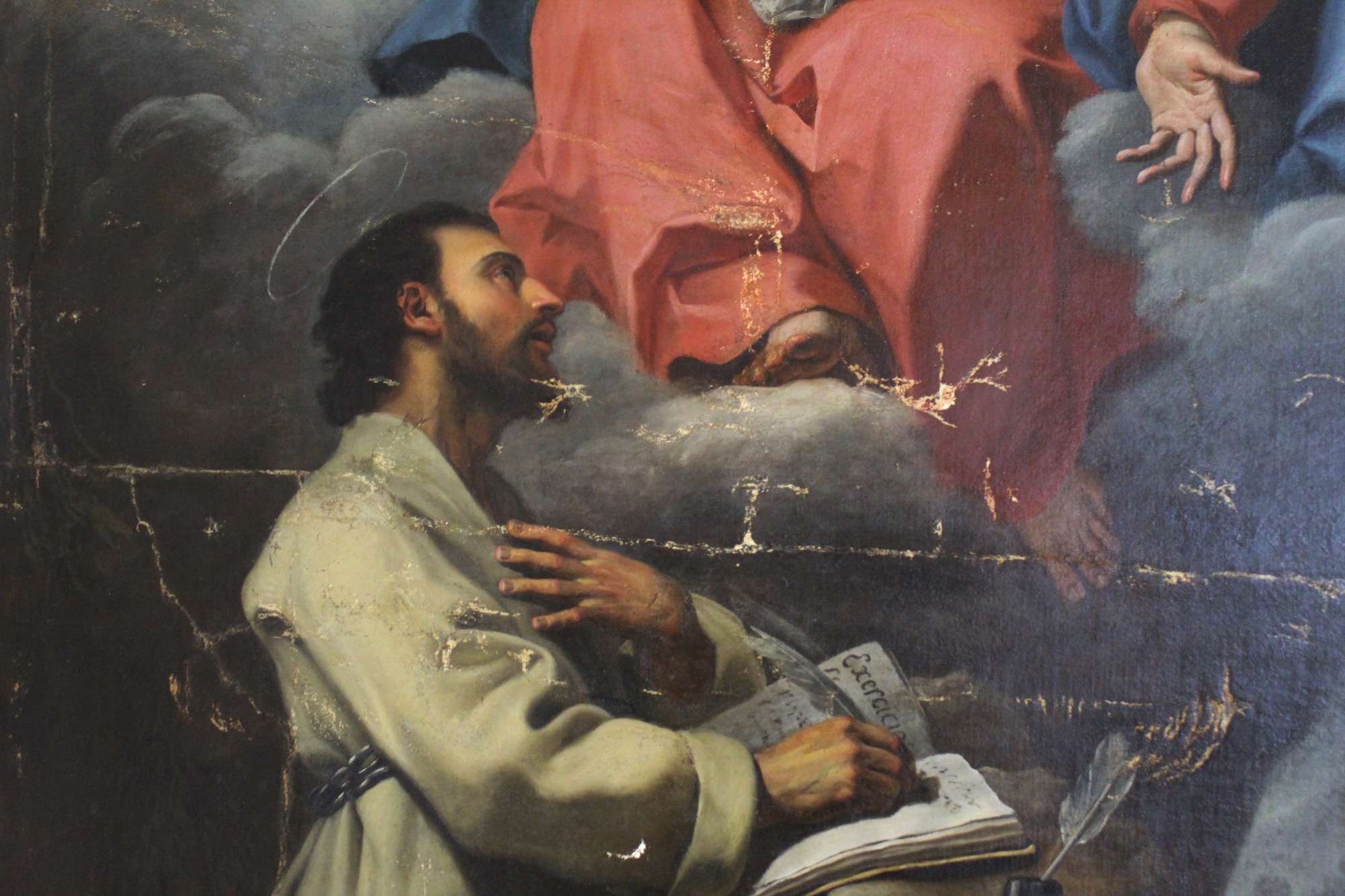
“Cleaning treatments included the removal of overpaint and gesso which were masking a network of canvas tears that the painting had endured over the years,” says Amy.
“The extensiveness and widespread distribution of the uncovered tears in the original canvas support was quite out of the norm and is usually encountered in paintings which would have suffered war damage. Nonetheless, further archival research needs to be conducted vis-à-vis the physical history of the painting.”
The lead conservator notes how previous restorers, in trying to conceal such extensive damage in the canvas support, applied gesso and paint onto the tears, which unfortunately greatly overlapped the original. Amy and her team removed these to uncover more of the original.
“The removal of past interventions also included the removal of a secondary canvas support which was attached to verso (the back side) of the original,” says Amy.
The removal of the old lining canvas and of the organic glue applied by past restorers to attach this secondary support enabled the conservators to mend tears and carry out canvas repairs using current techniques and methods.
Cut threads were re-woven under magnification and reinforced. The painting was also re-lined to fully stabilise the canvas support and then re-stretched on a newly manufactured stretcher frame which allowed the proper tensioning of the canvas painting.
Details showing the extensive damage and tears which the original canvas exhibited / Photo by ASC Conservation Centre Ltd
“Losses in the ground and paint layers were infilled and chromatically integrated following the ethics and principles of modern conservation,” Amy adds, whereby all materials and treatments applied are compatible with the original, reversible and re-treatable.
Preserving Casa Manresa’s spiritual ethos
The main altar painting is not the only one by Favray that adorns the Chapel – he produced four other paintings for the lateral altars and two oval paintings inspired by the spiritual ethos of Casa Manresa, focused on the themes of discernment and the good death.
The restored painting, which dates back to 1748, now radiates throughout the Chapel following its unveiling by Archbishop Charles Scicluna during the official inauguration and blessing of this historic building.
Founder & Conservation Director Amy Sciberras carrying out chromatic integration of infilled losses using reversible varnish colours / Photo by ASC Conservation Centre Ltd
“The 275th anniversary of the official inauguration and blessing of this historic building recalls not only the historical and spiritual significance of the complex,” Michael Pace Ross concludes, “but also its important contribution to Malta’s religious life across the centuries, together with its artistic and cultural value as part of the nation’s heritage.”
Main photo depicting details taken during the cleaning of varnish and overpaint / Photo by ASC Conservation Centre Ltd
Design Dispatch is a space for architecture and design buffs to delve into our coverage of current and upcoming design, product and interior trends, as well as the inspirational work of Malta’s architects and designers, from marvellous homes to striking public projects.