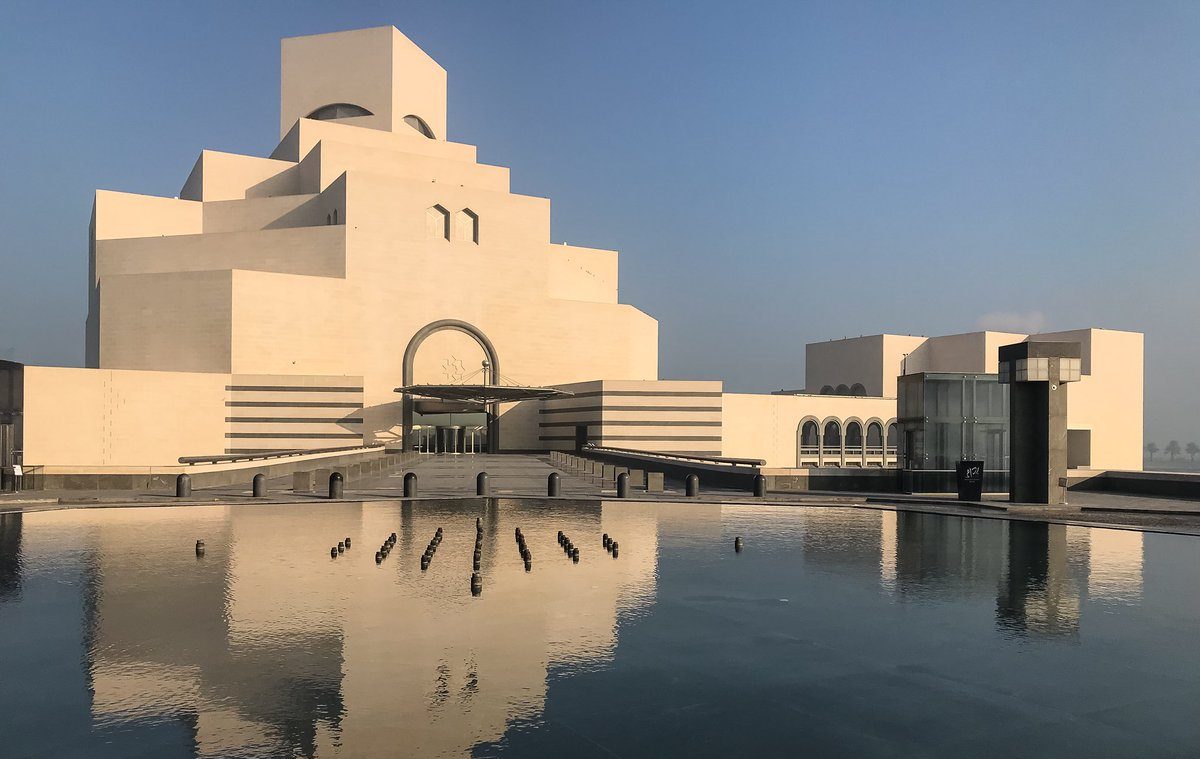
From the Museum of Islamic Art in Doha to New York City’s Guggenheim, the latter considered the pinnacle of American architect Frank Lloyd Wright’s decorated career, Design Dispatch explores these exceptional museums whose architecture is as expressive as the exhibits within their walls.
Guggenheim museum – New York City, US
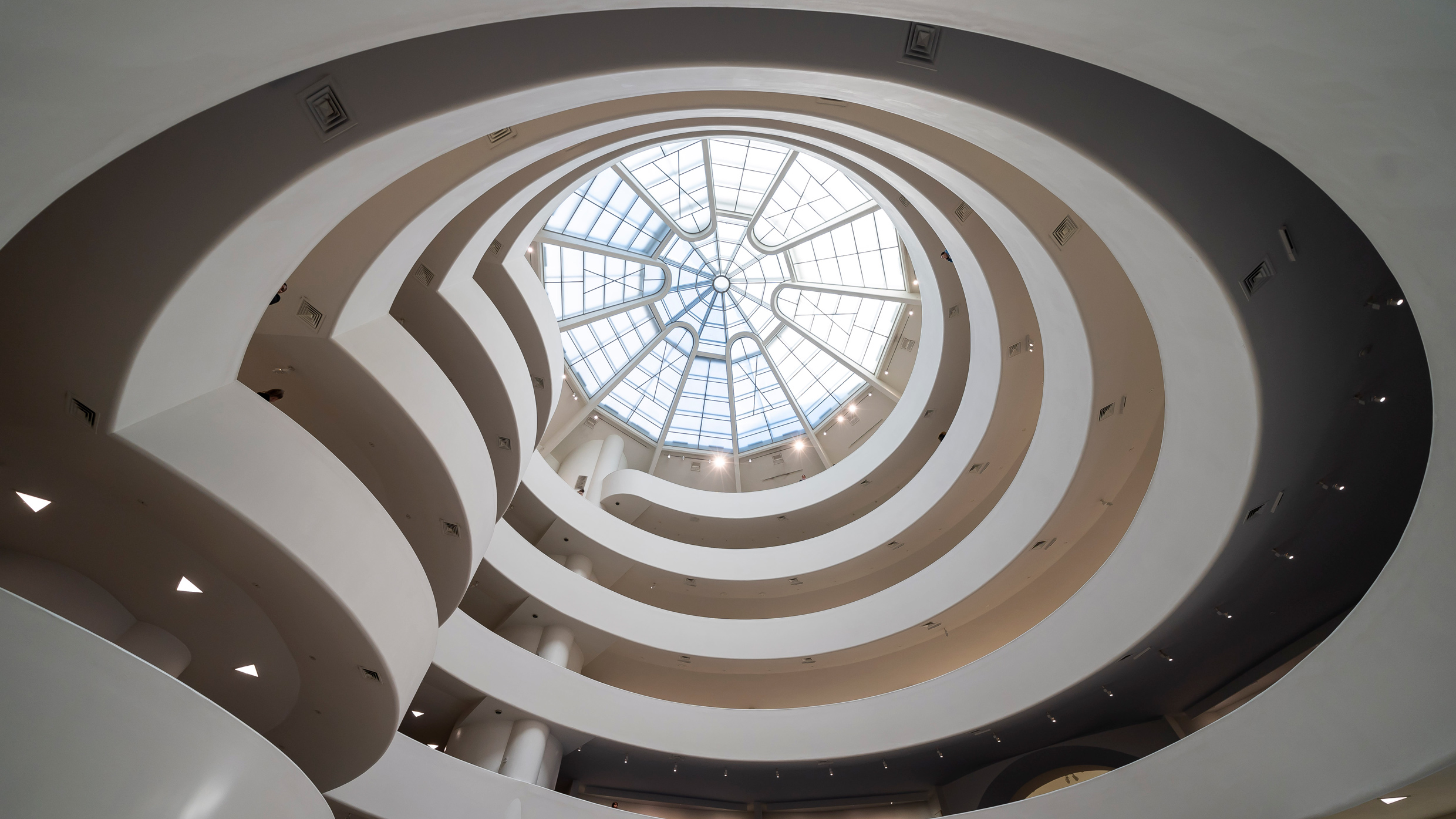
Designed by eminent American architect Frank Lloyd Wright, the Solomon R. Guggenheim Museum in New York City is considered by many as the pinnacle of his already influential career. The museum embodies forms found in nature into architecture – visitors are taken to the top of the building and proceed down on a gently-sloped ramp, with the galleries “divided like the membranes in citrus fruit, with self-contained yet interdependent sections,” the museum says.
Museum of Islamic Art – Doha, Qatar
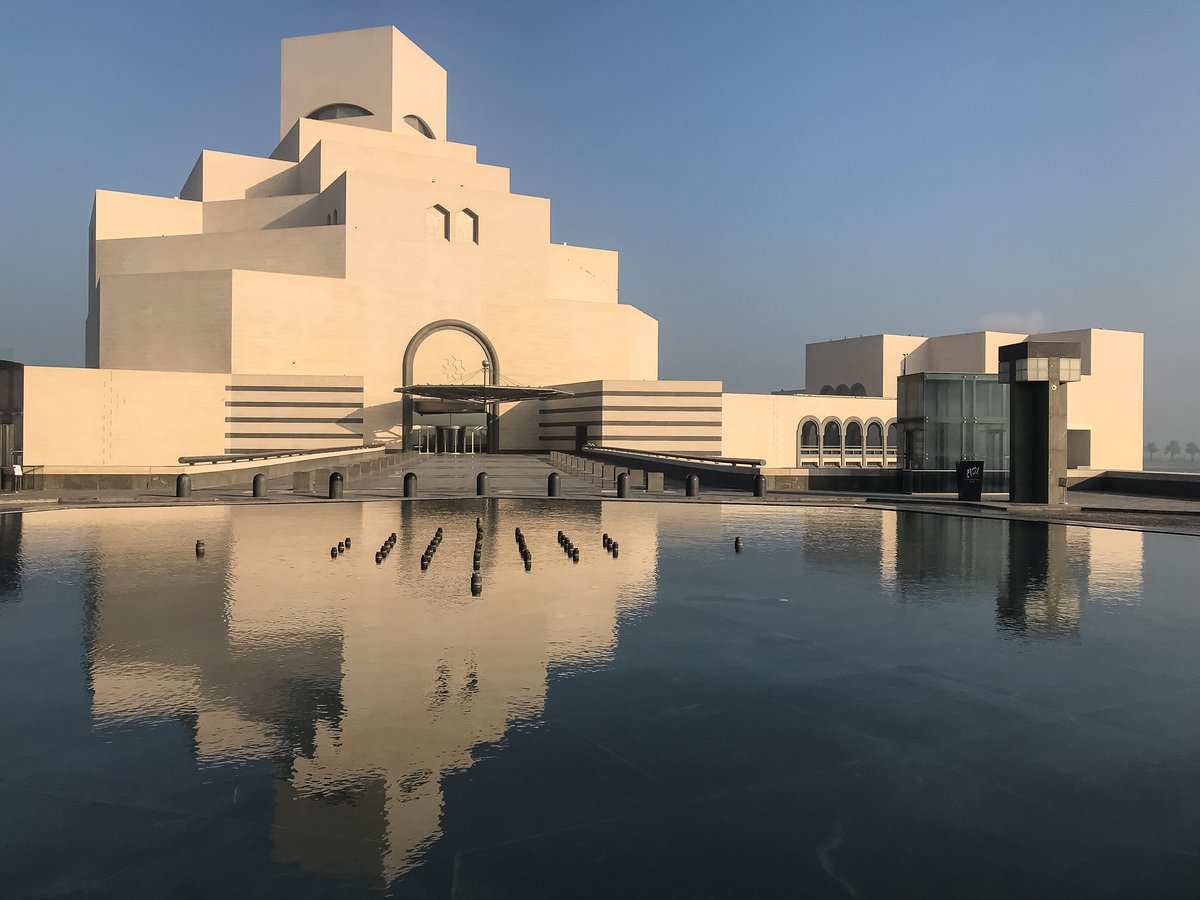
The five-storey building that houses the Museum of Islamic Art in Doha was designed by famed Chinese-American architect I.M Pei. A high domed atrium housed within a central tower rises through the main building, while the subtle cream-coloured limestone exterior captures the stunning changes in natural light throughout the day.
Len Lye Centre – Taranaki, New Zealand
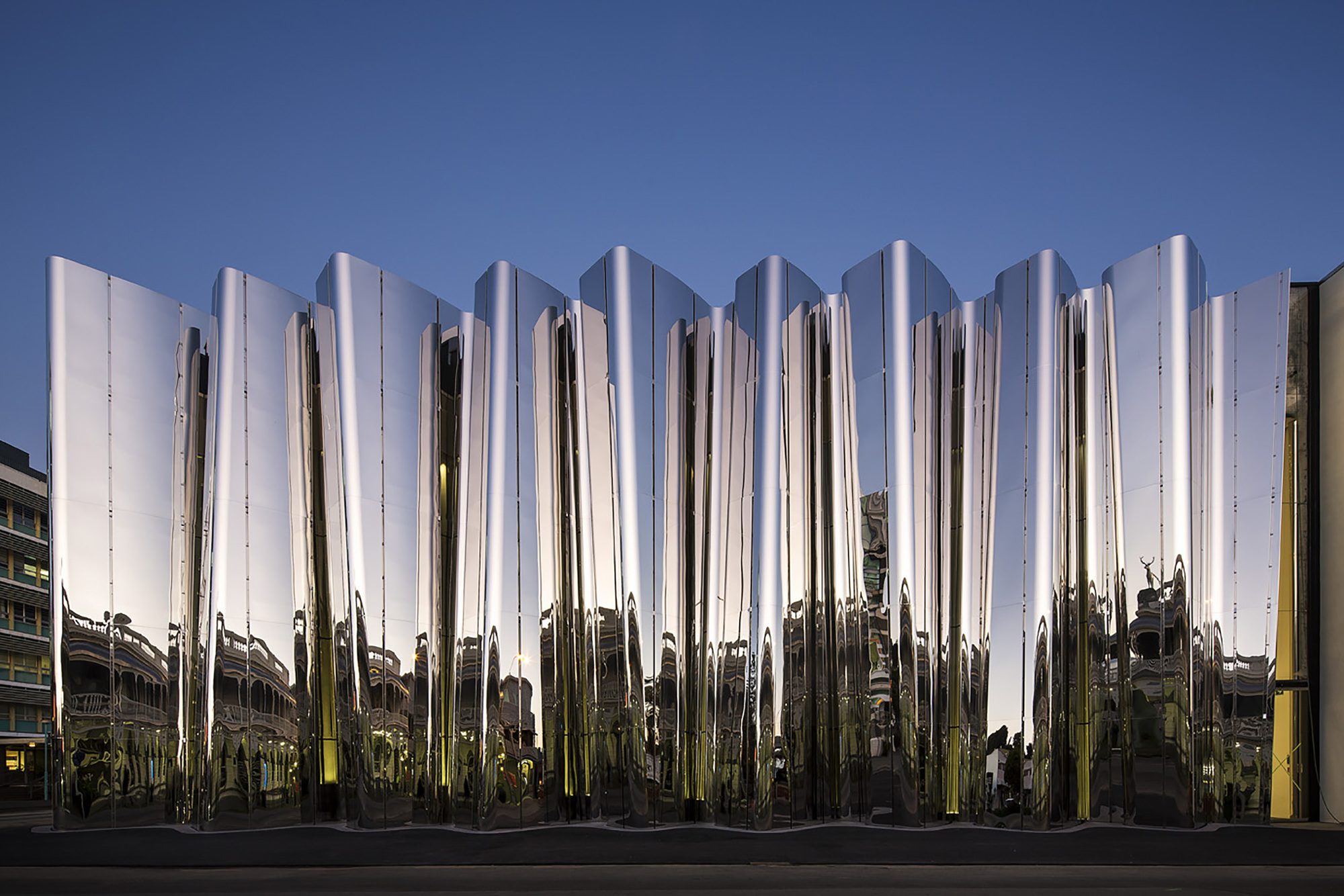
A shimmering, curved colonnade façade in stainless steel – produced locally in Taranaki – creates a captivating experience before setting foot inside the Len Lye Centre, which is the only museum in New Zealand dedicated to a single artist. Patterson Associates drew inspiration from Ancient Greek temples and Polynesian forms for the museum, which were a source of fascination for the artist.
National Museum of the 21st Century Arts – Rome, Italy
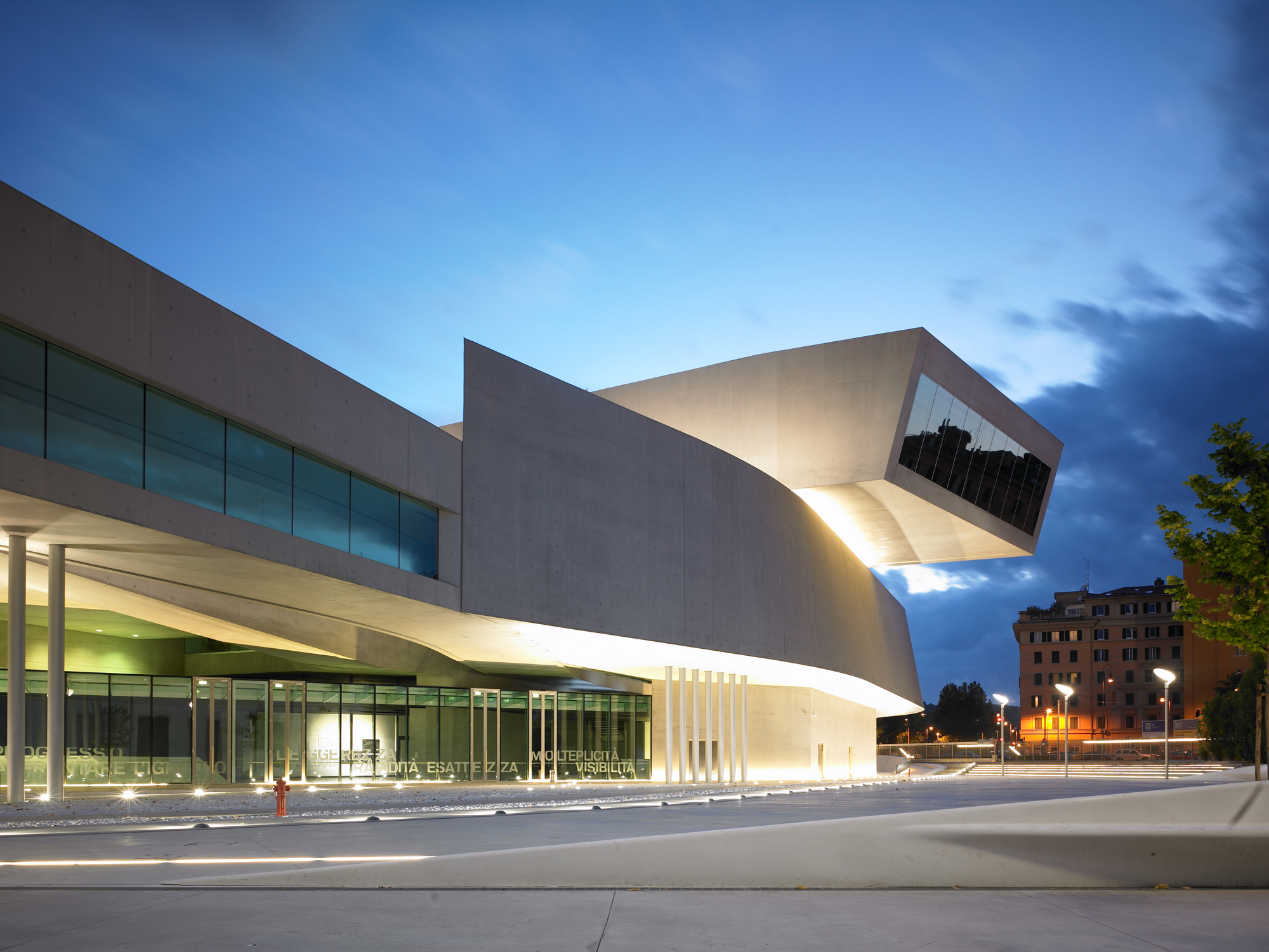
Widely referred to as Rome’s MAXXI, this museum is a national showcase of contemporary works of art and architecture, and another remarkable project by Zaha Hadid, whose concept was chosen by the Ministry for Cultural Heritage among 273 proposals. The building displays complex volumes, curving walls and a curious configuration that leaves visitors expecting the unexpected.
Biesbosch Museum – Werkendam, The Netherlands
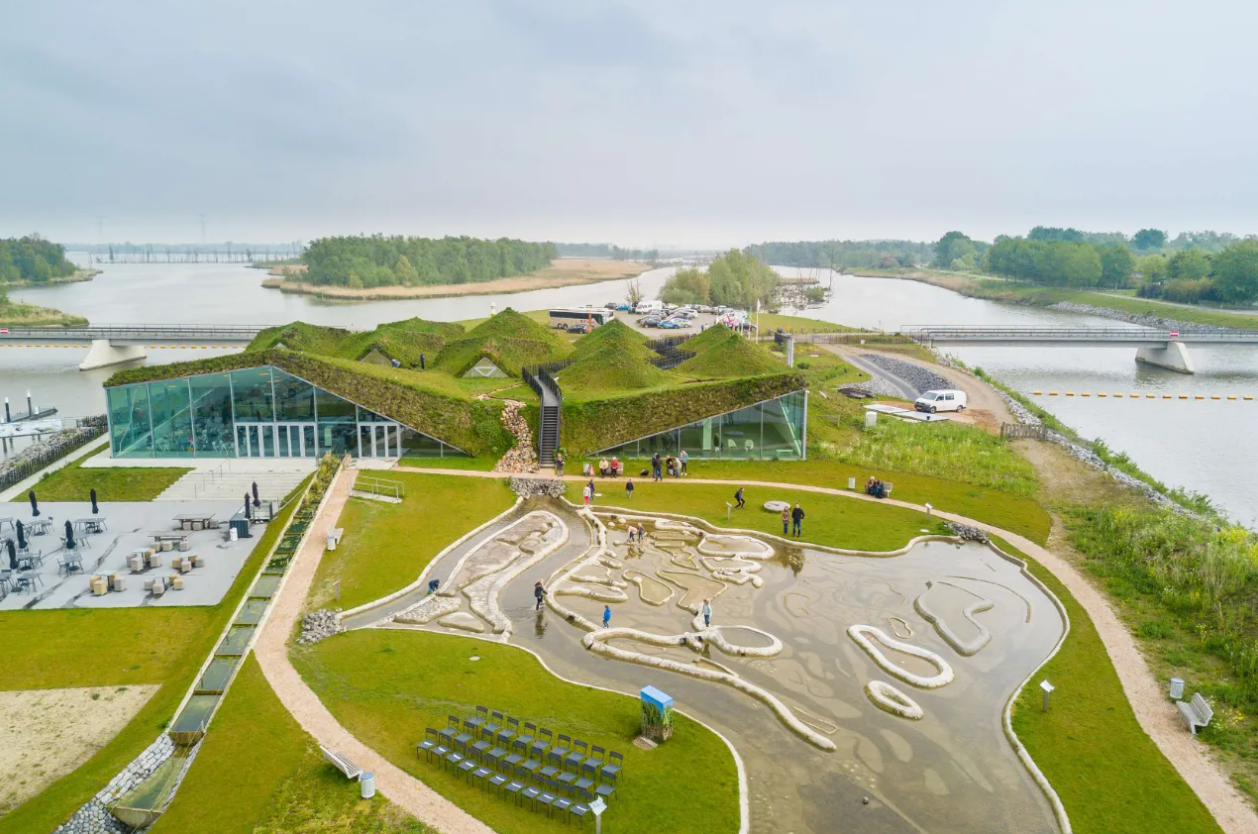
The Biesbosch Museum in Werkendam, The Netherlands, dedicated to the history of the country’s approach to and relationship with water, rises subtly from the ground covered in a grass blanket. The green museum includes a walkway on the roof that’s enveloped by low mounds, also covered in grass, leading to a look-out at one end, in an example of architecture that blends with its surroundings.


Museum of Fire – Zory, Poland
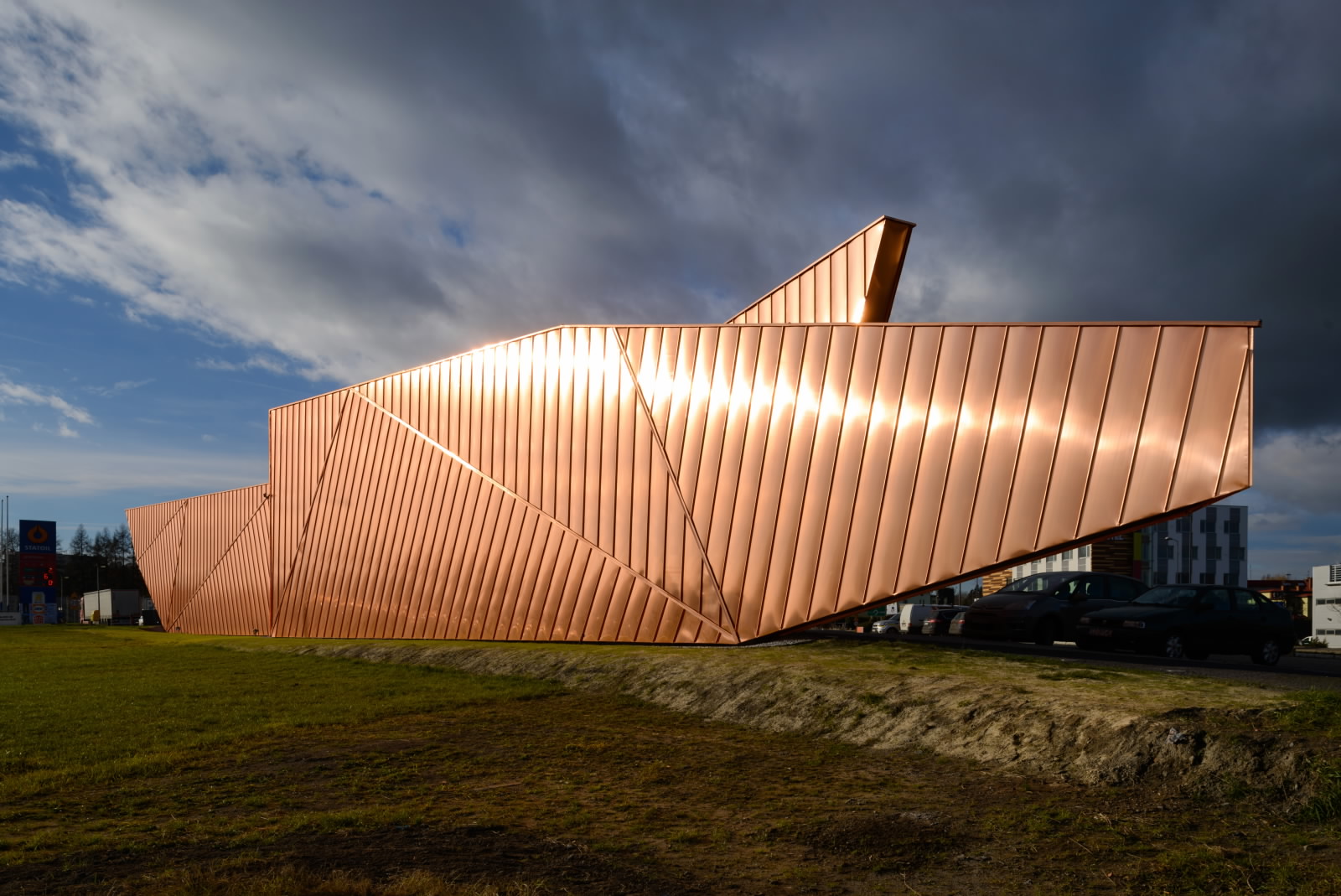
Copper plates formed like shards clad the Museum of Fire in Zory, Poland, beneath which is a shell of reinforced concrete. The museum’s design is a tribute to the city’s origins – a stretch of forest was burnt to the ground to give rise to the medieval city and its subsequent development in the 12th century. The ridged plates, especially when lit up at night, bring bright orange flames to mind.
Museo Internacional del Barroco – Puebla, Mexico
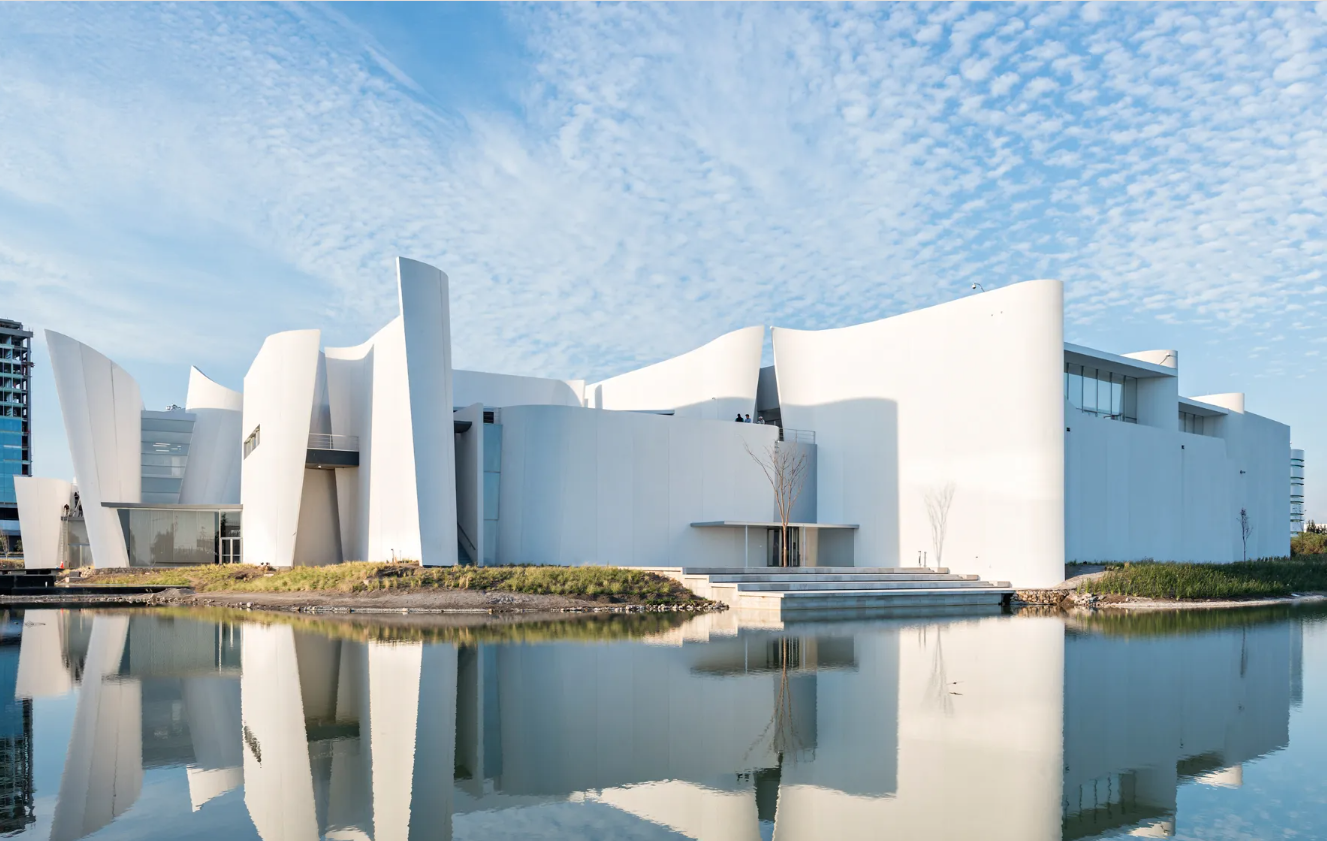
As if to imitate the exaggerated and flamboyant nature of the Baroque era, this museum in Mexico, designed by Japanese architect Toyo Ito, features curled white concrete walls and a crescent-shaped pond that envelopes the building. Its modern appearance is in contrast with its contents, which includes examples of Baroque art across several disciplines, including music, fashion and literature.
Museum of Memory – Granada, Spain

Spanish architect Alberto Campo Baeza designed the Museum of Memory in Granada, which is arranged around a central elliptical courtyard, the dimensions of which are the same as the courtyard of the Palace of Charles V within Granada’s jewel, the Alhambra. A series of circular ramps connect three levels to create, in Baeza’s words, an “interesting spatial tension”.
Bundeswehr Military History Museum – Dresden, Germany
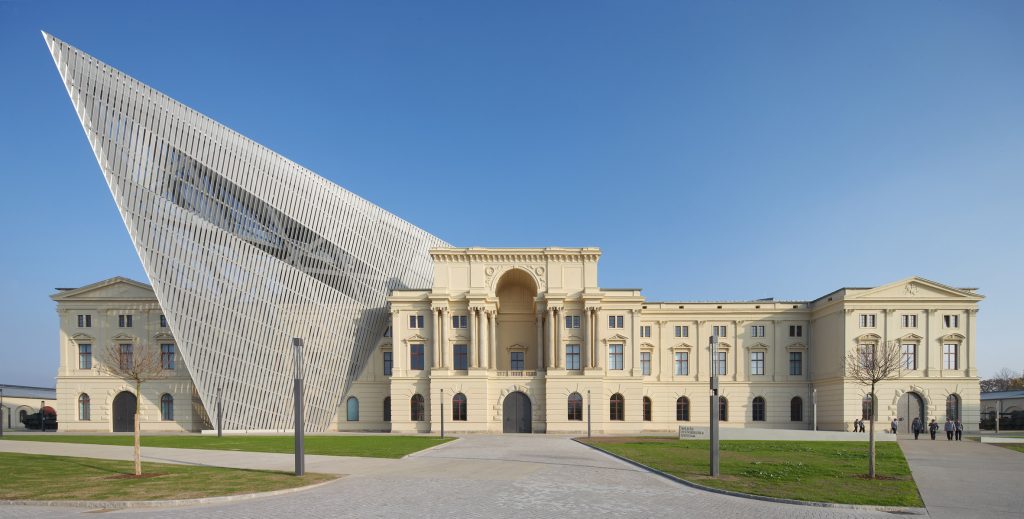
American architect Daniel Libeskind designed an extension to the Bundeswehr Museum of Military History in Dresden to complement the main building, an arsenal built in the 1870s. The museum’s subject is reflected in its architecture as well as its exhibits – the extension, which is shaped like a wedge, cuts through the old building, producing a play of light and shade in a symbolic reflection of Germany’s eventful military history.
Niterói Contemporary Art Museum – Rio de Janeiro, Brazil
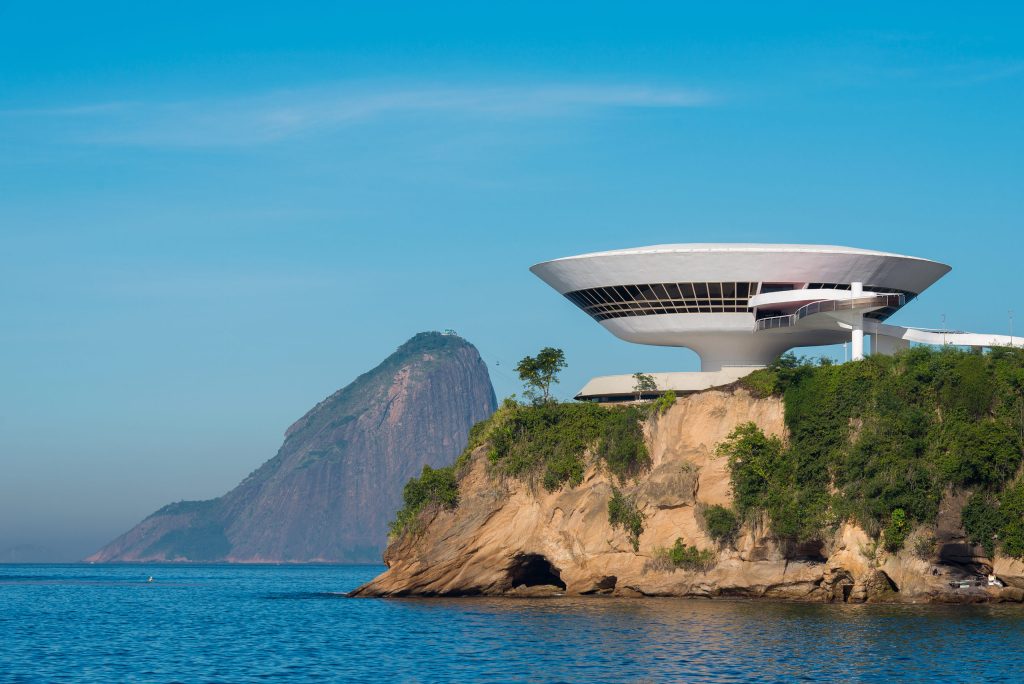
With its saucer-shaped structure and cliffside location, the Niterói Contemporary Art Museum, also know as the MAC, frames the stunning panoramic views of the Brazilian city. Designed by architect Oscar Niemeyer, the museum, which towers at sixteen metres and is accessed by a swirling ramp, houses a broad collection of over 1,500 works of contemporary art across four storeys.
If you enjoyed this article, you might also be interested in: London’s Museum of Architecture hosts a city imagined by architects made from gingerbread