Widely recognised for her futuristic designs that feature stunning curves, geometric shapes and unconventional forms, British-Iraqi architect Zaha Hadid left a legacy of architectural innovations over the course of her career, which came to an untimely end in 2016.
With Malta’s own Zaha Hadid design – Mercury Towers in St Julian’s – set to start welcoming visitors in the coming weeks, Design Dispatch takes a look at some of the architect’s most iconic international projects that earned her the title “Queen of the Curve”.
Guangzhou Opera House, China
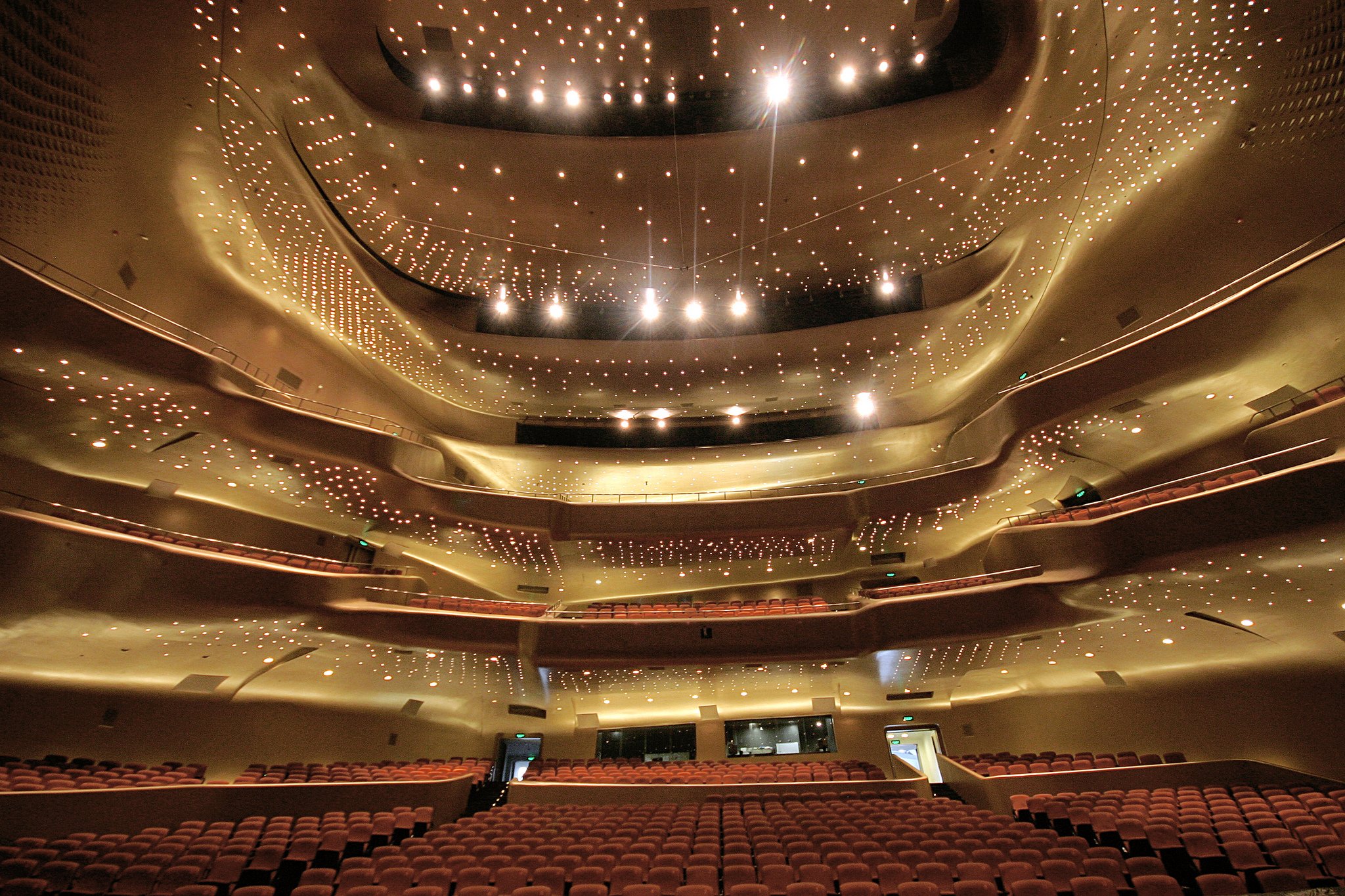
Overlooking Pearl River, the Guangzhou Opera House was designed to blend in with its waterside surroundings. This was Zaha Hadid’s first project in China, completed in 2010, and its contoured profile and flowing glass structure are among the many aspects of its impressive design that make it an architectural work of art.
Heydar Aliyev Centre, Azerbaijan

Breaking away from the rigid Soviet-era architecture prevalent in Baku, the Heydar Aliyev cultural centre brought lightness and grace to Azerbaijan’s capital through flowing curves that ripple through the expansive square, described by the firm as a building that aspires to “express the sensibilities of Azeri culture. And the optimism of a nation.” This project went on to win the London Design Museum’s Design of the Year award in 2014.
Daxing International Airport, China
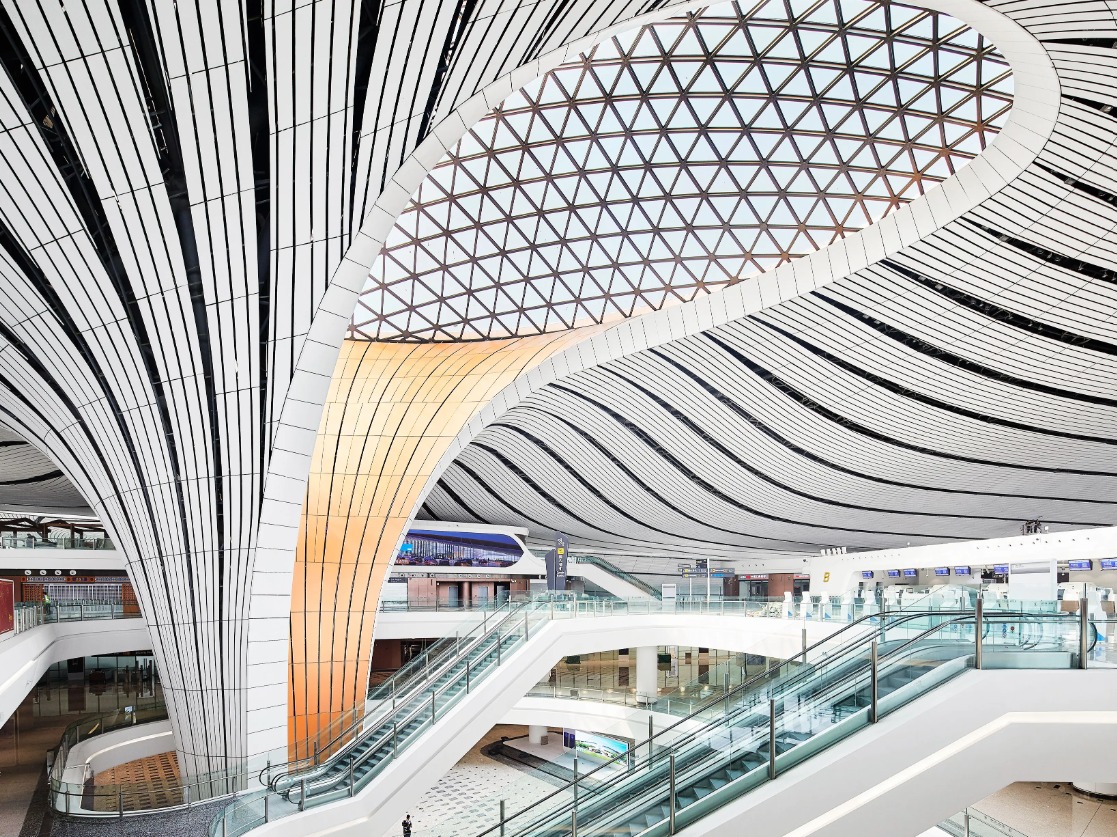
Its unique shape earned it the nickname ‘starfish’ – and a mammoth one at that. The Daxing International Airport in Beijing has five concourses that link to a main hall, designed in such a way that reportedly enables anyone to reach the furthest gate at the end of a concourse in eight minutes. The sprawling airport was designed to cater for future expansion, where passengers are expected to increase to 72 million per year by 2025.
Riverside Museum, Scotland
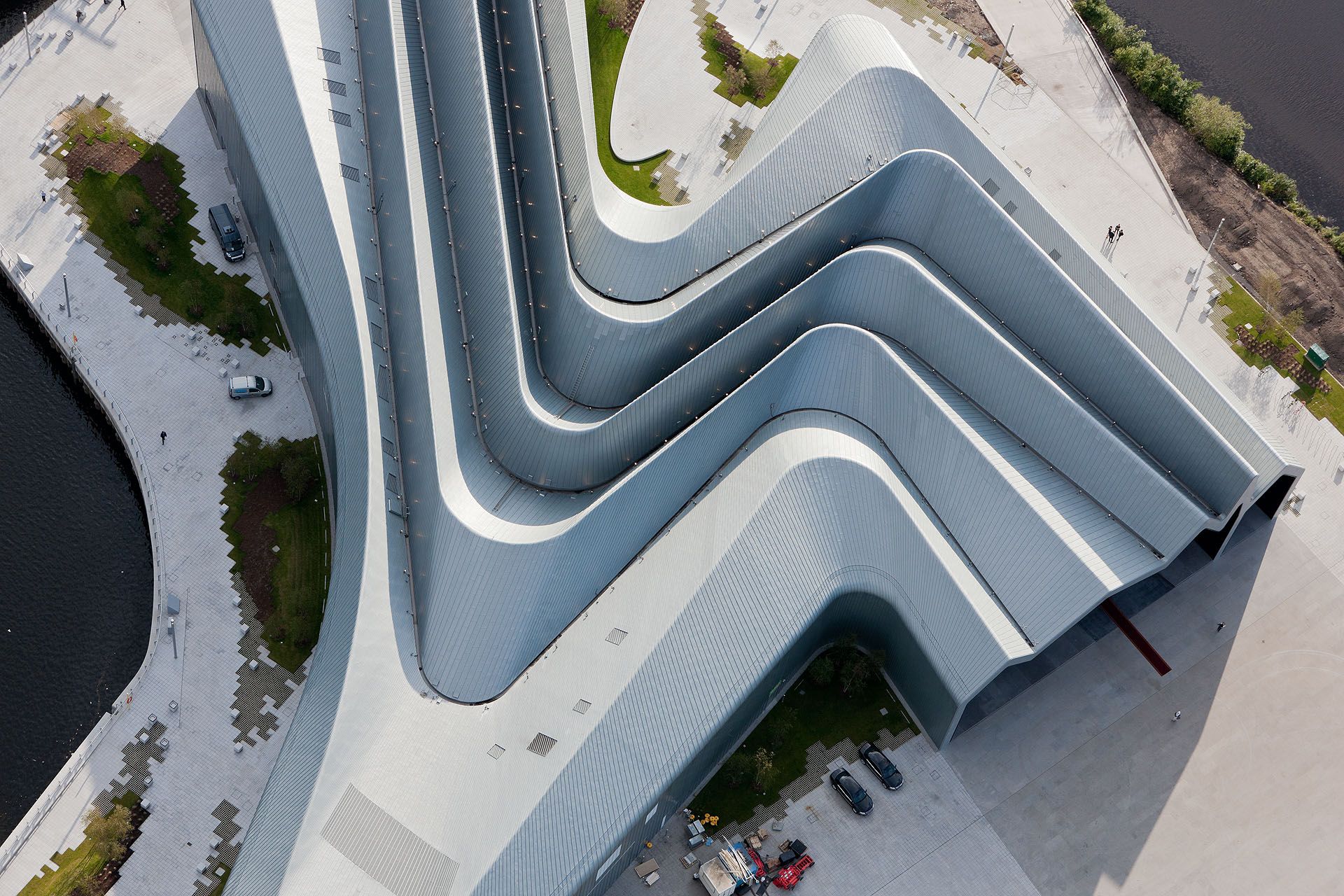
Built on the site of an old shipyard, the Riverside Museum in Glasgow is Zaha Hadid’s first major project in Britain, which won the 2013 European Museum of the Year award. The Z-shaped building has a zinc-clad roof that towers approximately 36 metres above the river Clyde. It forms the front of a series of ridges that zigzag through the top of the museum, drawing connections between the city and its location by the water.
Al Janoub stadium, Qatar
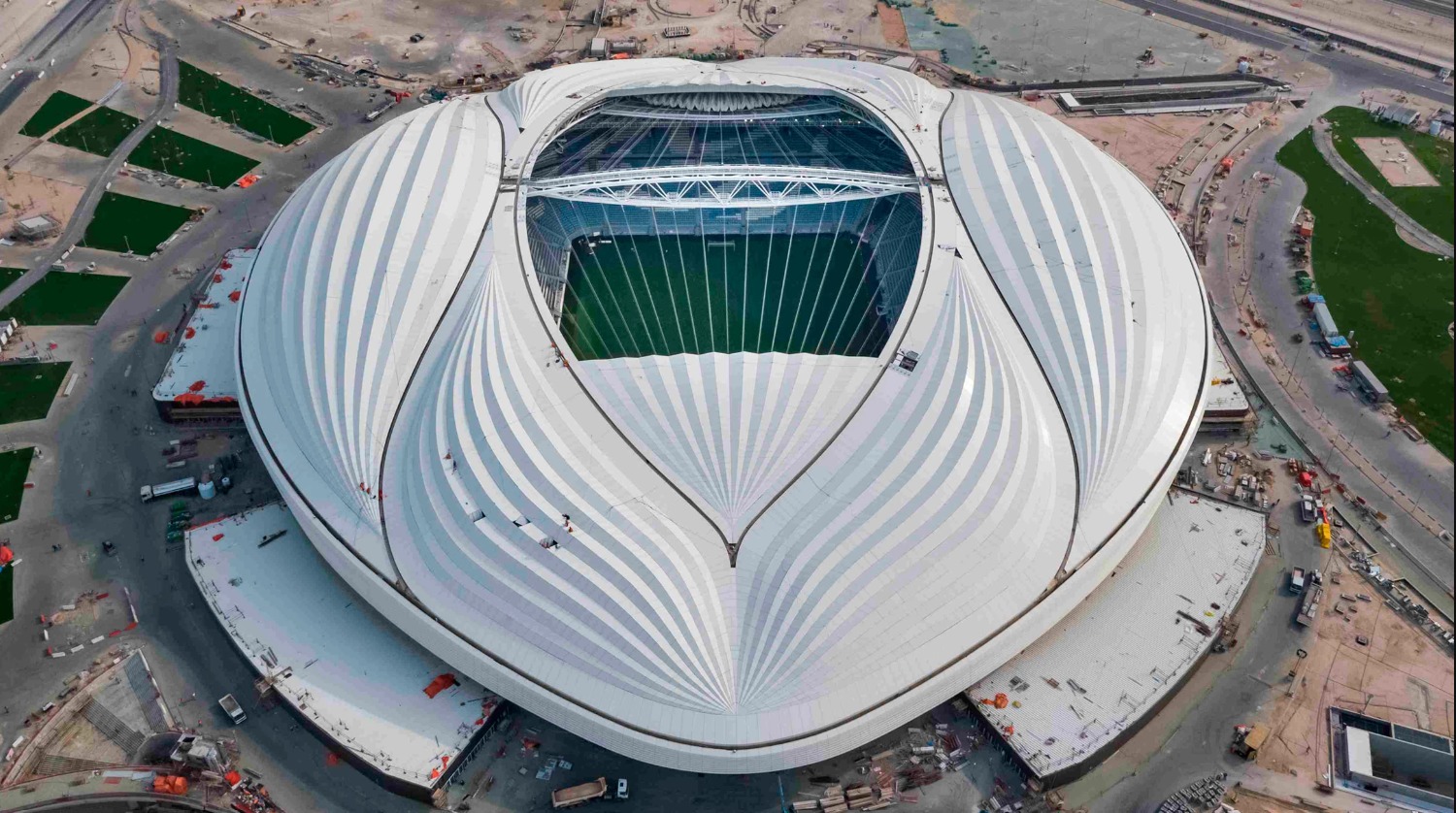
Designed as a 40,000-seat football stadium for the 2022 World Cup, the Al Janoub stadium drew inspiration from the maritime traditions of its home city, Al Wakrah, specifically the region’s traditional boat, called a dhow. It features a retractable roof clad with pleated fabric and cables that complements the rest of the stadium, which resembles a sail when deployed over the open roof.
Main photo: Iwan Baan / Hufton + Crow