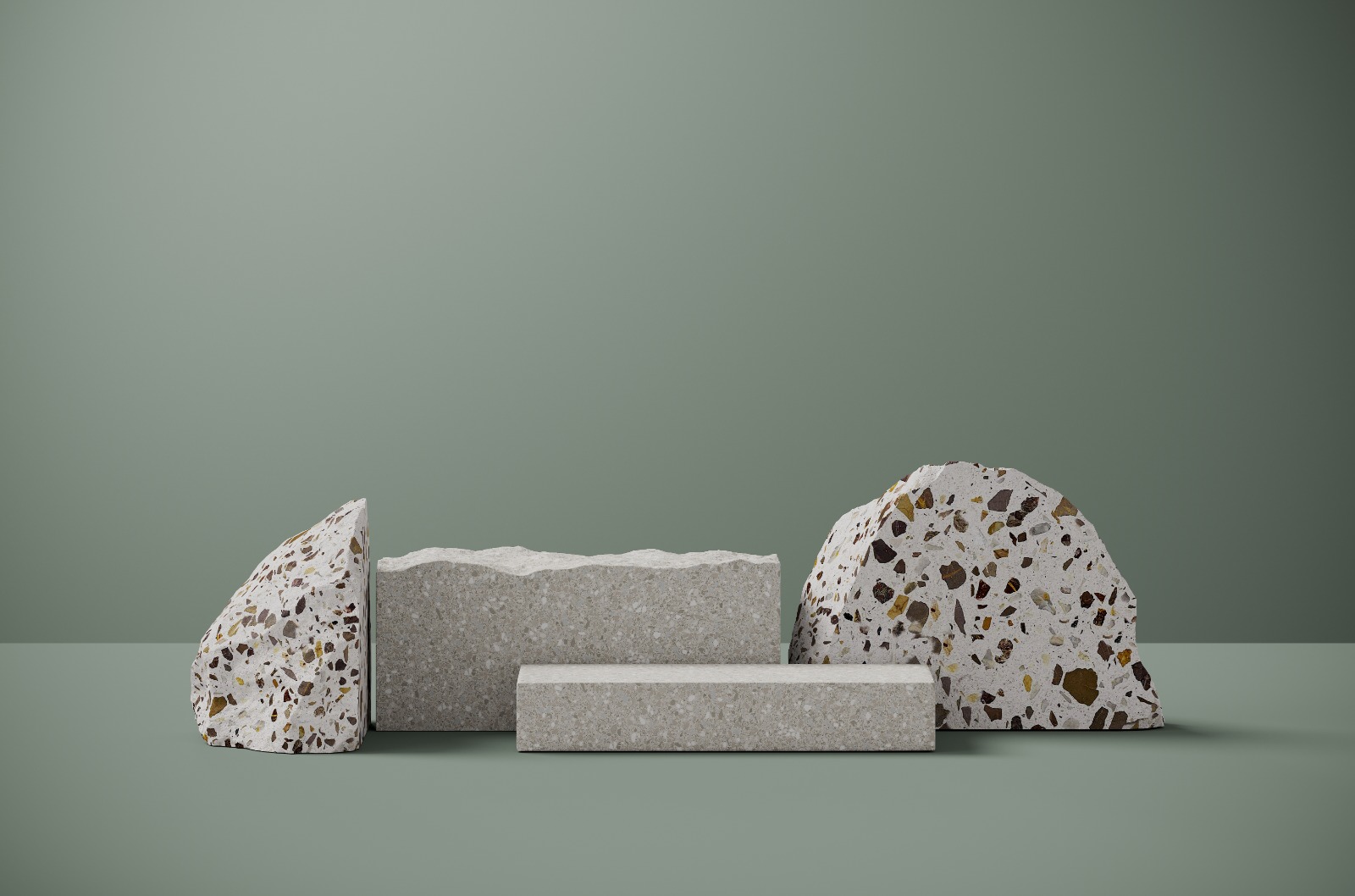
There’s a good chance that, embedded somewhere in your memory is a recollection that features the hypnotic, speckled flooring that was ever present in our childhood homes and public spaces. With its enduring and resistant qualities, versatility and aesthetic appeal, there’s no reason why terrazzo should really ever fall out of favour.
From its earliest known application – some 500 years ago in Italy to make use of discarded marble chips – to today, however, the appeal of this timeless material has changed.
Terrazzo has moved out from under our feet to many places in our home; as a worktop and splashguard in the kitchen, a surface for the bathroom vanity, coffee tables, coasters and all kinds of home decor.
For Neal Vella, architect and founder of Form Matters, a design-led brand that creates bespoke objects predominantly with terrazzo, acknowledges a resurgence in the level of interest in this material in recent years.
“I would say that the main reason for this shift is the introduction of new materials and new processes in the production of terrazzo, which allowed artisans and makers to explore a centuries old finish in a new way.”
“Furthermore, I think that designers and artisans are constantly pushing the boundaries, exploring the different ways in which this material can be used,” says Neal.
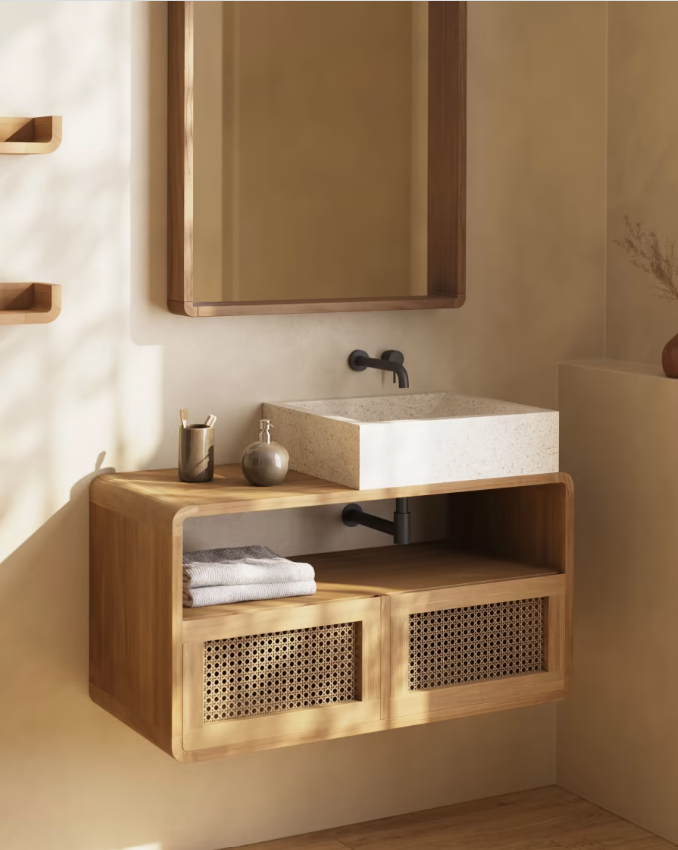
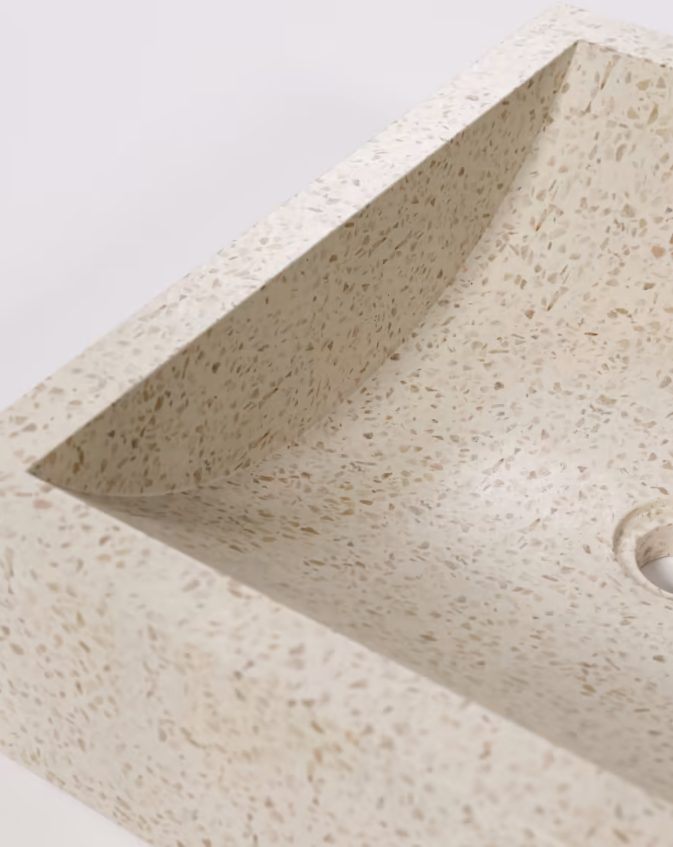
While its current popularity could be perceived as another fleeting trend, Neal says “I believe that as a material and a finish it is a nostalgia-driven trend, evoking a sense of mid-century modern design, giving a unique pattern to its objects.”
“With its versatility, ability to be highly customised and the introduction of new styles and new colours, terrazzo has become a contemporary material which is here to stay.”
From an aesthetic standpoint, terrazzo is a unique material. “You rarely get two identical objects from the same recipe. There are always variations in colour and pattern arrangements, making each object exclusive. There are also a number of finishes which can be applied, giving the customer versatility and choice.”
Functionally speaking, the material is highly durable and long-lasting, can be repaired and also renewed. “Terrazzo can be considered sustainable, due to its use of recycled materials such as post-consumer glass chips or crushed stone and marble waste,” says Neal.
Through Form Matters, which he founded in 2019, Neal is able to merge his appreciation for architecture with his passion for quality product design.
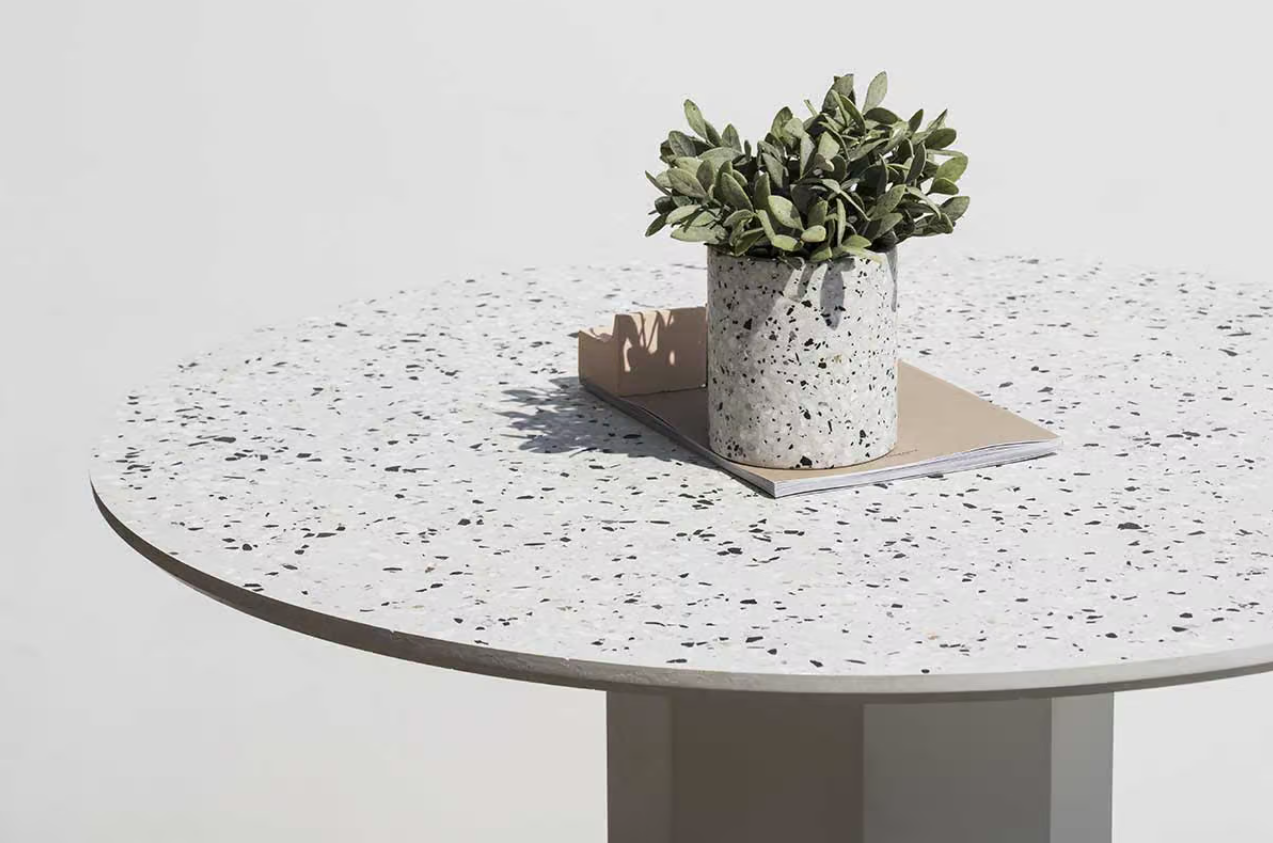
“As an architect, I’ve always had an appreciation towards our architectural heritage and the different movements, styles and materials that influenced our built fabric. I would say my interest in terrazzo started there, looking at mid-century facades and interiors and noticing this prominent material that for a period, characterised the homes of many of our grandparents and great grandparents.”
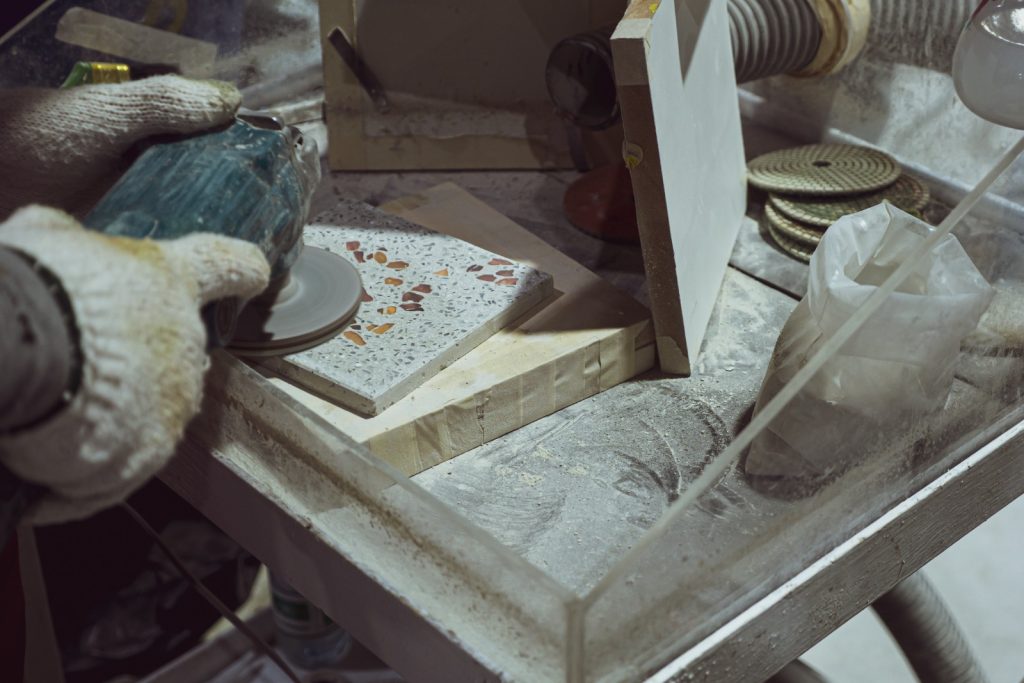
Coupled with this, “I love how flexible terrazzo is and how unpredictable it is, always having that sense of expectancy and surprise from the moment you cast a product to the moment you finish it. That said, working with this material is extremely labour intensive. Exposing the aggregate and getting a proper finish takes a lot of time and patience.”
Despite this, he gets a lot of satisfaction from working with the material, but perhaps more so from the thinking process that goes into making every piece.
“This includes coming up with a new product, thinking about the mould and how the object will be extracted from it, thinking about the finishing process, how to ensure that the form proposed and the predicted finish can be achieved, designing the different colour combinations and experimenting until we achieve the desired outcome.”
If you enjoyed this article, you might also be interested in: Six contemporary bathroom tile collections defined by their timeless appeal