From Valletta’s well-known Upper and Lower Barrakka Gardens to the private Palazzo Madonna delle Grazie in Zebbug, a series of Maltese gardens often featuring significant architectural details formed the basis of architect and artist Jade Zammit’s latest exhibition, which came to be in a serendipitous kind of way.
In this interview with Design Dispatch, Jade shares that she began researching and documenting foliage across the island as part of the process leading up to her debut solo exhibition in 2024.
“Amidst the rapid loss of nature in my beloved home country, I soon found solace and inspiration in the enduring beauty of Malta’s last remaining gardens. As I began building a collection of references, it became clear that these lush, green spaces, with their unique character and significance, deserved to be celebrated. This was the start of a year-long project titled What Remains.”


The 13 locations that made it to the exhibition walls through intricate ink drawings on paper were chosen following a meticulous selection process. “My focus was on showcasing gardens with compelling narratives. The criteria for choosing these places were rooted in a deep appreciation for historical richness, regardless of whether they were public or private.”
“Each of the chosen gardens possesses layers of raw greenery, adding to their unique appeal and distinguishing them from ones in a more urban context. The intention behind this careful selection was to provide viewers with a glimpse into gardens that not only have historical significance but also serve or have served as sanctuaries for the families that frequent them,” she explains.
The presence of historical monuments in Jade’s drawings, such as the neoclassical memorial dedicated to Sir Alexander Ball in the Lower Barrakka Gardens and the iconic sculpted sentry box at Gardjola Gardens, as well as time-worn architectural details ranging from arches and columns to balustrades and limestone steps, were not accidental.
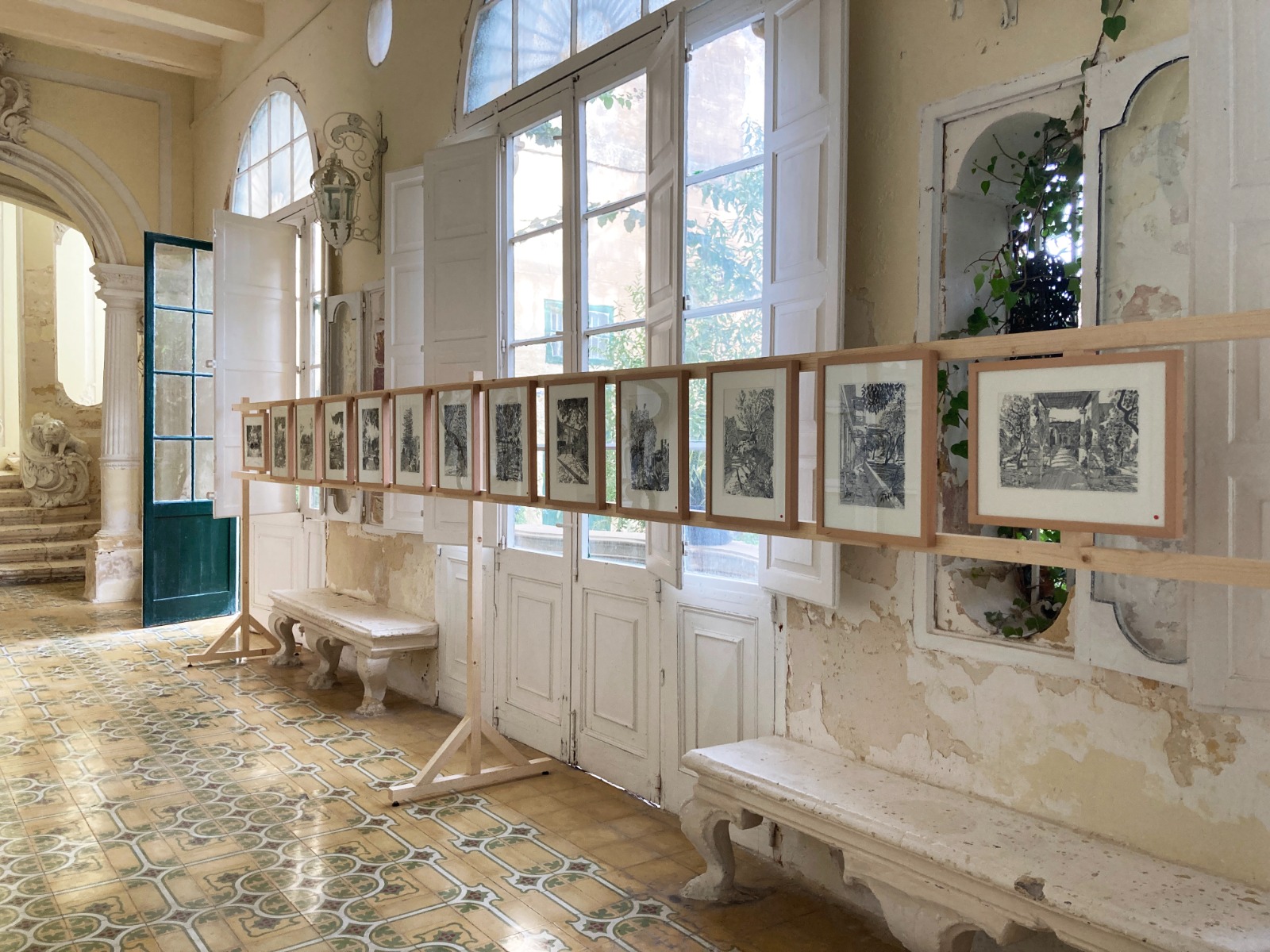
“As an architect, the inclusion of historical architectural elements in the drawings became a significant consideration. While it wasn’t mandatory to integrate architectural features, I quickly recognised that these landmarks offered valuable context to the work,” she explains.


“As world-renowned architect Rem Koolhaas says, ‘Great architecture creates a sense of place and identity, connecting people to their surroundings’. I found, therefore, that introducing distinguishable elements enhanced not only the artworks’ aesthetic value but it also made the work more relatable, providing the viewers with a deeper understanding and connection to the subject matter.”

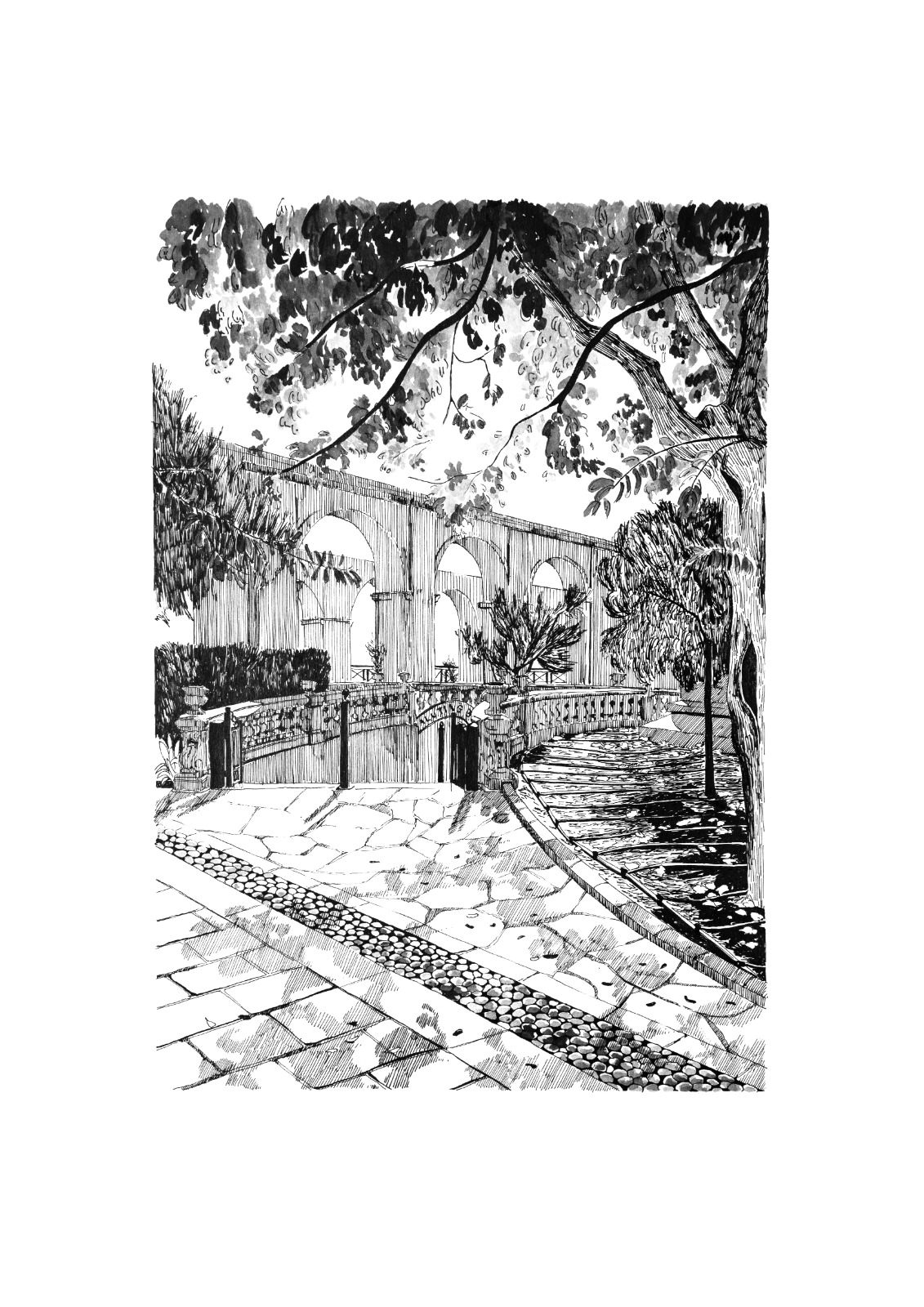
For every drawing, Jade visited the site numerous times to experience and capture the best light conditions, then moving to a controlled studio environment to work on each piece, mainly due to the time-consuming nature of each artwork as well as the potential for ink spills.
“Contrasts of light and shadow are highly evident in most of my work, and in What Remains too, I used shadow patterns to texturise and add depth to the drawings,” the artist explains. “The actual creation of each piece begins with a faint pencil outline, blocking in the interplay of light and shadow. From there, I move on to the pen, where I carefully build upon the foundation laid out in the initial sketch, drawing lines and details as I go along.”
For this body of works, Jade opted for a traditional artistic approach in order to achieve a high level of detail, which she describes as “crucial” for this particular subject matter, and to execute her vision in a single colour, ink was her medium of choice.

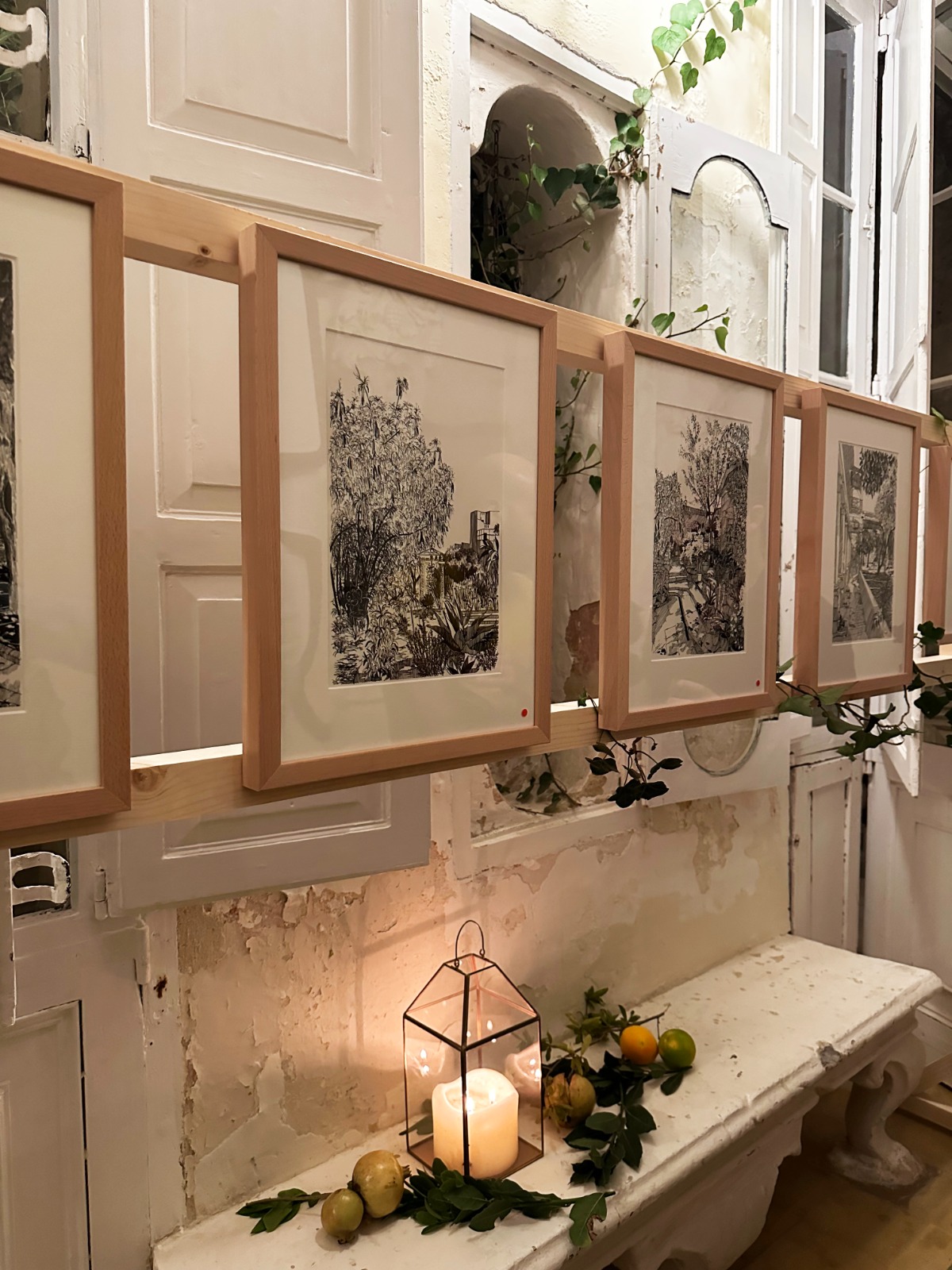
The choice might have been a subconscious one – “I suppose because this serves as a bridge between my architectural background and my artistic expression. Alongside pencil, ink serves as a medium that resonates with the monochromatic, hand-drawn architectural drawings that have influenced my career. Additionally, it allows a meticulous rendition, contrary to alternative media which I am unable to control in an equally delicate manner.”
While each unrefined piece of paradise she frequented holds its own unique significance to the artist, “some carrying more personal sentiments than others”, the depiction of Palazzo Madonna delle Grazie is singled out as her favourite piece, where the narrative is defined by the solitary tree dominating the garden, casting a heavy shadow on the walls of the 18th-century palazzo in Zebbug, Malta, she explains.
“My fondness for this drawing, however, extends beyond the admiration of its visual composition. It represents a significant moment and a personal achievement in my career as it is within this magnificent property that I had the privilege of launching this series of drawings,” says Jade. “The drawing therefore serves as a poignant reminder of a wonderful and intimate evening filled with celebration, surrounded by the warmth of family and friends.”
Main photo: Daphne Bugeja