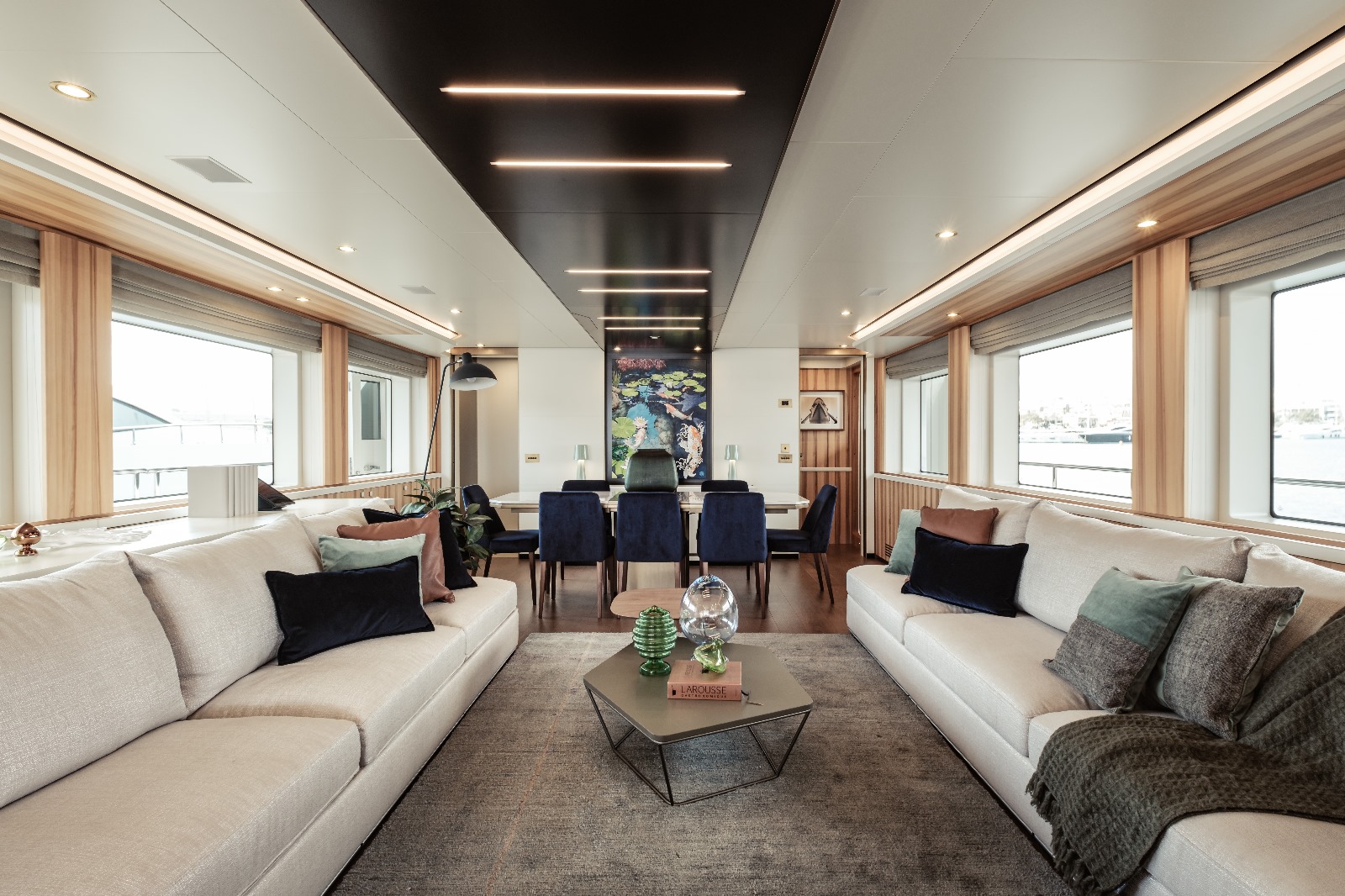
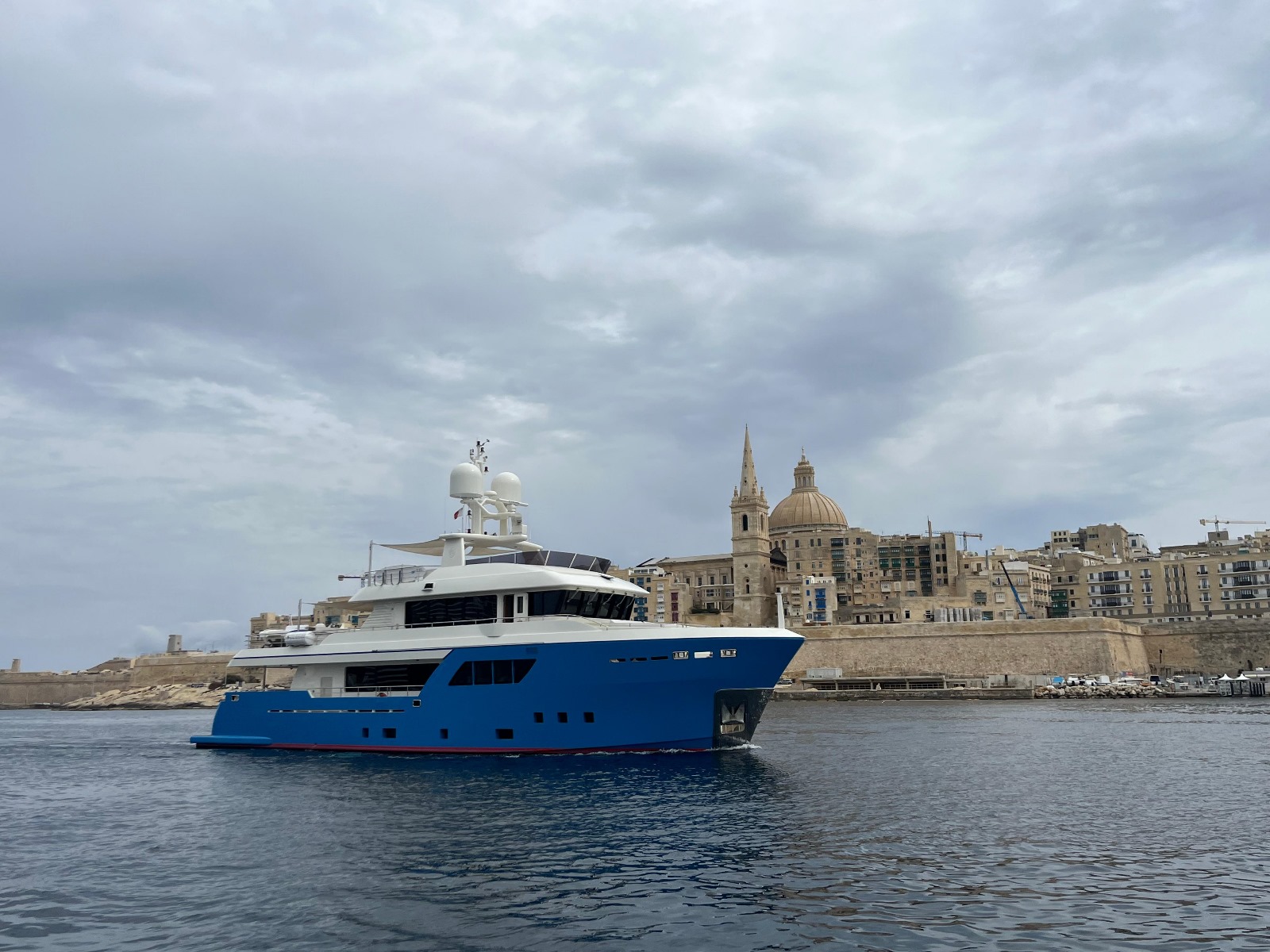
Commissioned by an experienced yacht owner who was after a compact vessel to explore far-flung corners of the globe, the M/Y ACALA could be described as a deceiving yacht – from the outside, it appears robust and ready for duty, but its interiors, designed by Mexican designer and founder of his eponymous studio, Simon Hamui, are sublime.
With its owners looking to sell, the yacht was in need of refurnishing, which is where Sara Brincat, Head of Interior Design at form.draw – an award-winning architecture and interior design practice that collaborates with furniture company Form – came in, eager to take on the challenge.
“We are currently designing the offices of AG Advisory, who provide advisory and consultancy services in various aspects of the yacht/superyacht industry. The founder recommended our services and we began conversations to get this project going,” says Sara.
Cleared of loose furniture by its current owners, the brief was to furnish and decorate the interiors, highlighting its existing features to appeal to the potential buyer.
“Our vision was to create an inviting, depersonalised space. With my background in 5-star hospitality design specialising in FF&E (furniture, fixtures and equipment), this was super fun and exciting, especially as it comes with its own challenges of transporting high-end furniture and furnishings via a gangplank.”
Sara was presented with an already discerningly-designed interior featuring liquidambar timber and hand-stitched white leather cabinetry throughout, presenting a neutral and sophisticated foundation for the yacht’s various owners to work with.
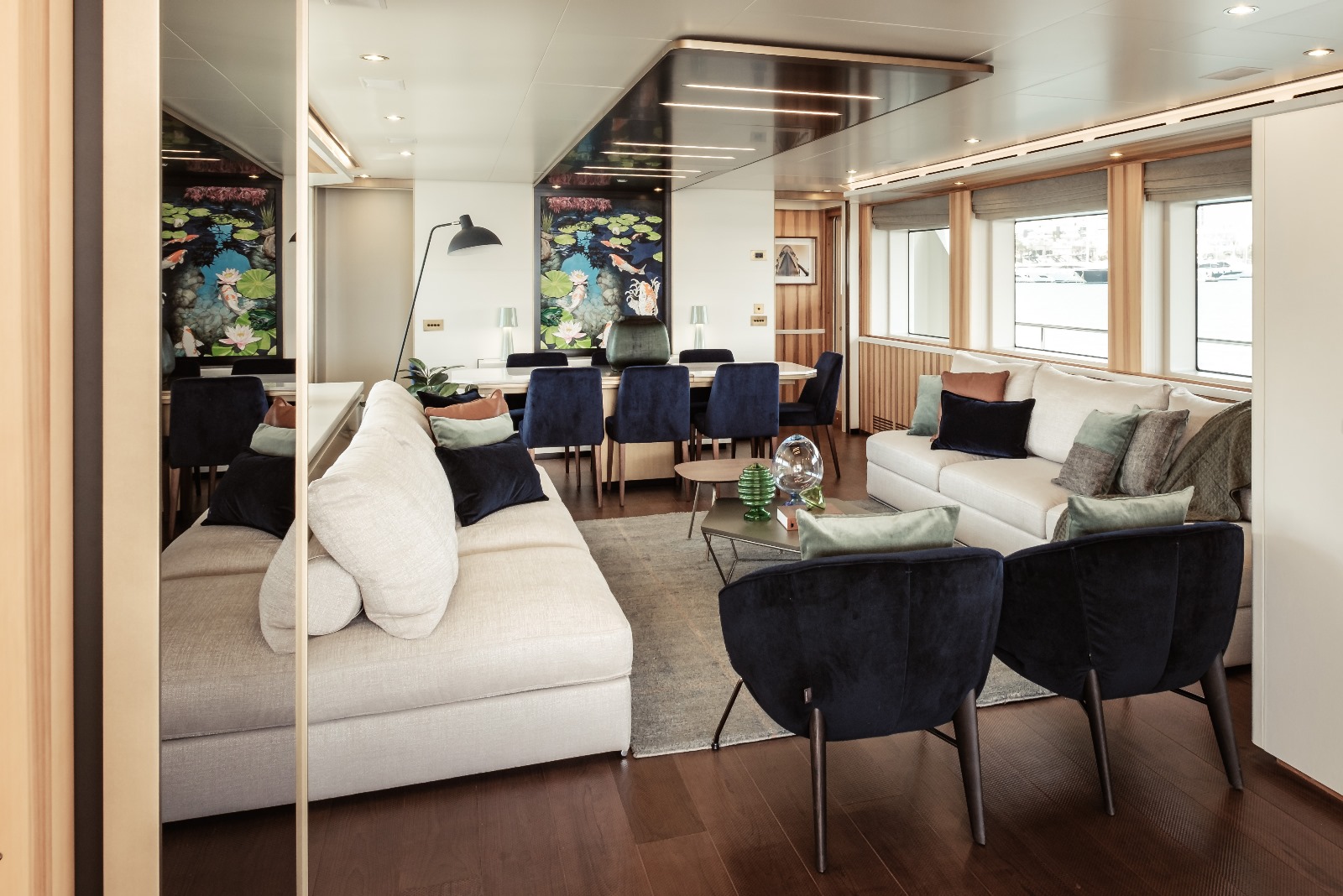
“The existing owners had already chosen some bold artwork for the spaces which presented a unique opportunity to creatively integrate these pieces into the overall design,” says Sara.
The yacht includes five guest cabins on the lower deck, and the master cabin as well as a further two VIP and two guest cabins on the upper deck. Bunkbeds in the latter take the total number of guests aboard to 12. The main salon was adapted into an enjoyable space for dining and relaxing. It also has its own diving centre, dining spaces on the external main and upper deck cockpits, as well as a pool, bar and plenty of lounge space.
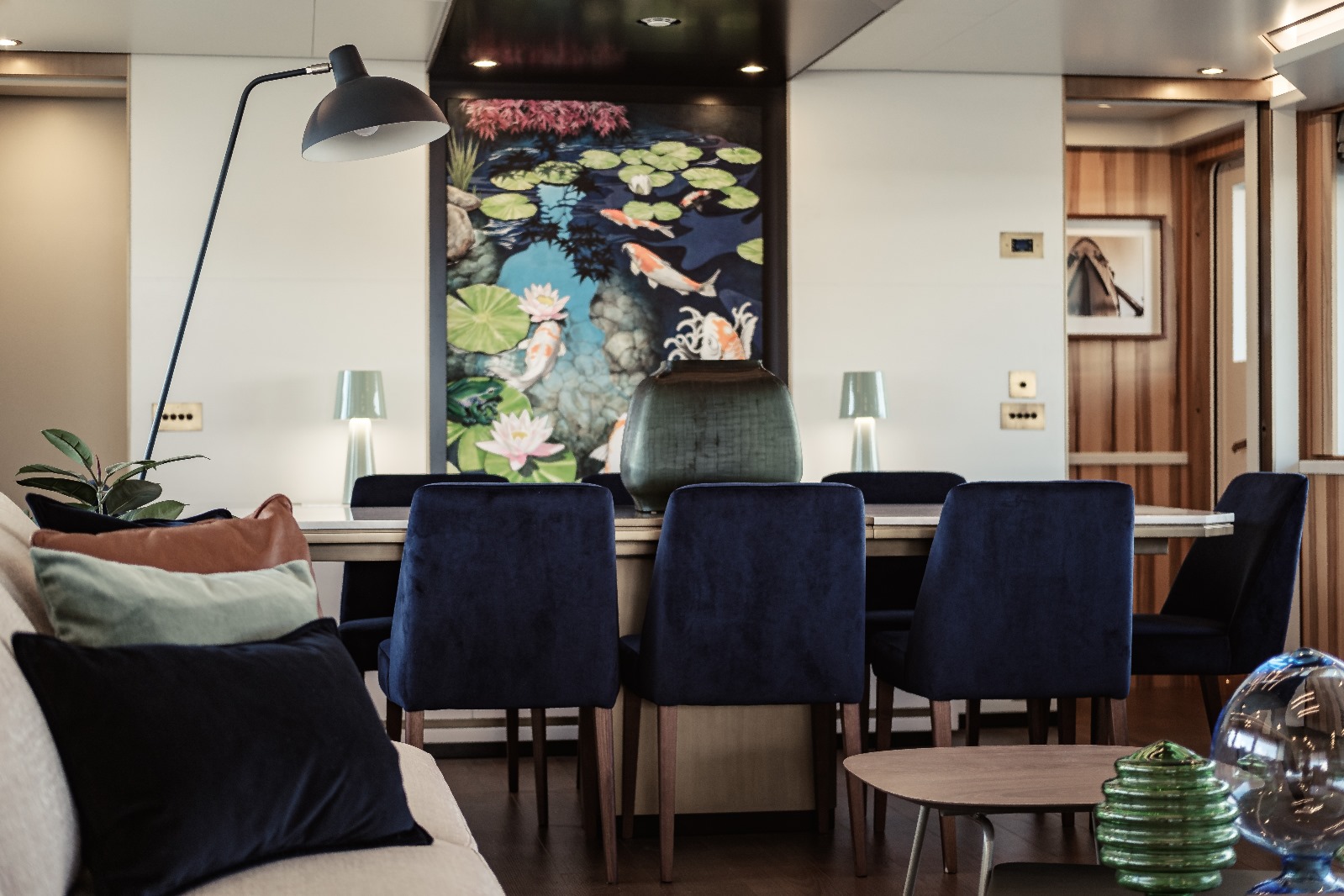
With the design of most of these spaces already established, Sara focused the selection of furniture around lightweight yet robust pieces, using luxury fabric finishes and materials fit for purpose and location.
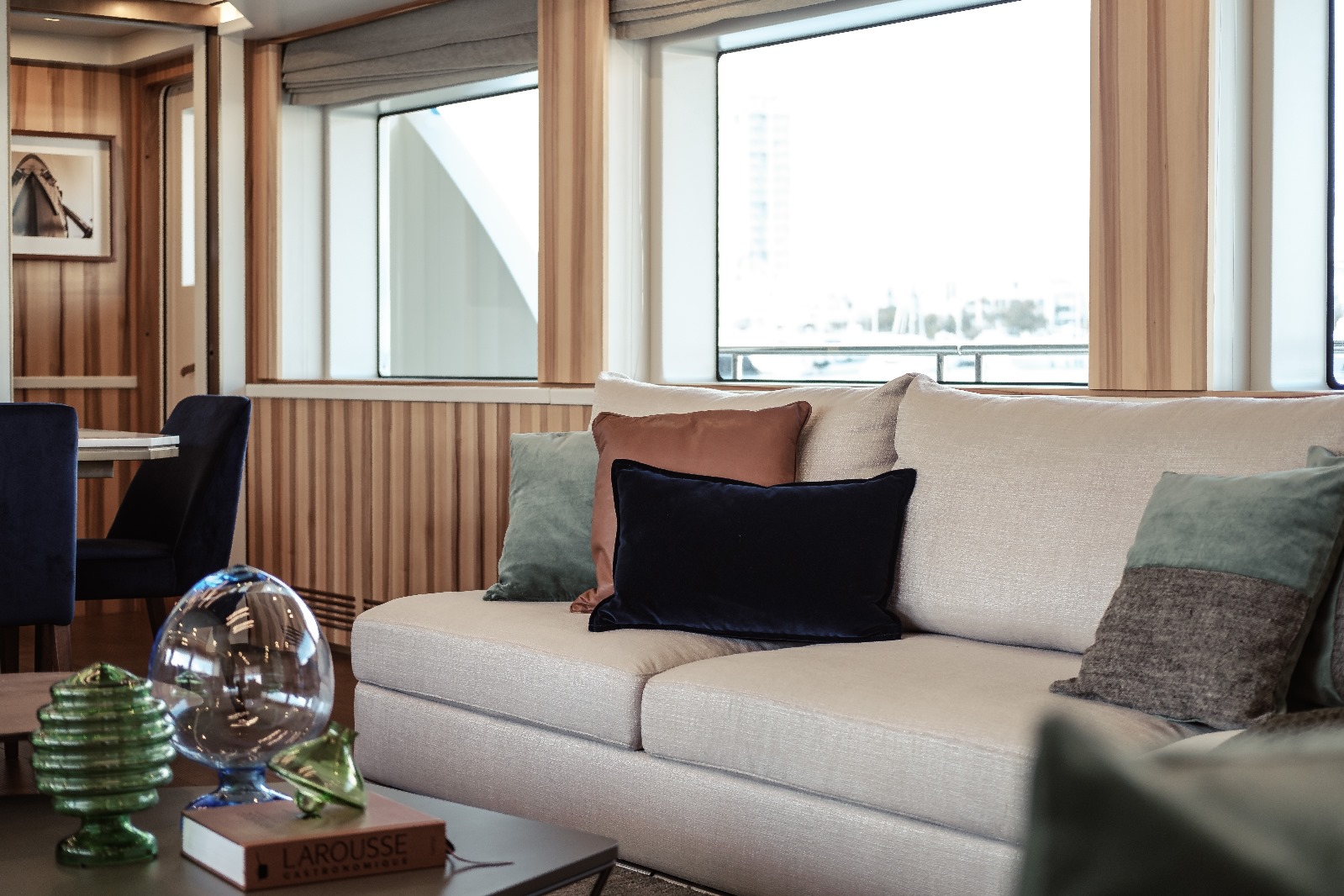
“Our selected palette allowed the existing artwork to shine while creating a balanced and inviting atmosphere. We worked with blues primarily as a nod to the nautical industry and of the yacht’s blue hull,” the interior designer explains.

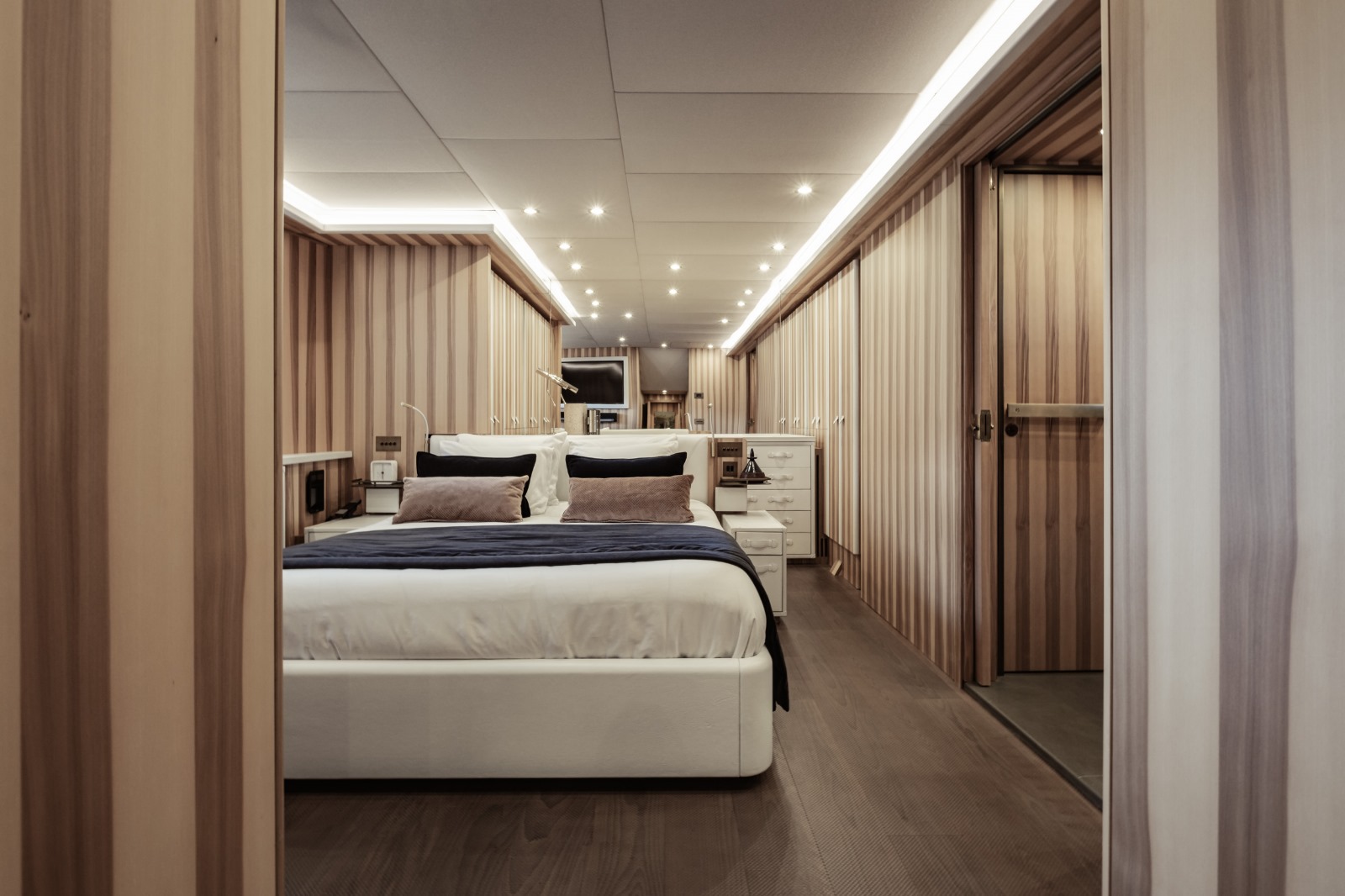
“This was carried forward in the main deck salon with a complimentary green, whilst the upper deck salon and master cabin had more subtle tones of tan and blush. The additional four cabins used earth tones of rust and sage green.”
Striking a balance between luxury and practicality was a central part of this design project, which evolved naturally with the vessel’s redecorating requirements.
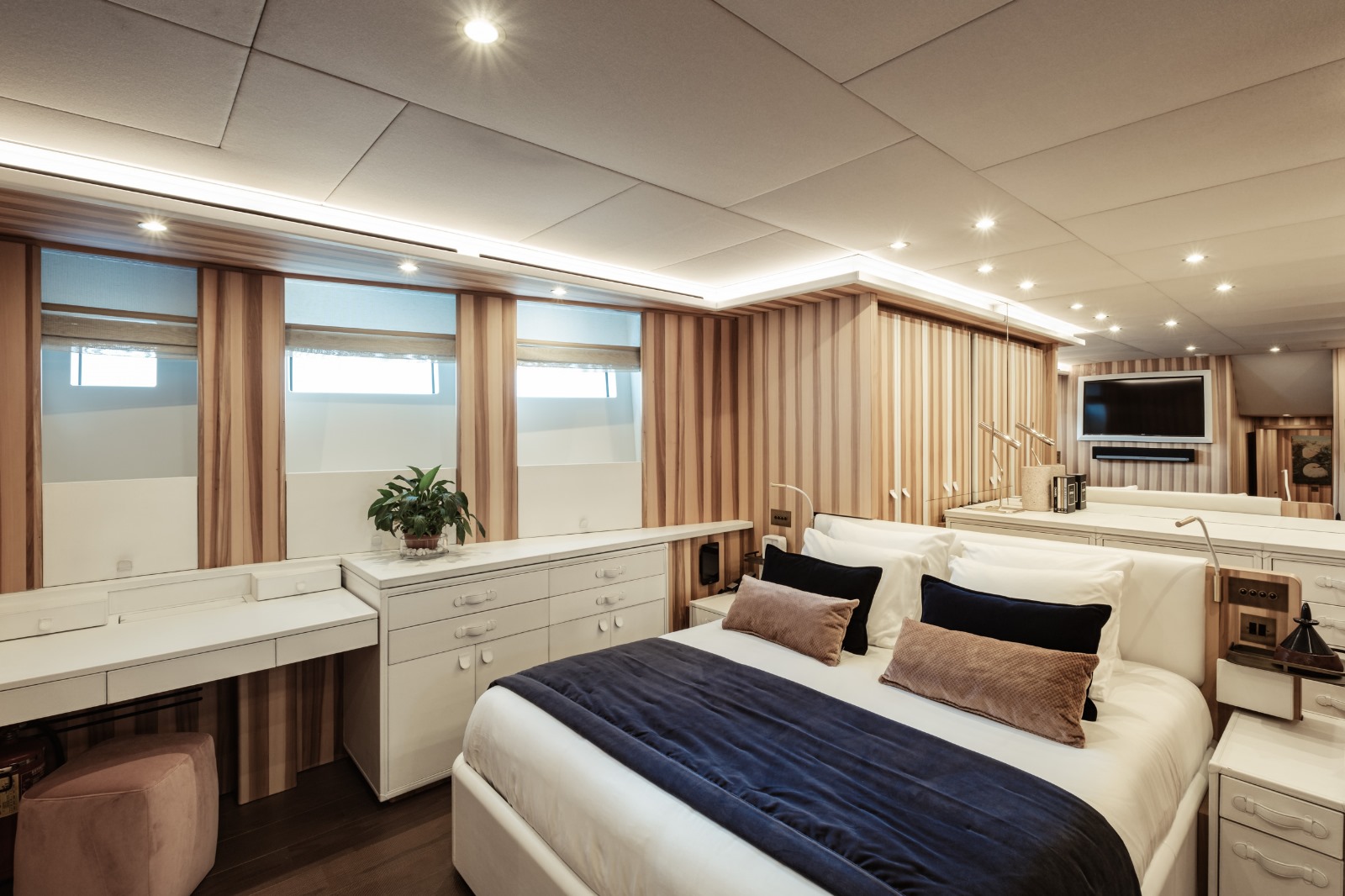
“Luxury and longevity usually go hand-in-hand, so we only had to ensure that our selection was practical and suitable for rough seas and smooth cruising. We ensured to choose pieces with wide surface areas for stability or objet d’art that can roll without causing damage.”
Contrary to styling a home on land, decorating the interiors of a yacht comes with its own set of considerations – from the choice of fabrics which must be International Maritime Organisation (IMO)-approved, to the loose furnishings that could withstand wet swimming gear.
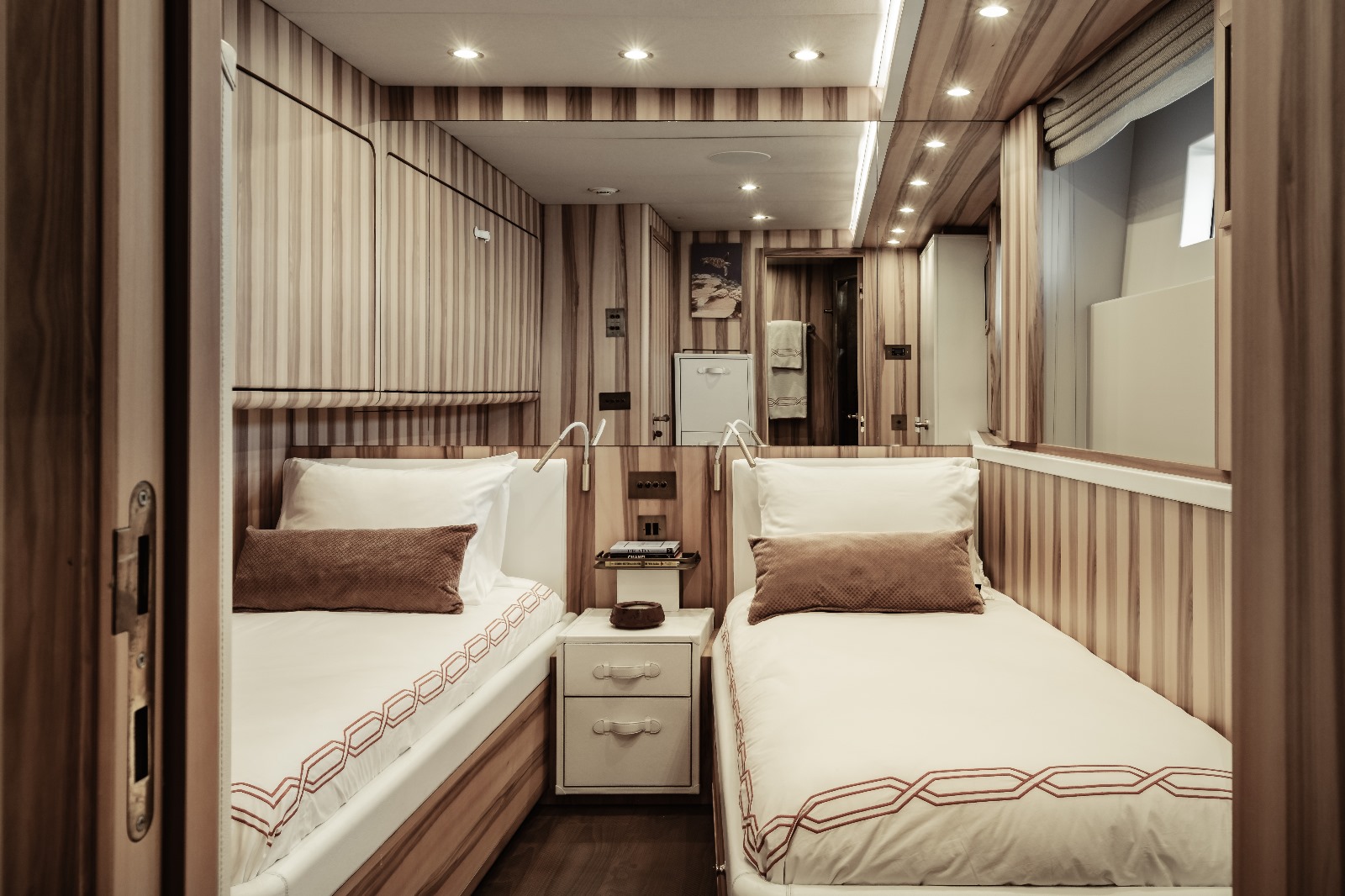
“We used a blend of veneers and engineered surfaces for their advanced properties and sophisticated finish. We also had to ensure all items can be carried by one person as the yacht was docked in the marina, meaning all items had to be crossed over the gangplank. This provided some challenges in logistics as not everyone has adopted sea legs.”
On the flipside, the fact that “no one was hurt or injured in the making of this production,” as Sara jokingly puts it, goes down as the greatest satisfaction of this project.
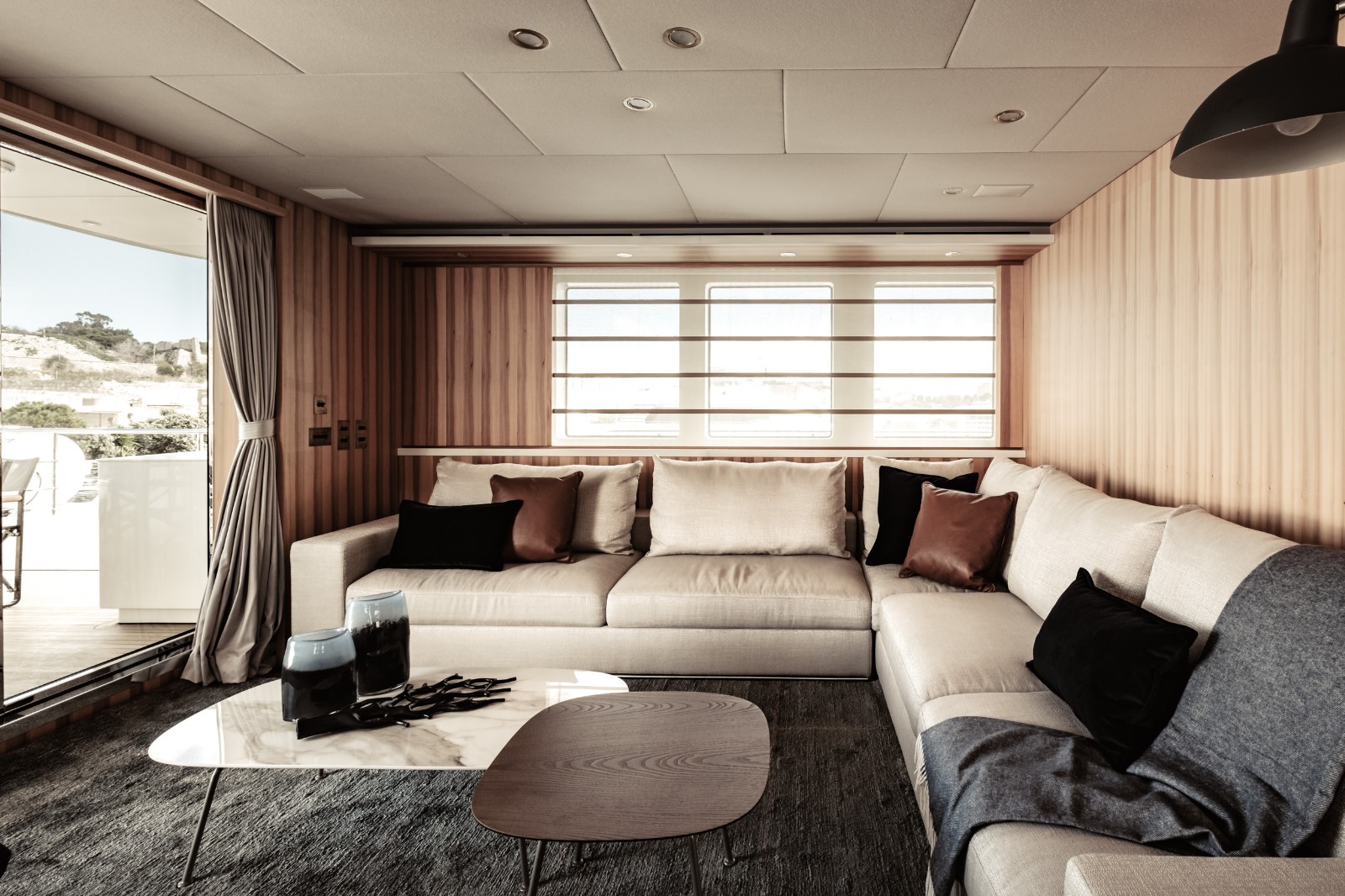
“We find that projects with a faster turnover are particularly motivating for our team. The quick pace not only allows us to see the end product come to life swiftly but also adds a dynamic and enjoyable element to the work,” says Sara. “The fast-paced nature of these projects helps guide our decision-making and keeps everyone engaged and enthusiastic about the results.”
Photography: Brian Grech