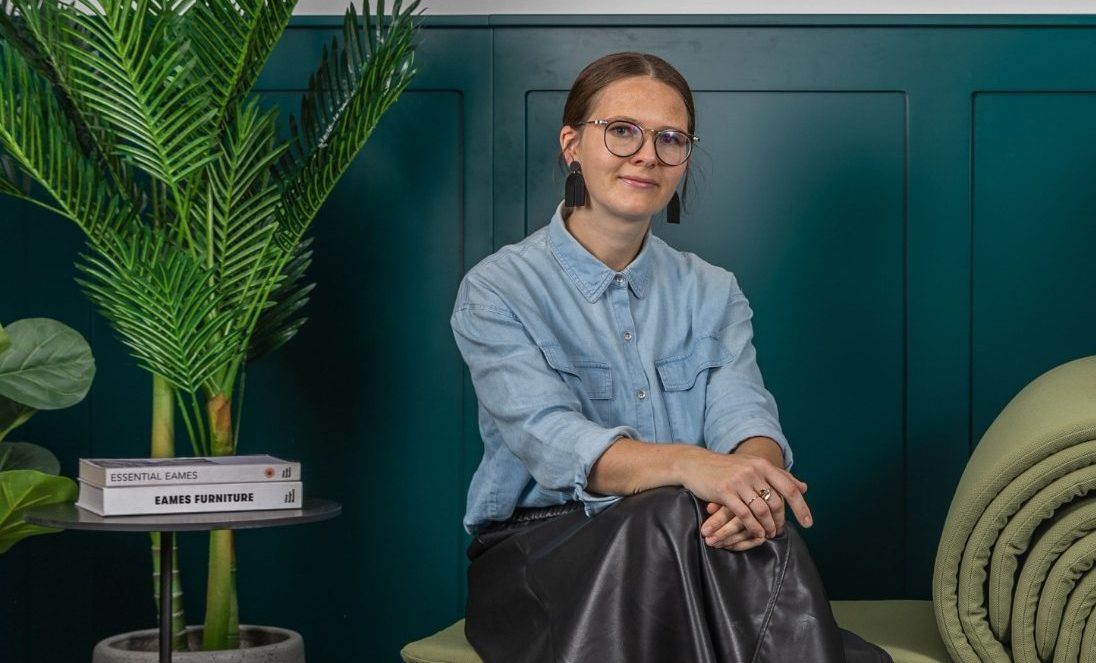
“I like a good challenge,” says Inese Refalo, an artist and interior designer with a passion for furniture design, who created a lounger, called Turning pages, that is as practical as it is playful, and the result of a combination of her interests, life experiences and travels.
“The idea and the name were inspired by a three-year backpacking trip my husband and I took a few years ago, a project called Turning Pages.”
“When outside in nature, you often have to find shelter under a tree, which not only provides excellent protection from the sun or rain, but it also has an amazing power to recharge and relax the mind,” says Inese, who sought to translate that connection between man and nature into a chair that would emulate that “feeling you get when sitting under a tree.”
Her idea needed to communicate a sense of shelter, “something stable, simple, easy to use, but unique and playful. A furniture piece that creates and triggers a positive impact and emotions.”
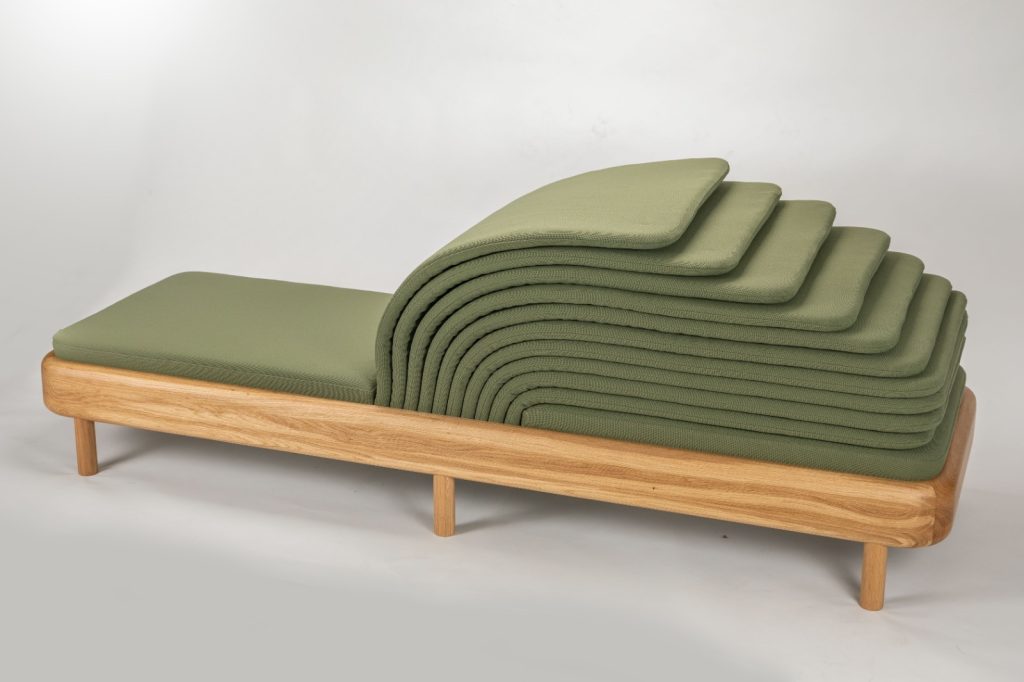

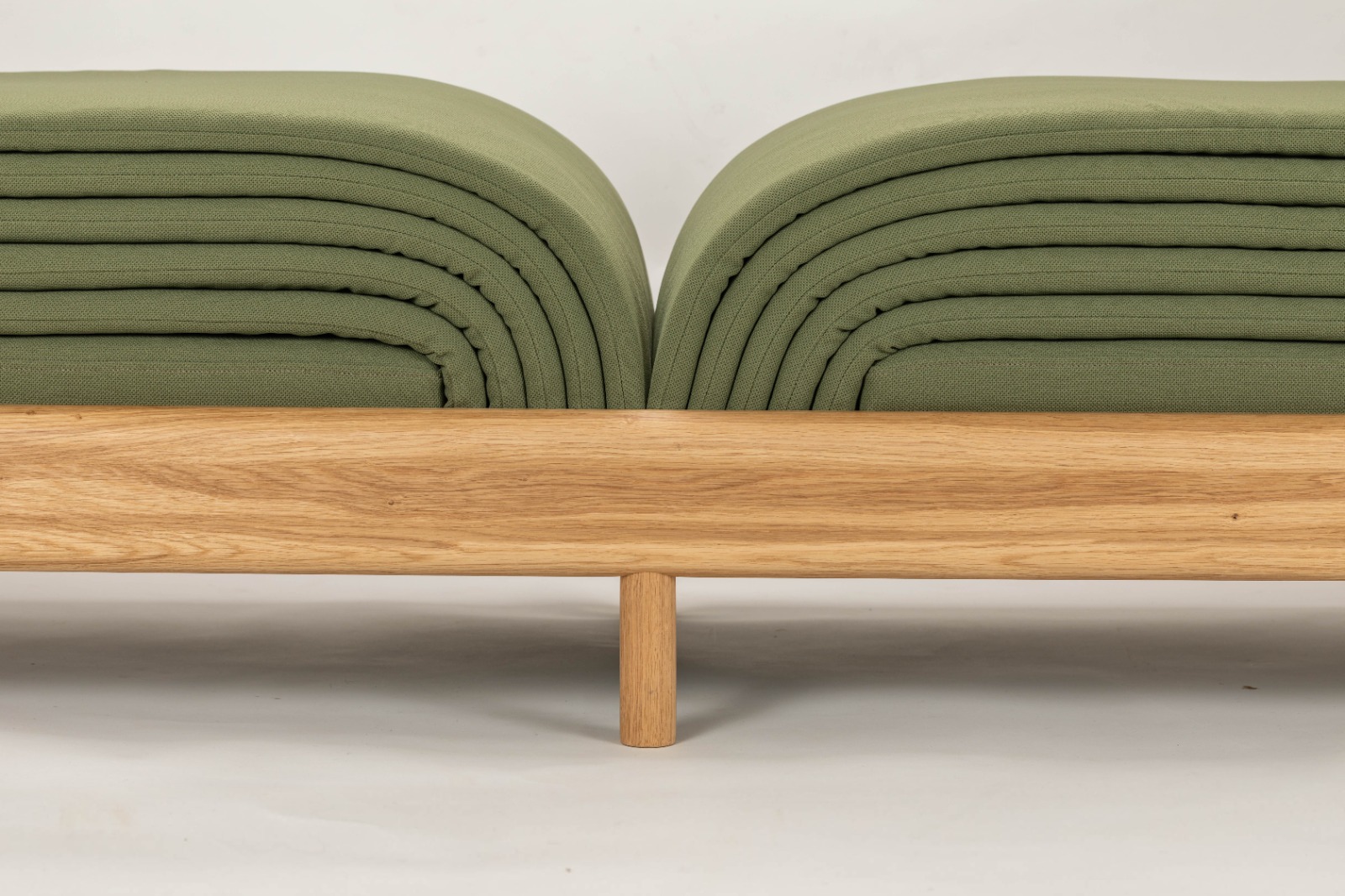
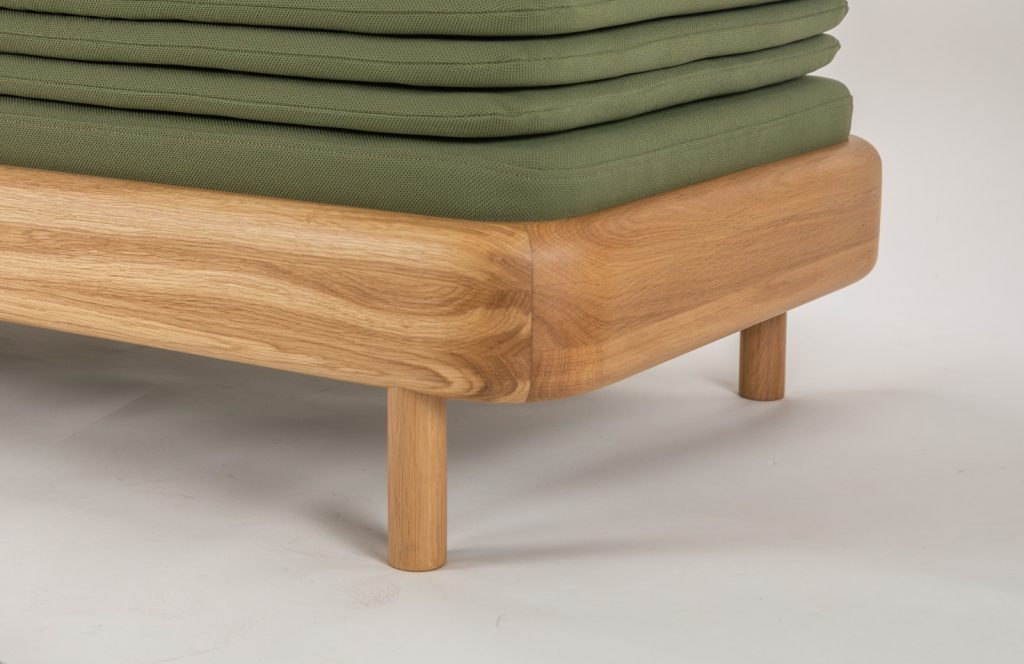
The chair, which Inese designed for the Charette Starchitect’s Chair design competition and was sponsored by Vivendo, comprises a solid wood base for strength and support. Choosing the best material for the cushions proved trickier.
“Each fabric has different properties – how it folds, how it wears. I wanted this part of the lounger to draw associations with book pages and tree foliage. After lots of experimenting, I settled for the Contour line of fabrics from Danish brand Gabriel, which had the best weight and elasticity to keep the upholstered sheets light enough, but that curve nicely when folded over.”
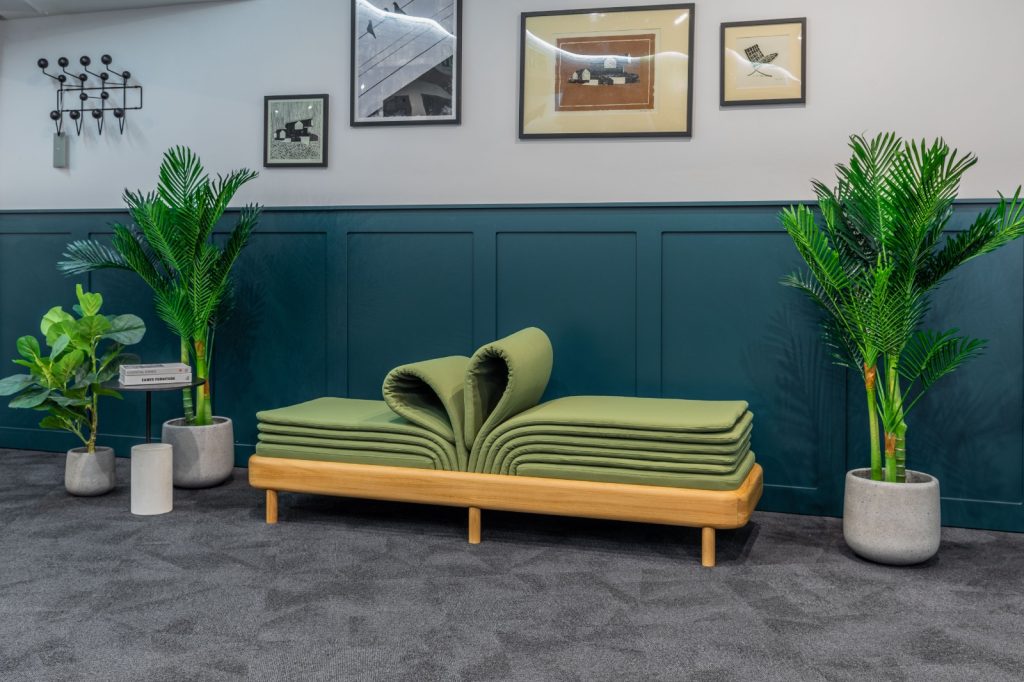
The chair’s lifecycle also influenced the choice of materials. Inese says that while solid oak is strong and ages nicely, fabrics tend to wear out faster.
“I designed each sheet to be attached individually to the base with a steel rod, which not only gives the ‘pages’ better flexibility for flipping, but they can also be replaced one by one, possibly even in different colours to give the chair a new look.”
Beyond the personal meaning for Inese behind Turning Pages and its unique appearance, she intended for the lounger’s design to be practical and useful.
“A good design’s main property is functionality. When creating furniture, I analyse different aspects of how users would interact with it – what would make people frustrated or uncomfortable when using it, and how can I, as a designer, solve this problem without losing the core of the design concept.”
The Latvian interior designer, who has been a part of Vivendo’s customised solutions team since 2020, believes that the chair’s versatility is one of its best qualities.
“I love the fact that by simply changing the position of the upholstered sheets, the lounger can be used in so many different ways and shared with others, even without any extra cushions or throws, making it a perfect piece for public spaces,” says Inese.
Photos: Mark Sapienza
If you enjoyed reading this article, you might also be interested in: Favour round over rectangular? These circular dining tables make a compelling case