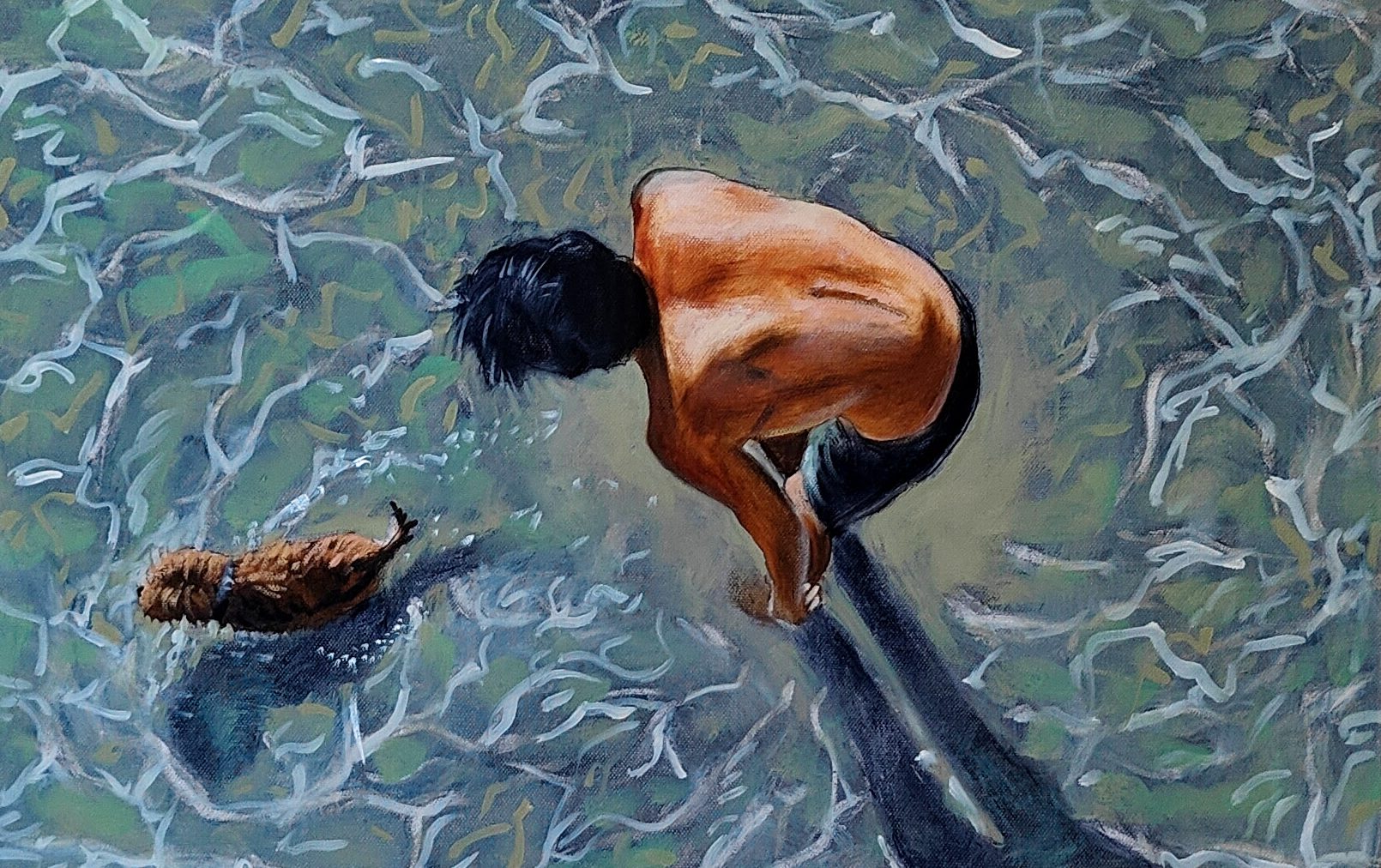
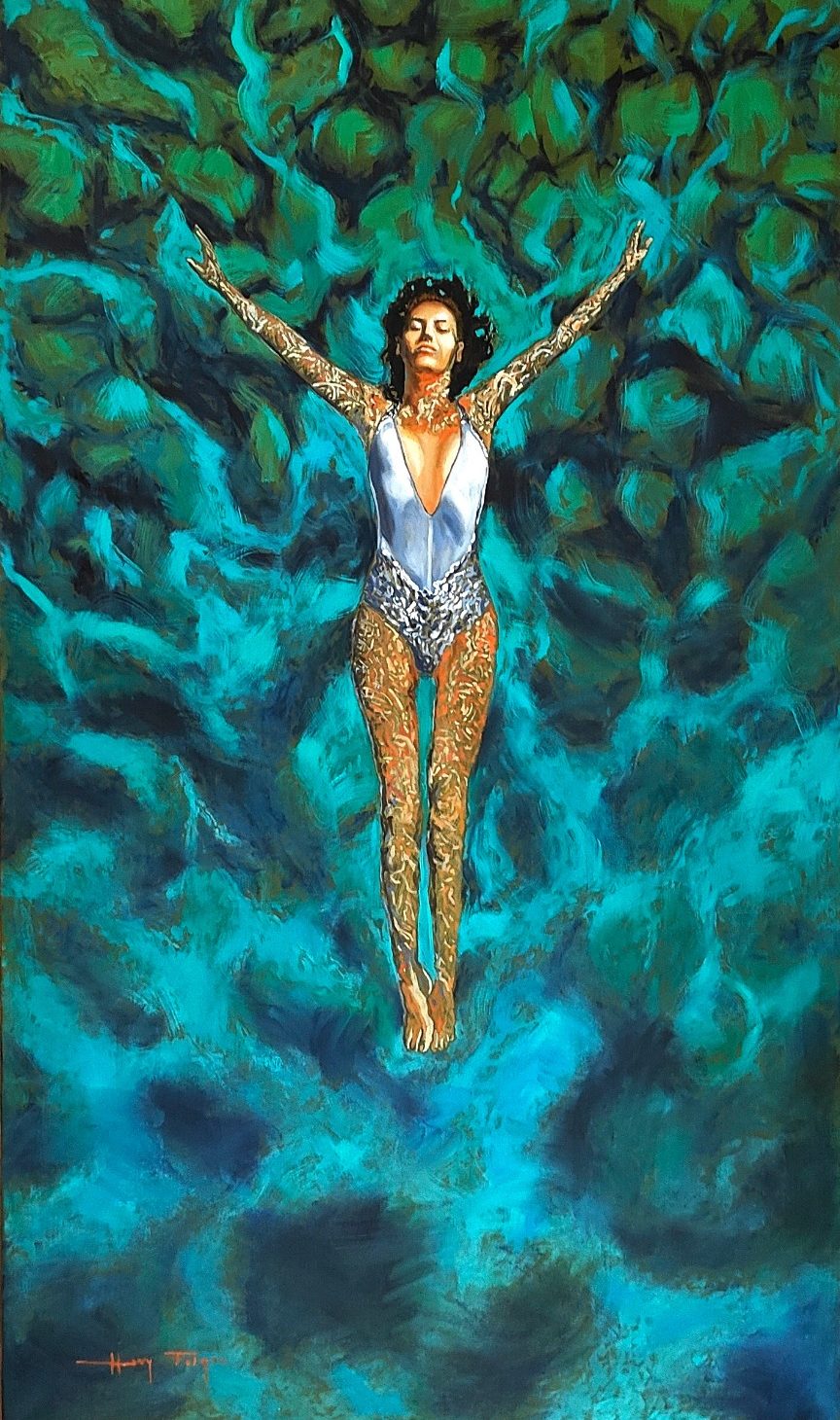
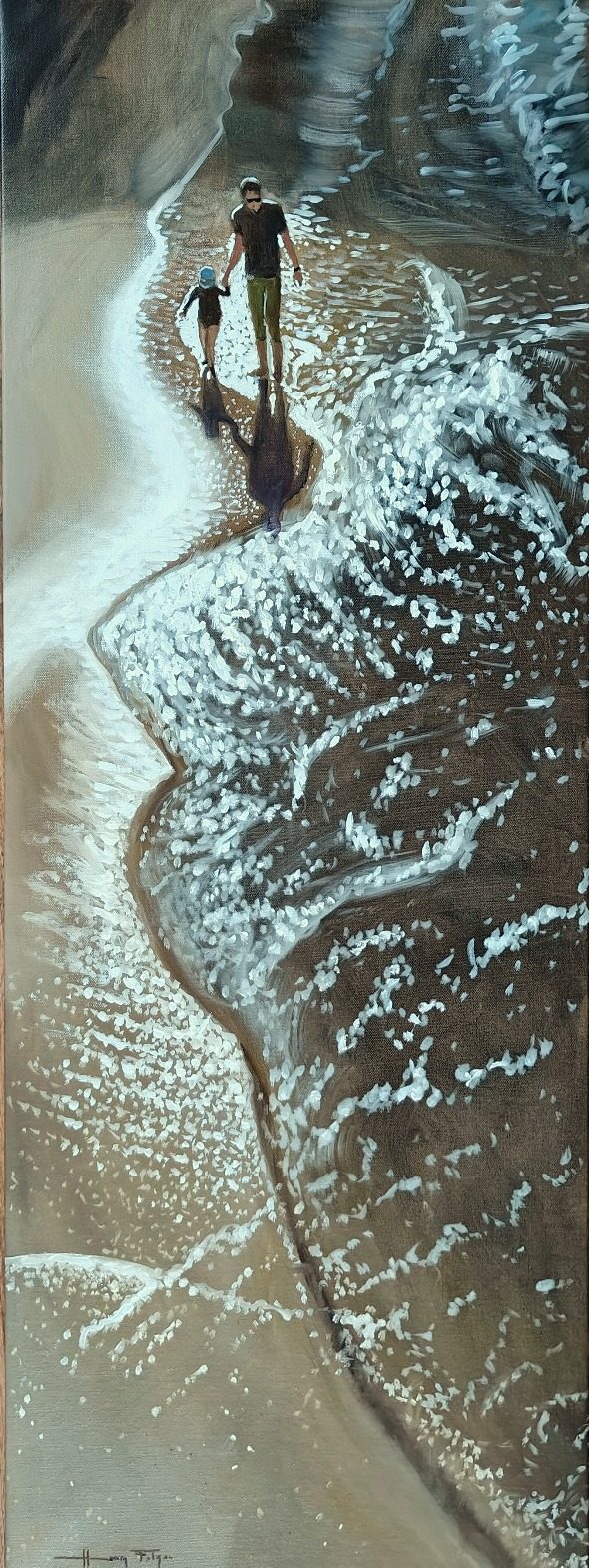
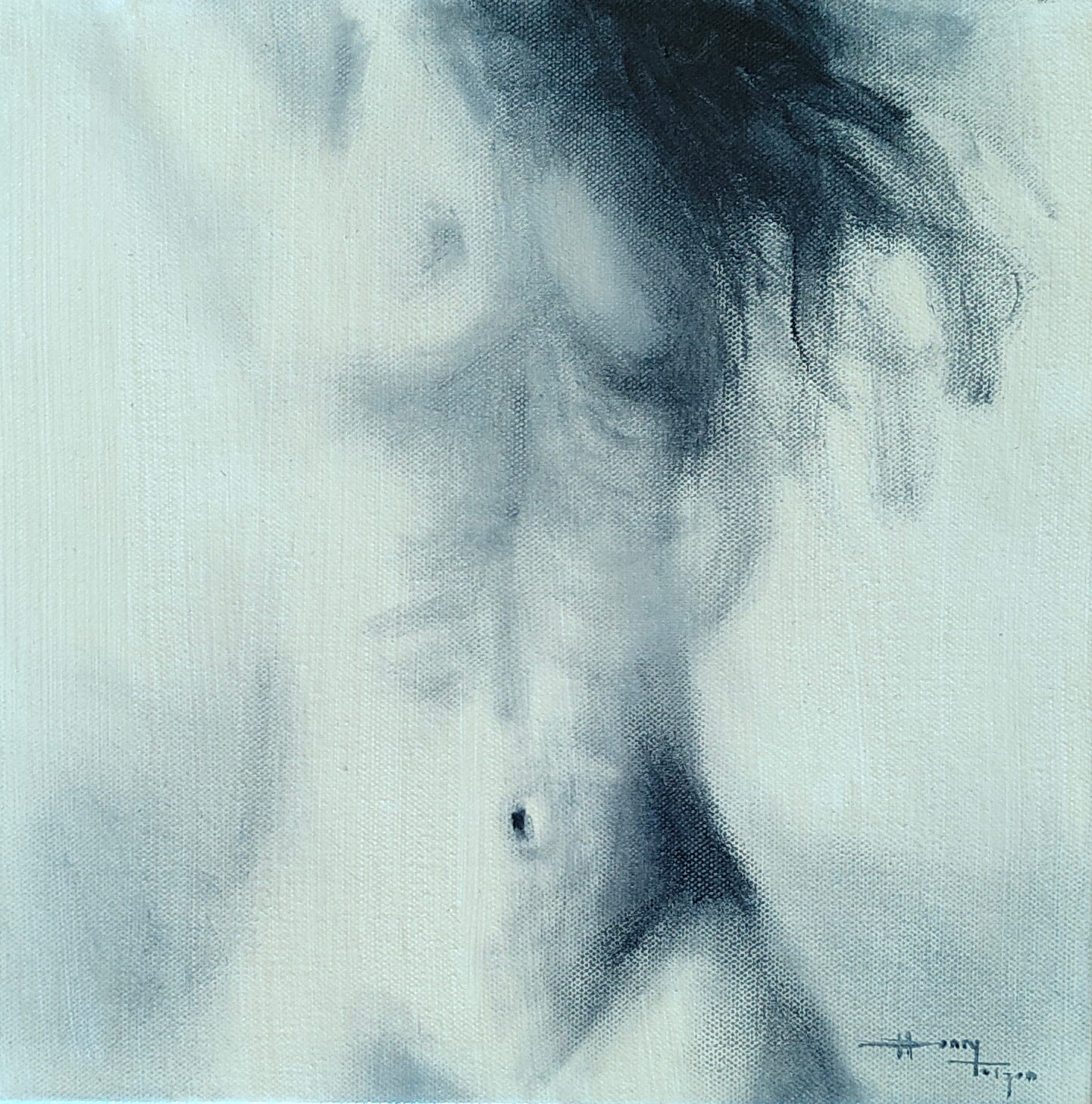
A father and child walking along the beach, a woman floating in azure waters on a summer’s day, a man and his dog enjoying the water, and intimate portraits charged with raw emotion. These are just some of the scenes captured by artist Henry Falzon in his current solo exhibition, at the heart of which are snapshots of human engagement that are at once fleeting and distant, and yet oddly familiar.
And different as each one may be, the artist’s invitation to the viewer in each painting is one and the same: to pause and listen – not to speech, but to human presence.
The exhibition, titled I Thought I Heard you Say, began with the artist’s interest in how people listen – and how often we mishear.
“Communication is full of uncertainty; sometimes, what we think we’ve heard reveals more about ourselves than about the words spoken,” the artist tells DesignDispatch.
“Over time, this evolved into a visual exploration of that fragile space between hearing and seeing, between understanding and misunderstanding. The exhibition grew organically from that tension, from a wish to translate sound, silence, and emotion into painterly form.”
A distinctive visual language
Working primarily in oil on canvas, with select pieces in pastel, Henry evokes the elusive nature of human communication through gesture – moments suspended between reality and imagination.
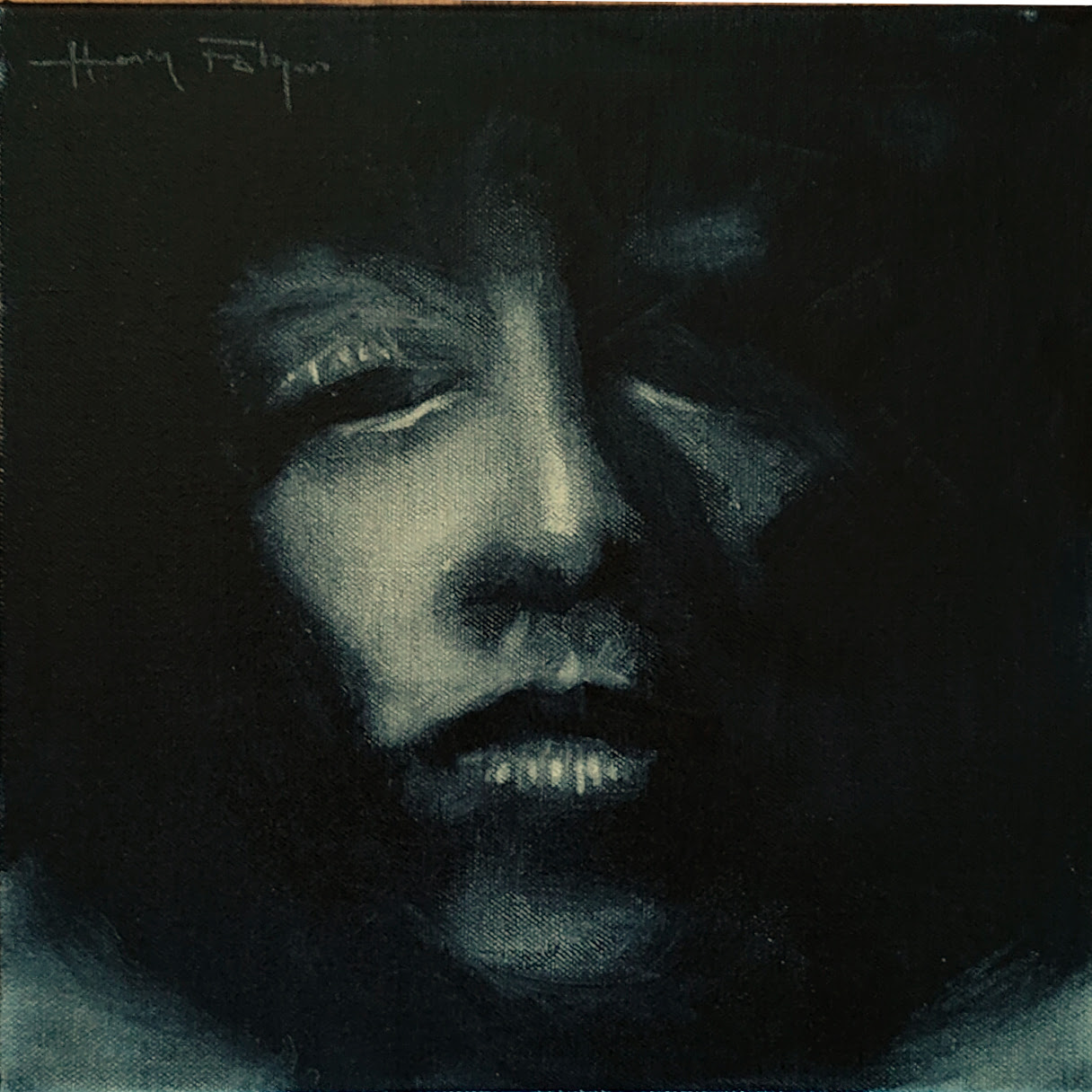
The result is a personal collection of artworks, curated by Prof. Charlene Vella, that “hover between figuration and abstraction, between presence and disappearance.”
“Each work is a conversation – sometimes quiet, sometimes restless – that reflects my fascination with human connection. This series marks a deeper exploration of emotion and perception, and painting itself becomes, for me, a form of listening.”
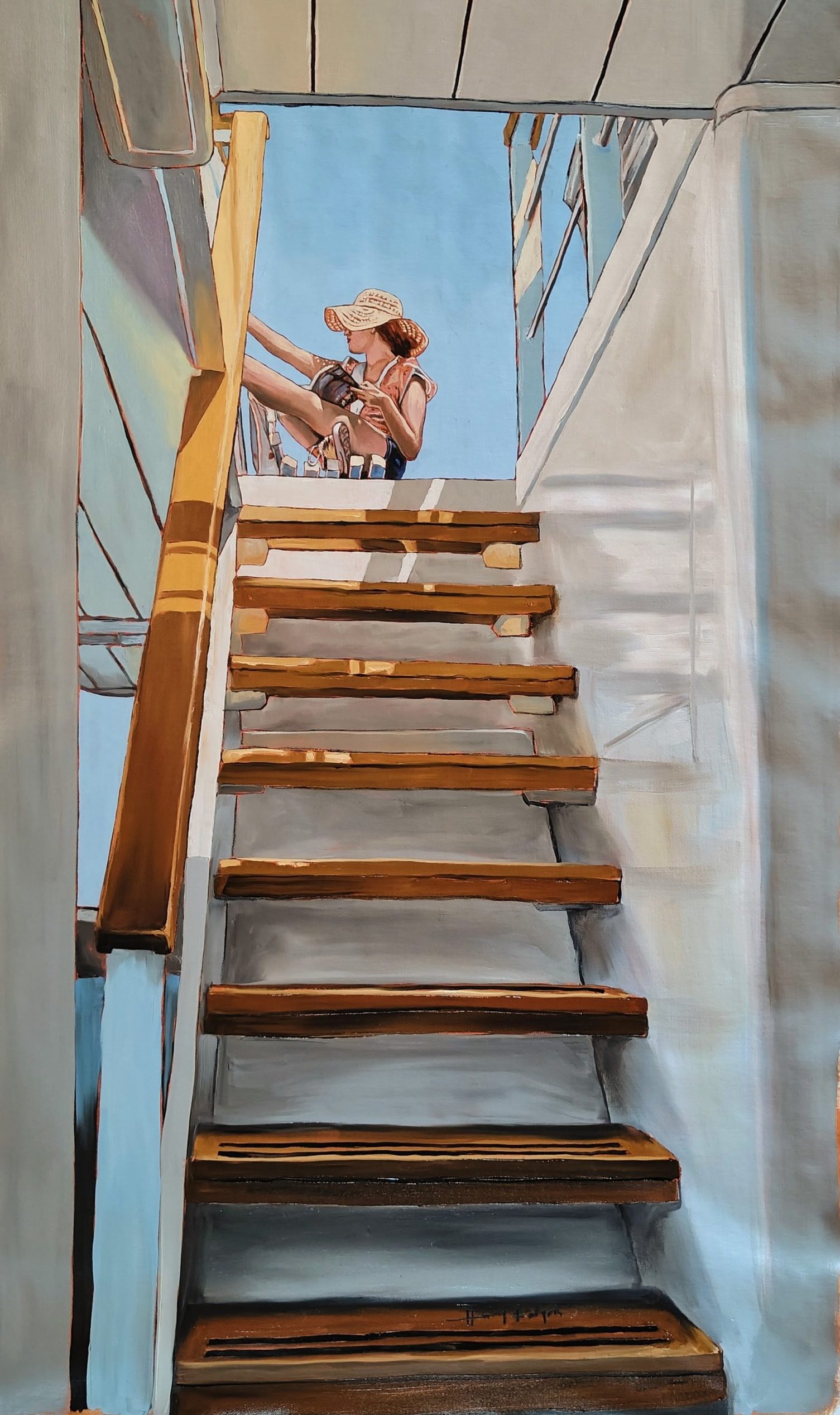
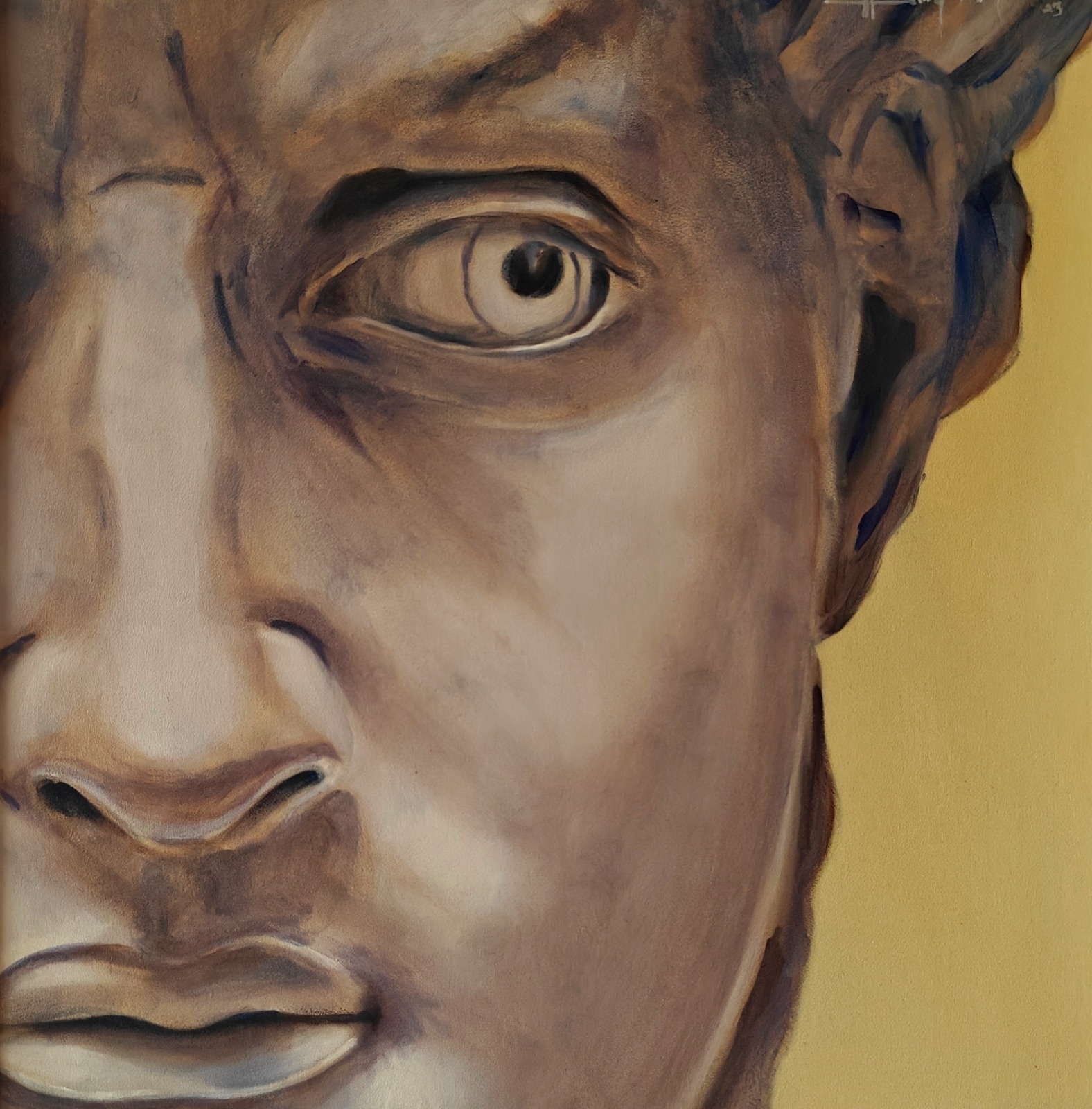
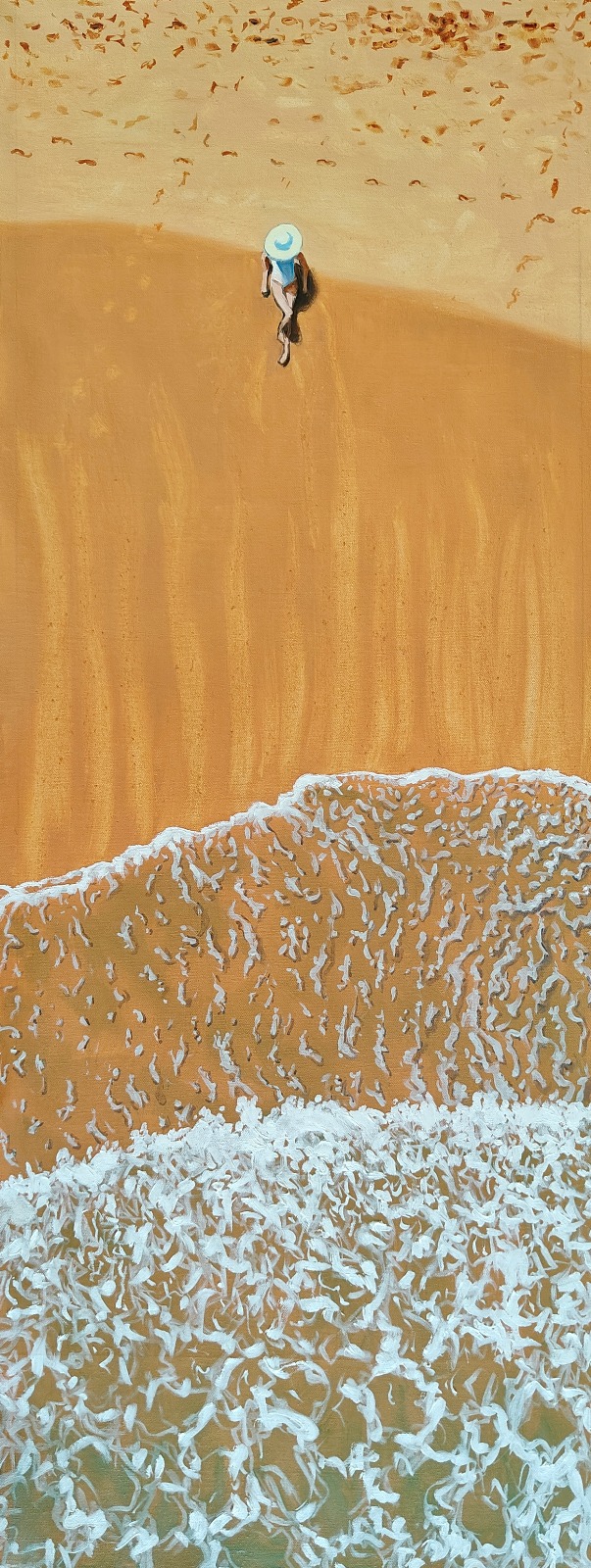
The exhibition features large atmospheric compositions, such as the bold Just Floating and Mystic, as well as more intimate paintings like Stone Cold David and Lady from the Orient, some of which are depicted from a seemingly suspended viewpoint – which has become a distinct characteristic of the artist’s work.
“The distance allows for reflection. It’s as if I’m looking down at a memory rather than directly at a scene. That elevated viewpoint creates both intimacy and detachment: it lets me observe without intruding,” says Henry. “It mirrors how we remember: never from the exact point of experience, but from somewhere just above or beyond it.”

Knowing when to stop
Henry notes that painting in this way comes with unique challenges – such as balancing between control and spontaneity.
“Working from such perspectives can easily slip into abstraction, so I have to keep the emotional truth of the moment alive. It’s less about getting the details right than about sustaining a sense of rhythm and depth. The challenge lies in knowing when to stop, when to let the painting breathe.”
The reward, however, comes in that moment when the painting begins to speak back, “where it stops being a collection of brushstrokes and becomes alive: a gesture, a feeling, a sound you can almost hear,” he notes.
“That dialogue between control and chance, silence and expression, is what keeps me painting. It is one of the trickiest things for an artist to know when to stop and not overwork an artwork.”
Throughout this month, visitors can experience Henry’s work up close inside the Phoenicia Malta’s Palm Court Lounge. “Visitors can expect a quiet and rather immersive experience, as much as the venue allows. The works are not loud – they invite you to pause, to look, to listen,” he notes.
“There are large canvases that envelop you and smaller, more intimate pieces that feel like whispers. Together, they create a rhythm, a space for reflection. I hope people leave feeling that they’ve overheard something familiar yet unspoken.”
The exhibition will run until 30th November 2025.
Photography courtesy of Henry Falzon