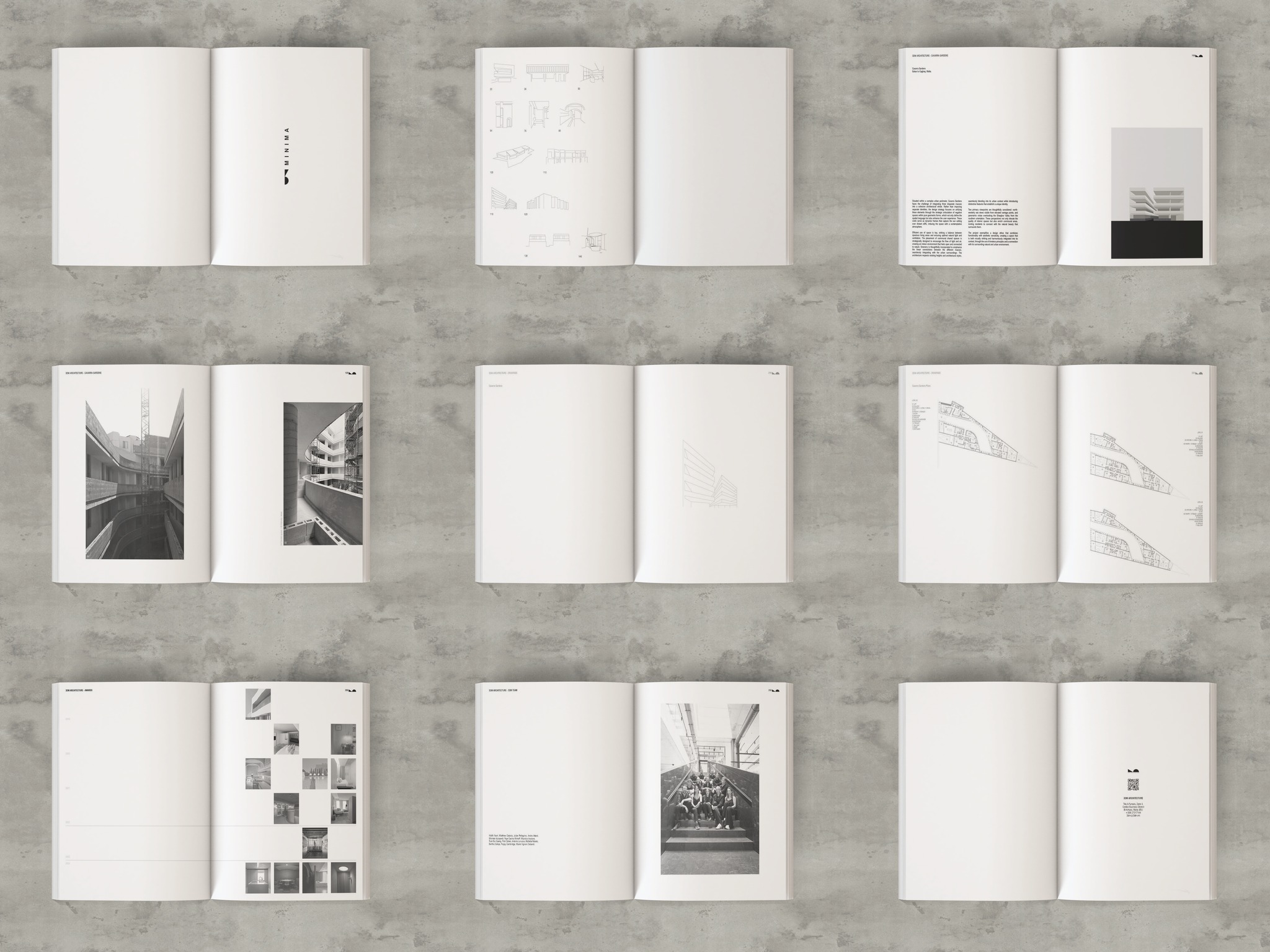
Through an elegantly-designed industry publication, Minima, 3DM Architecture is shining a light on a local issue of far-reaching consequences: the scourge of over-development and mass-production of buildings, accompanied by principles for architects to “develop a timeless architectural language that bridges the past and present.”

In a detailed description of the publication, the studio asserts that “contemporary architecture faces a profound crisis, increasingly dominated by mass-produced buildings that prioritise speed and profit over quality, identity, and the human experience.”
As a result, it states that the role of architecture as one that shapes lives, communities and interactions is undermined.

The book proposes two approaches to tackle the issue: crucially, drawing inspiration from the balance found in nature, and returning to the fundamental principles that have guided architectural excellence throughout history.
“These timeless guidelines, when reinterpreted for the contemporary context, can inspire designs that bridge the past and present. Combining these fundamental principles with a deep appreciation for nature can foster a more holistic and enduring approach to contemporary architecture.”
The tradition of integrating architecture with its natural context throughout the centuries is amply evident in Maltese buildings, from pre-historic temples to vernacular and traditional buildings crafted from local materials.
“Unfortunately, many contemporary buildings lack this sensitivity to context, resulting in designs that are disjointed and devoid of character. To remedy this, we must reclaim the principles, orders, and materials of the past,” the studio states.
Minima shares a number of principles that architects could use to develop a timeless architectural language that bridges the past and present, believing that “the future of architecture lies in a conscientious return to its roots, guided by principles that have stood the test of time.”
Main image: 3DM Architecture