Each year, in and around Valletta’s most spectacular historical venues, devotees of music, art and history descend to delight in the many rousing musical performances organised by the Valletta Baroque Festival, an annual event that takes place throughout January hosted by Festivals Malta – the national body dedicated to nurturing and growing festivals and cultural events in Malta and Gozo.
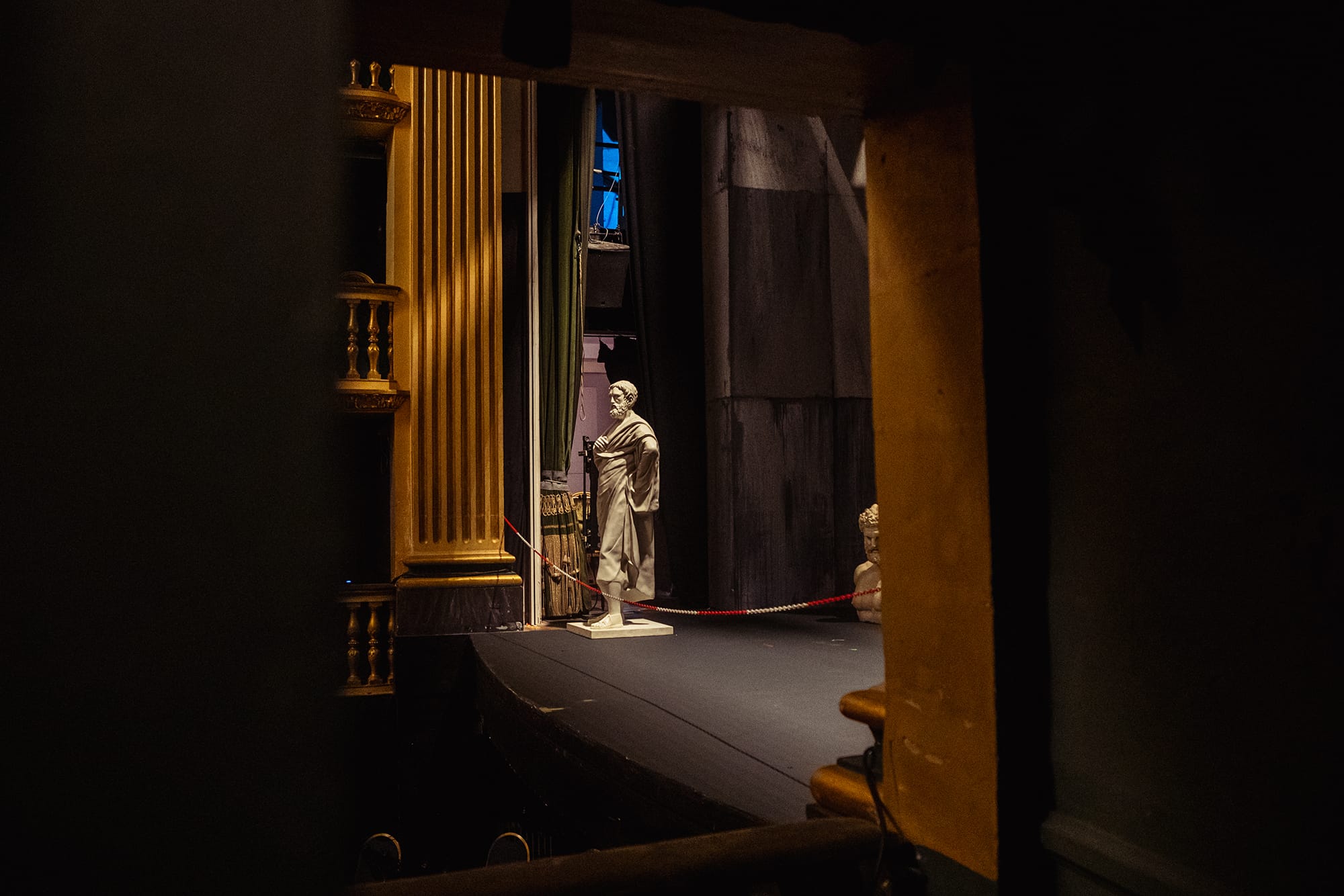
But this year, Pelopida – the festival’s penultimate operatic event set in Ancient Greece – has theatre-goers as well as the team behind it eager to stage a show that comes with a few fascinating firsts; namely that the last time it was staged was in 1747 at Teatro Argentina in Rome.
That performance was also the opera’s debut, written by Maltese-Italian composer Girolamo Abos. Under the stage direction of Brett Nicholas Brown, the 2026 production makes it the first to be performed in living memory.
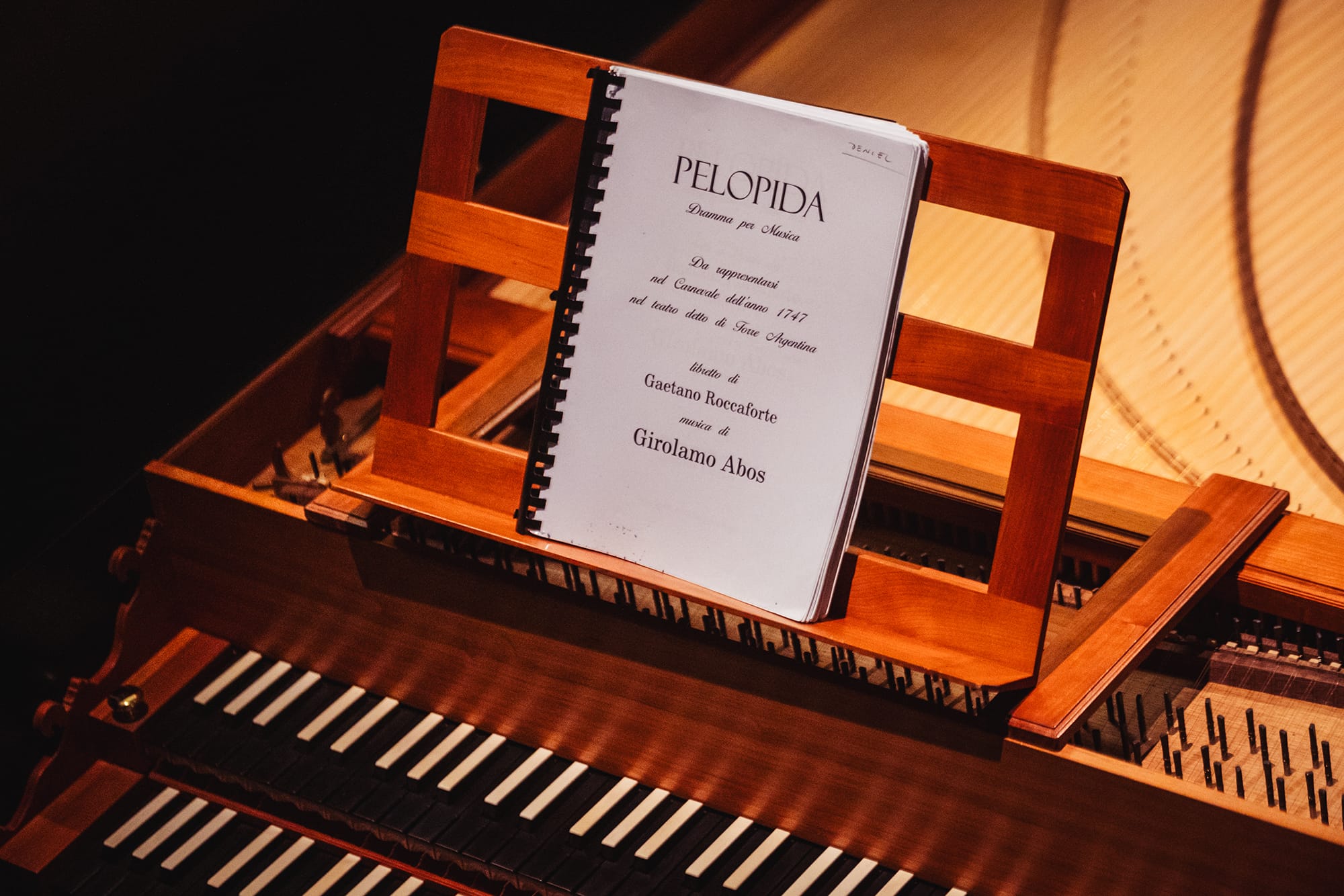
This alone was an undeniable draw for architect and set designer Anthony Bonnici, costume designer Luke Azzopardi, and lighting designer Moritz Zavan Stoeckle who share their concepts, insight and experiences of deigning for Pelopida.
The making of a museum
Anthony Bonnici, co-founder of architecture studio EBEJER BONNICI, says the absence of an inherited visual memory for Pelopida’s set design meant there was no established way it was meant to look.
“That condition is rare, and it creates real freedom. It allows the work to begin from first principles rather than reference,” says Anthony. “The starting point became the idea of a museum. It was important that this museum would not be presented as a neutral space, but a place where power, violence, and history are stored and exhibited.”
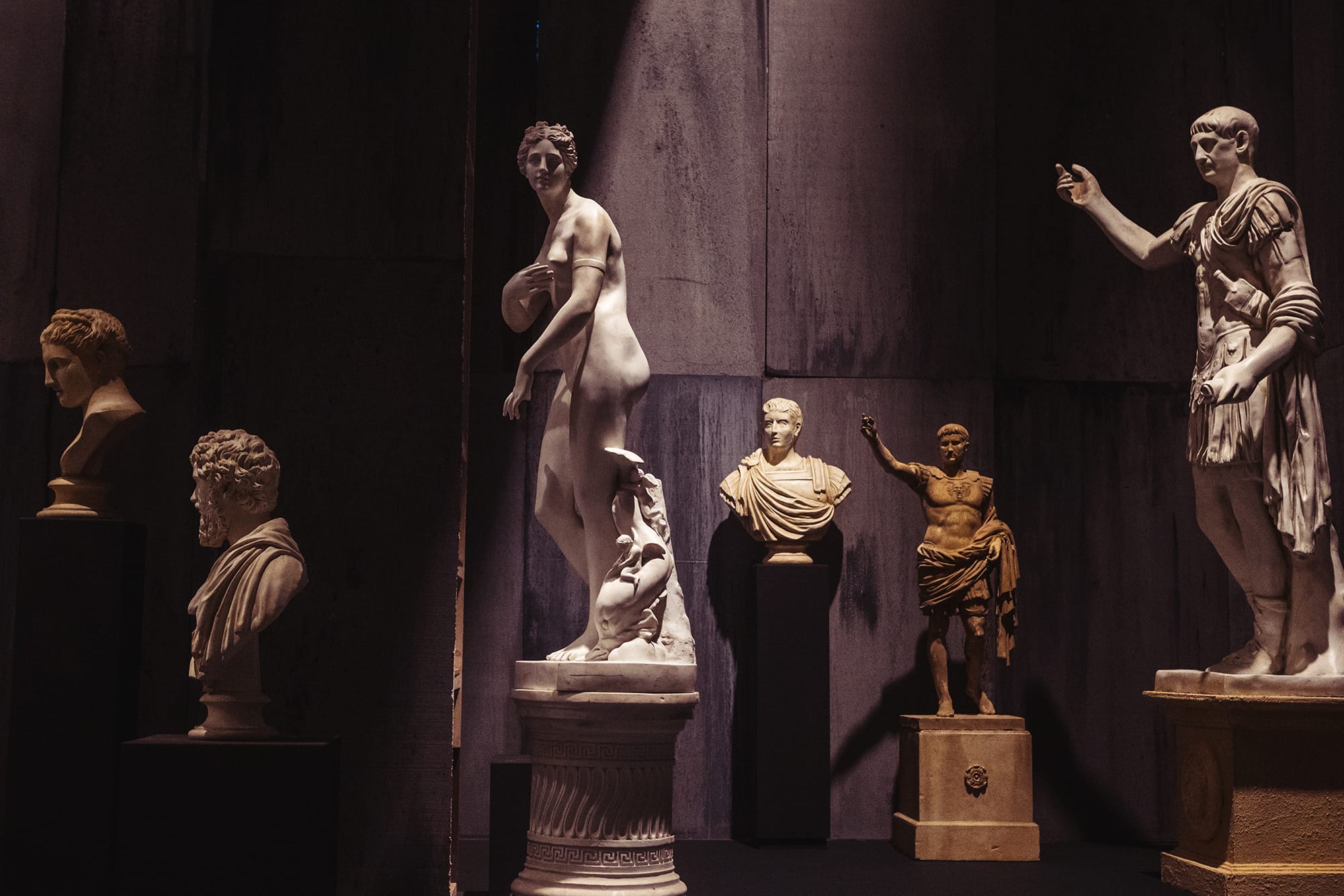
Anthony and his team created a bunker-like environment – a dark concrete world populated by Greek statues. Within it, the opera becomes a museum piece, staged inside a museum that is both its container and its subject.
The design avoids translating Ancient Greece into a recognisably modern setting, and instead creates an architecture that is deliberately tough and ambiguous, allowing the opera to move through different dramatic conditions without changing location.
“The opera unfolds within a single monumental space rather than through scene changes. The stage has been stripped back and exploded. It is the tallest, widest, and deepest set ever realised at the Manoel Theatre,” says Anthony.
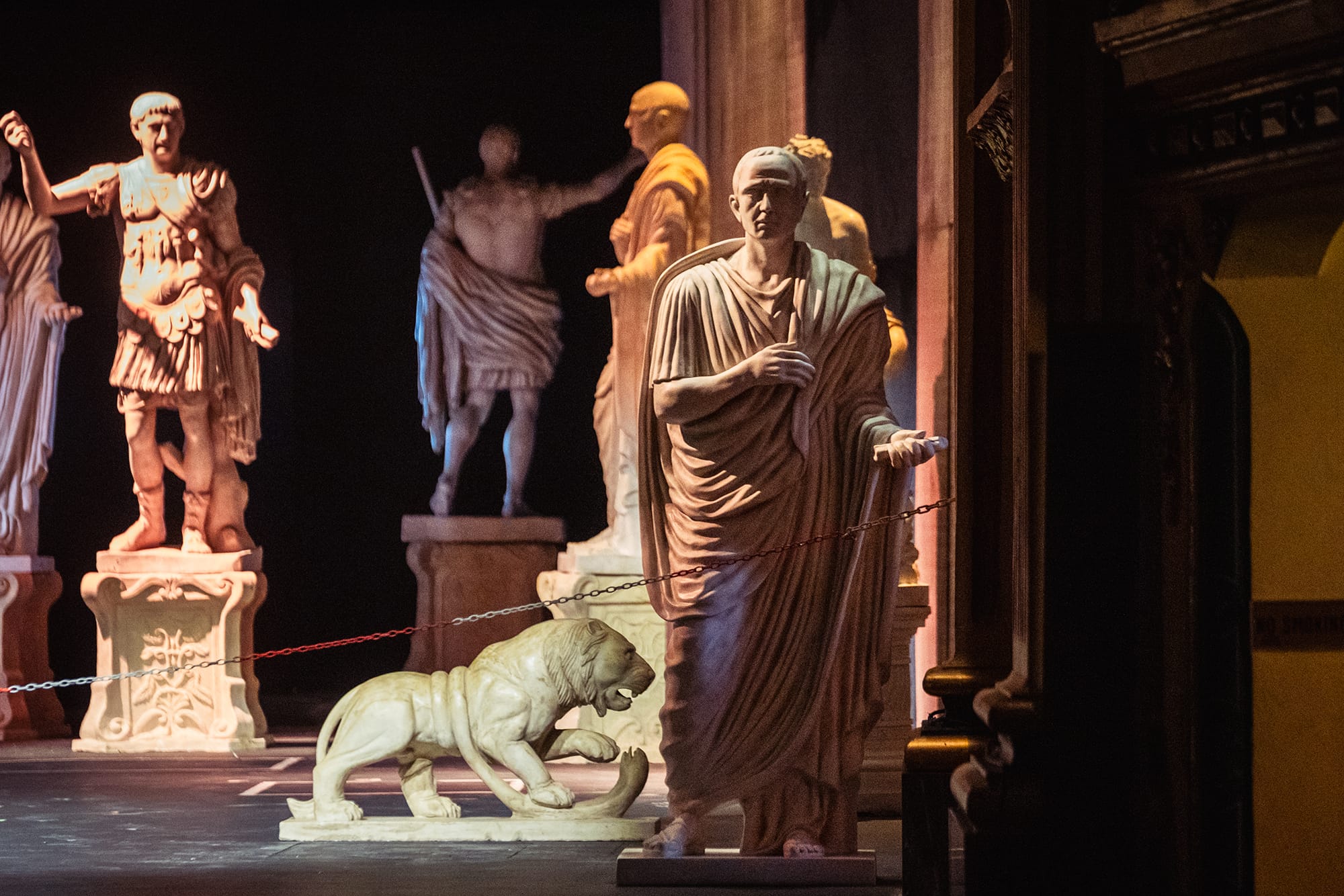
“Six metre high columns and walls define the space, with beams spanning the entire stage. All backstage screens have been removed, exposing the back walls of the theatre and the storage room beyond. All this collapses the boundary between performance and infrastructure, giving the space a sense of endlessness.”

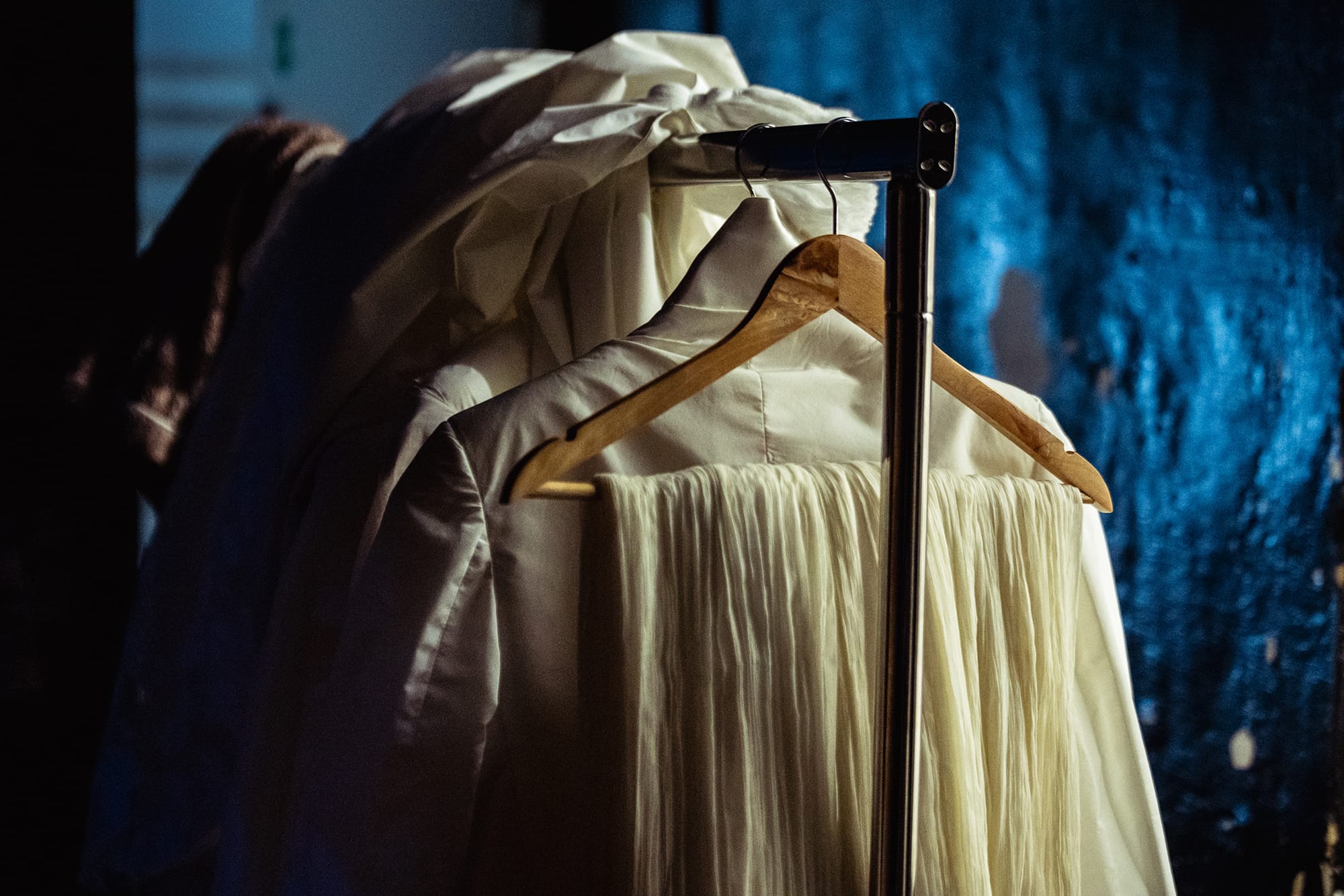
Costumes as modern couture
For costume designer Luke Azzopardi, founder of couture brand AZZOPARDI Studio, Pelopida presented a “once-in-a-lifetime opportunity: a richly dramatic opera that has essentially lain dormant for almost 300 years before being rediscovered. It’s not every day that a Baroque work, especially one by a Maltese composer resurfaces in full production.”
His process began with understanding the opera’s emotional architecture and the psychological silhouette of the characters, underpinned by the interpretation of director Brett Nicholas Brown.
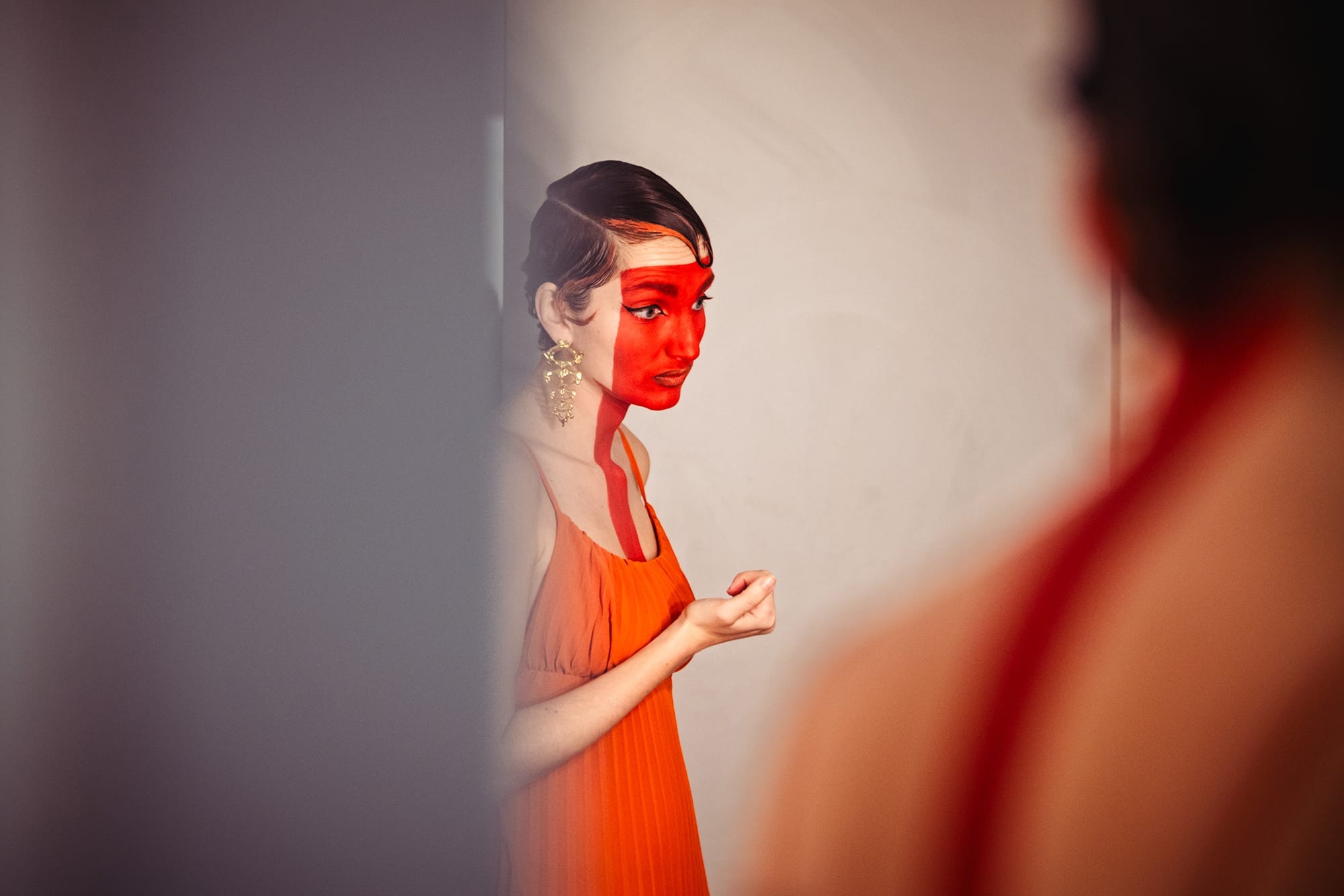
“With Brett’s help, I looked closely at the political and personal stakes in the story: the fierce ideals of the character of Pelopida. From there, I moved into a material and aesthetic investigation, where historical references and symbolic textures guided contemporary reimaginations.”
Rather than replicate Baroque costuming, Luke sought a visual language that felt both archetypal and immediate; costumes that could hold their own beside Anthony’s modern reinterpretation of Ancient Greece where past and present collide.
“This informed every choice, especially that of moving everything into a distorted modern world, which almost exists as if Hellenism never really ended, resulting in an aesthetic which is equal parts dystopian and futuristic.”
Ultimately, Luke’s vision channels the strength of Greek statuary infused with modern sensibility and psychological nuance. “I want the costumes to work as modern couture, as if they are presented on a runway,” he explains. “They reflect a dialogue between permanence and impermanence: draping that recalls the ruins of classical forms but feels grounded, even vulnerable, in its materiality.”
A distinct visual language
The lighting for Pelopida was an opportunity for lighting designer Moritz Zavan Stoeckle to establish a visual language for the production alongside this formidable creative team, offering a framework for a high artistic and professional standard.
“As this is the first staging of Pelopida in living memory, it felt important to approach the piece with a strong and contemporary identity,” in line with Anthony’s set concept of a bunker-like environment during wartime, says Moritz.
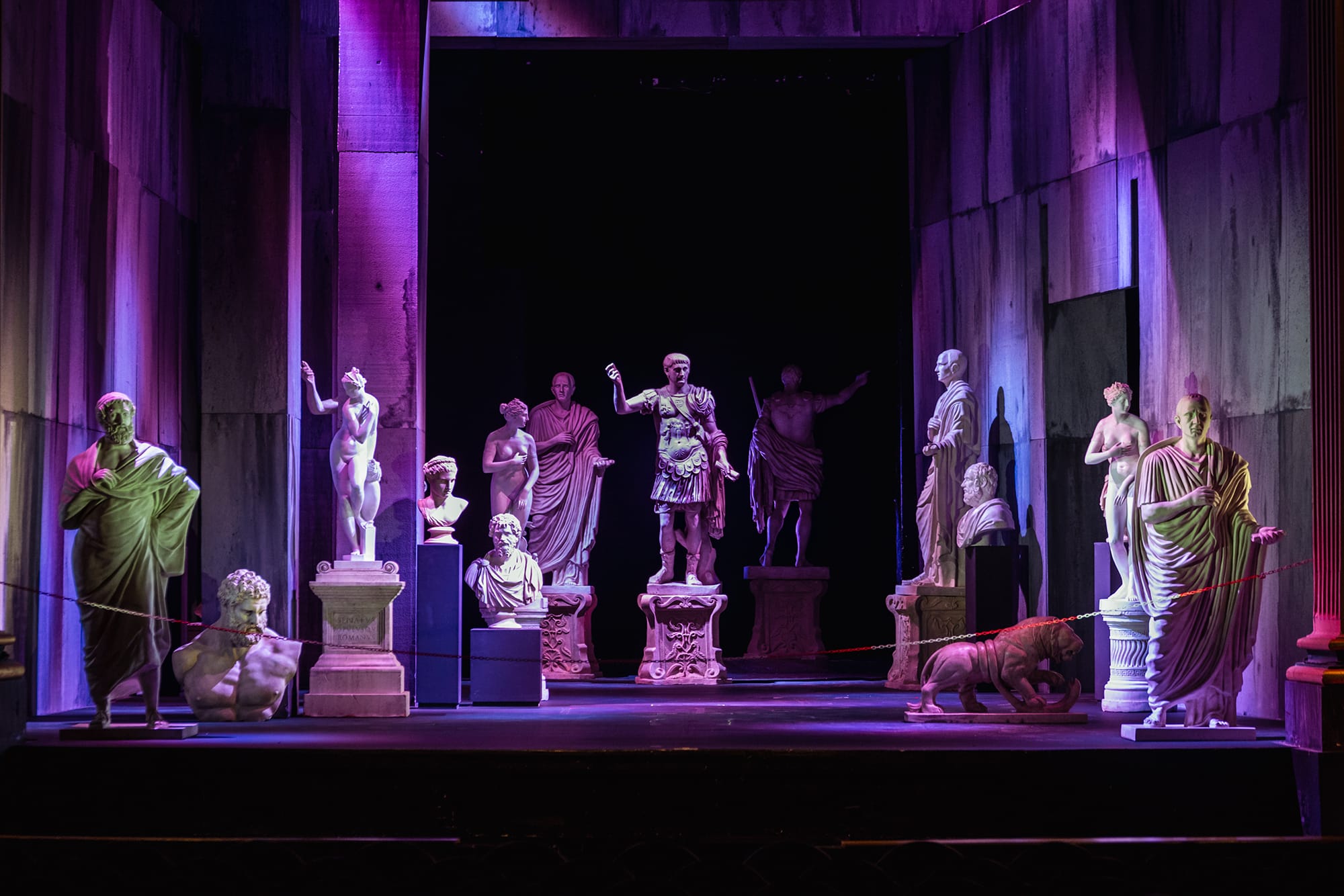
“The space also functions as a museum. This duality suggested a setting that is at once highly designed and curated, yet marked by decay, destruction, and desolation. Through lighting, I aimed to articulate this tension between order and collapse, creating an atmosphere in which history, memory, and conflict are visually embedded.”
Using the initial 3D set drawings, Moritz develop lighting studies and a visual vocabulary with both the set designer as well the director. The design, however, truly takes shape on stage where accurate calibration of intensity, focus, and colour temperature in relation to the human body and the costumes allows for a more refined design.
The interior of the bunker-museum became the focus of Moritz’s work, specifically how the lights positioned high above the set could suggest an ‘outside’, a world beyond where hope and destruction coexist.
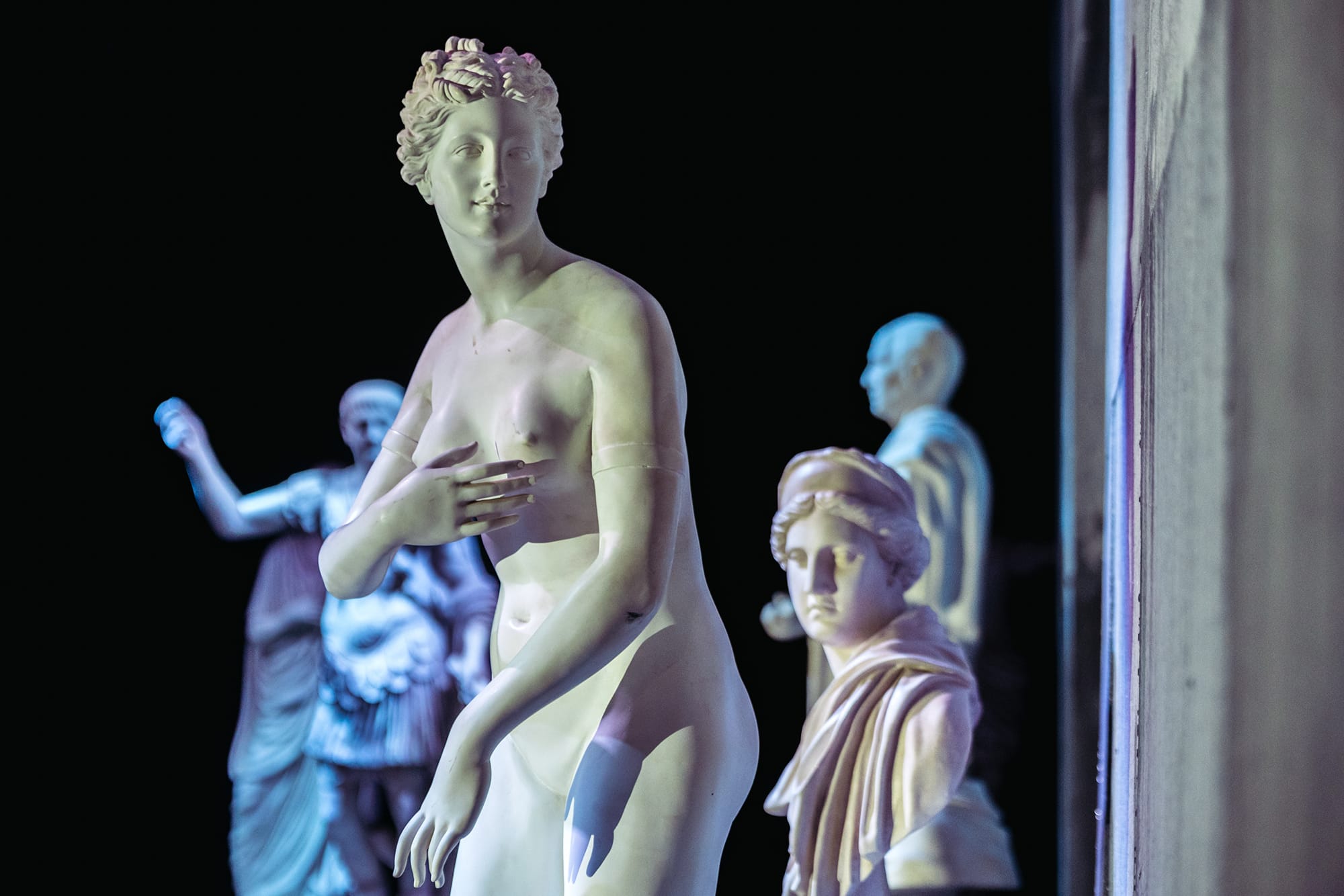
“The concept emphasises contrast: scenes grounded inside the bunker are intimate and enclosed, while strong, diagonal shafts of light evoke the outside world,” he explains. “The goal is to unsettle the audience, suggesting that safety is relative, both the threat of destruction and the promise of hope can penetrate even the most sheltered spaces.”
By creating chiaroscuro effects, Moritz seeks to sculpt both space crafted through Anthony’s set and emotion. “Equally important are the costumes: Luke’s intricate designs challenge and inspire the lighting, adding depth and nuance that interacts with every angle and intensity of light.”
Pelopida will be stagde on Friday 23rd and Sunday 25th January 2026 at Teatru Manoel.
Photography by Elisa Von Brockdorff