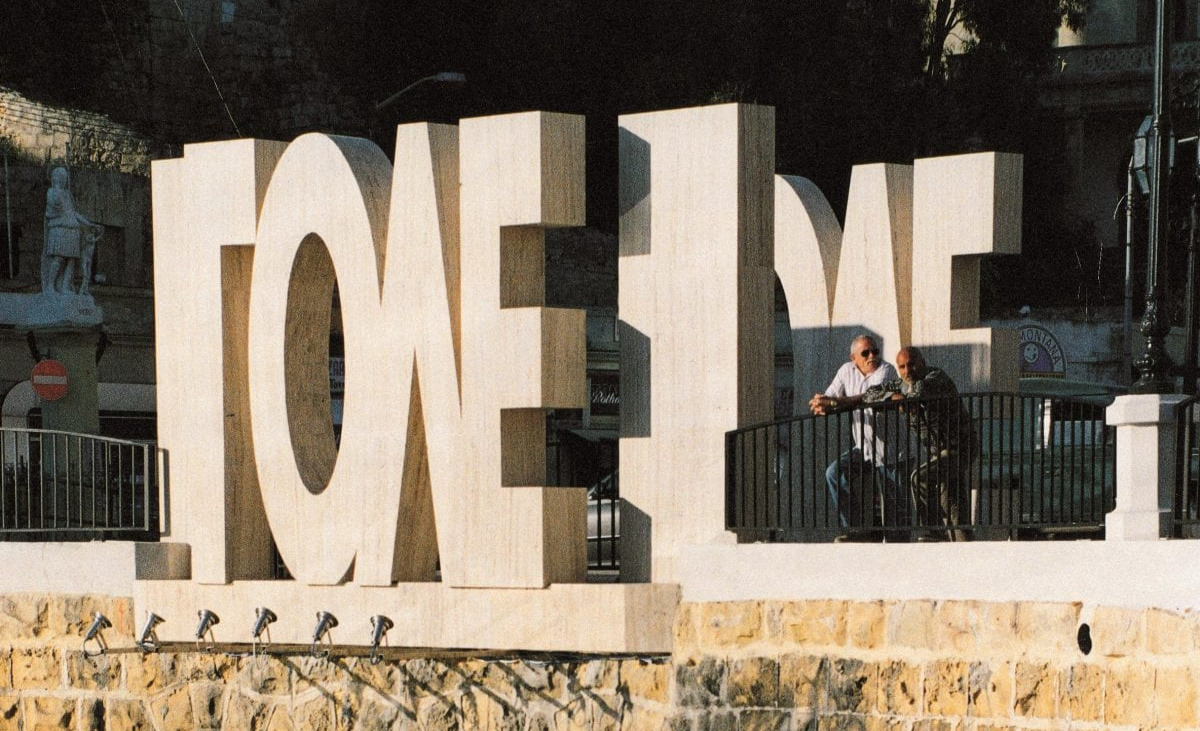
For the last two decades, Spinola Bay has arguably been defined by an imposing piece of art that, for better or worse, divided public opinion from the get-go. Today, the iconic LOVE monument by Richard England is an instant landmark for locals, and a source of amusement for visitors.
This month marks 23 years since the monument’s official inauguration in April 2003. Originally commissioned by the Ministry for Tourism and Culture, led by Francis Zammit Dimech, the monument was part of a regeneration project of the St. Julian’s promenade.
Of reflections, light and shadow
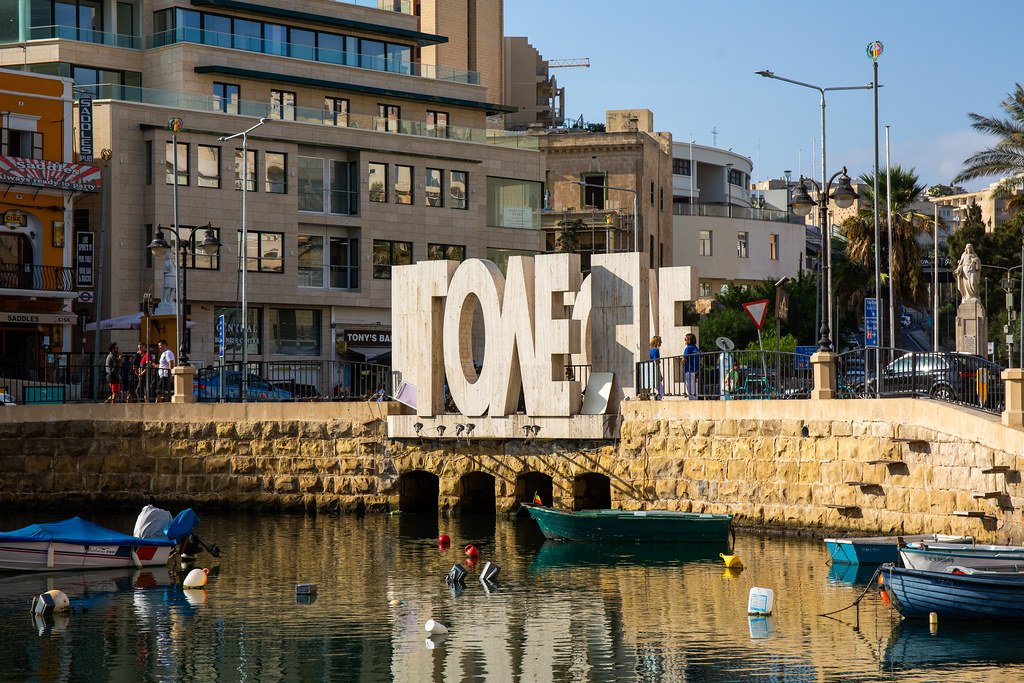
A unique piece at the time of its unveiling, the LOVE sculpture is a playful artwork meant to evoke reflections on the meanings of love, and create interactions with perception, sea reflections and the passing of time as a metaphor. In this interview with DesignDispatch, the artist and architect reflects on its meaning then and now.
“Conceived as a typographic sculpture stark in form, but variable in recognition, it is a work dependent on light, shadow, reflection, and sea mood as if to echo and enact the mood changes and variations of human love,” describes Richard.

“A diurnal kinetic artwork, it is played by light cast or reflected, stable yet variable and modified by variant solar luminance and shadowed umbra. The sculpture’s road facing frontal structure is light monitor performing as a shadow clock while the sea facing one acts as a thalassic sensor, both gnomon seasonal markers.”
With this artwork, viewers are encouraged to interact with the typography, look at it from different angles, or simply pass through it. For some it may be a new and interesting spot in their travels around Malta, and for many it is a daily familiar stop along their commute.


“The work was also conceived as a filter-viewing threshold to emphasise the dichotomy between the hereness of the viewer and the thereness of the viewed,” Richard says.

Art as engagement
Originally a somewhat controversial intervention which incited a spectrum of reactions from the public, it has now become the landmark of Spinola Bay, often the subject of photos or playful interaction among children and adults alike.
England reflects on the sculpture’s present role amidst a fast-paced and ever-changing St Julian’s.
“Two decades on, the work continues to evoke reactions both negative and positive but now although it still provokes it also soothes and entertains. With the time shift, public reaction has softened into if not admiration, familiarity and acceptance. What was originally read as disturbance of a quiet bay is now a still and serene interval contrasting with the loud and turbulent noise of the area.”
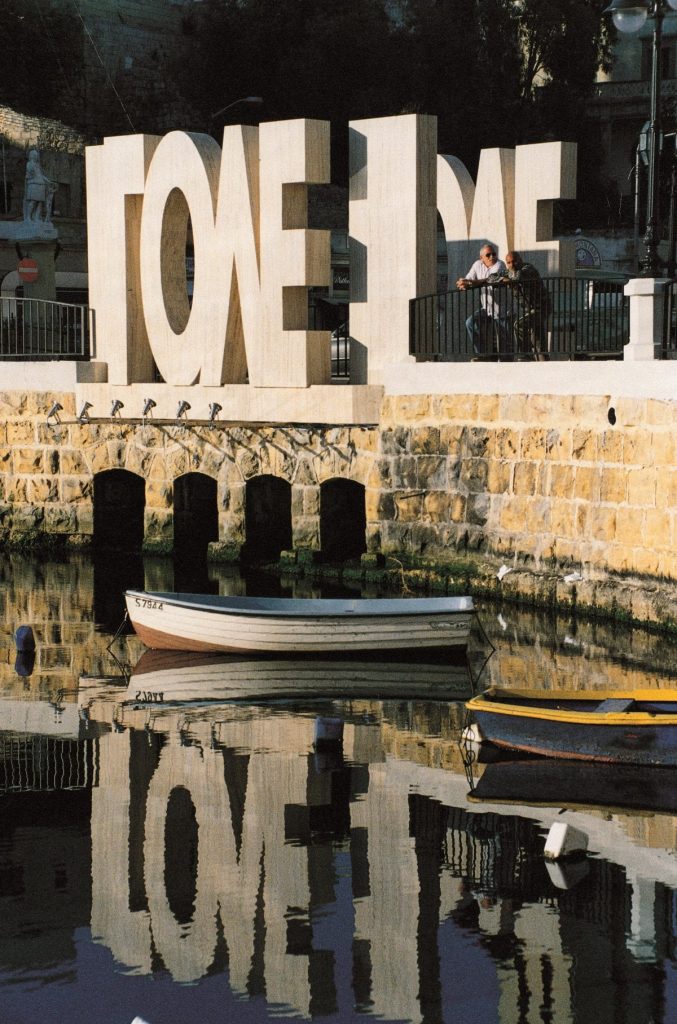
This sculpture was also designed as a physical link to Sliema through the visual connection created between the LOVE monument and its sister sculpture White Shadows located in Fond Għadir bay. Both sculptures play with light and shadow, and carry similar materiality through the use of travertine stone.
“It is now a landmark, a must tourist photo shoot, a meeting point for locals and the initiating point of a time walk to my other light condition sculpture White Shadows. In the latter shadow becomes light, in the former light motivates shadow,” says Richard.
Human love in this sculpture is poetically represented by dichotomies created by the distance yet duality of the forms, and shadows which move in time, yet with a sense of rhythm to the movement.
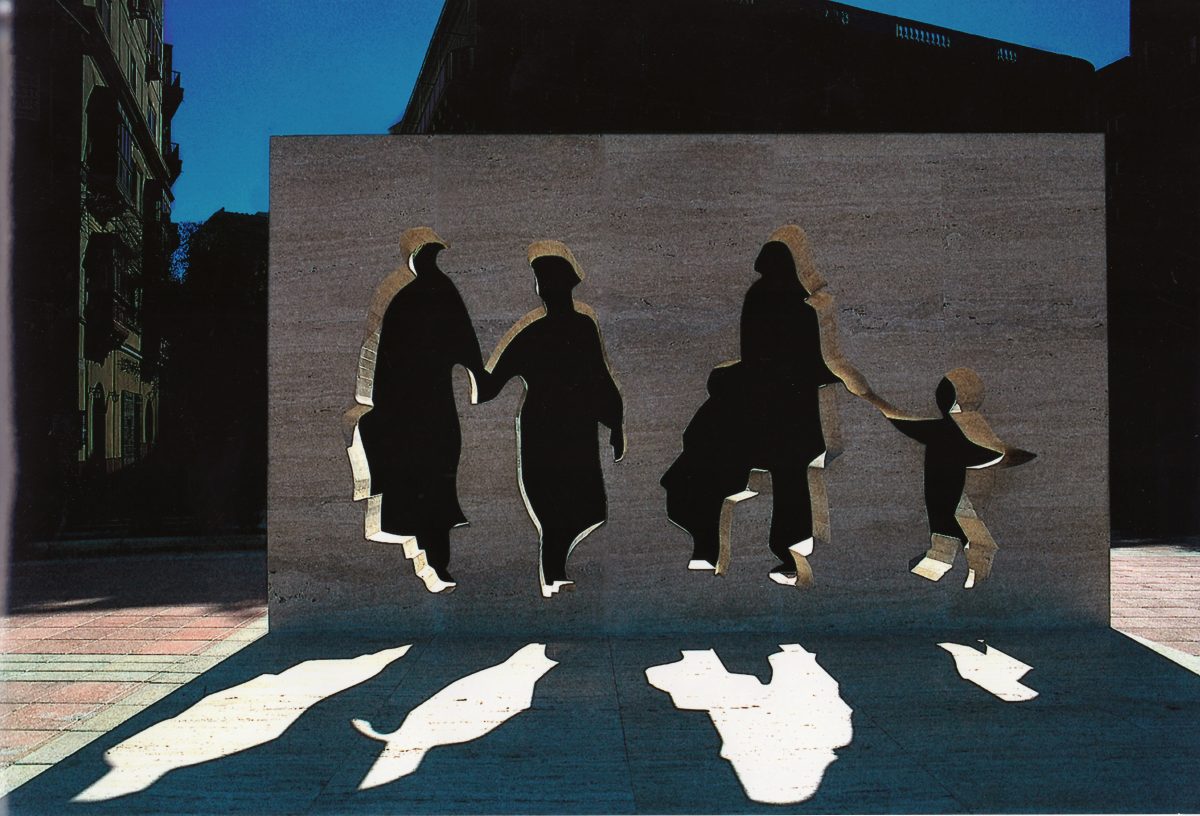
“Sun, shadow, and sea combine to make the sculpture variable and legible in its different moods dependent on weather conditions to again pass the message that human love is also constant but variant according to variable circumstances,” the artist remarks.
“Twenty years on, despite its controversy, it has survived as opposed to many of my buildings, proving that works of art are more permanent than architecture.”
Main image courtesy of Richard England