From Valletta’s city gate in 2014 to Sweden’s Kalmar Museum of Art and Krakow’s main square in Poland, ‘Żieme’, the three-legged horse by Maltese contemporary artist Austin Camilleri, has travelled far and wide.
And now, it has made its way to Place Broglie, home to the Opéra national du Rhin, where it enjoys a key position in what is described as the civic stage of Strasbourg.
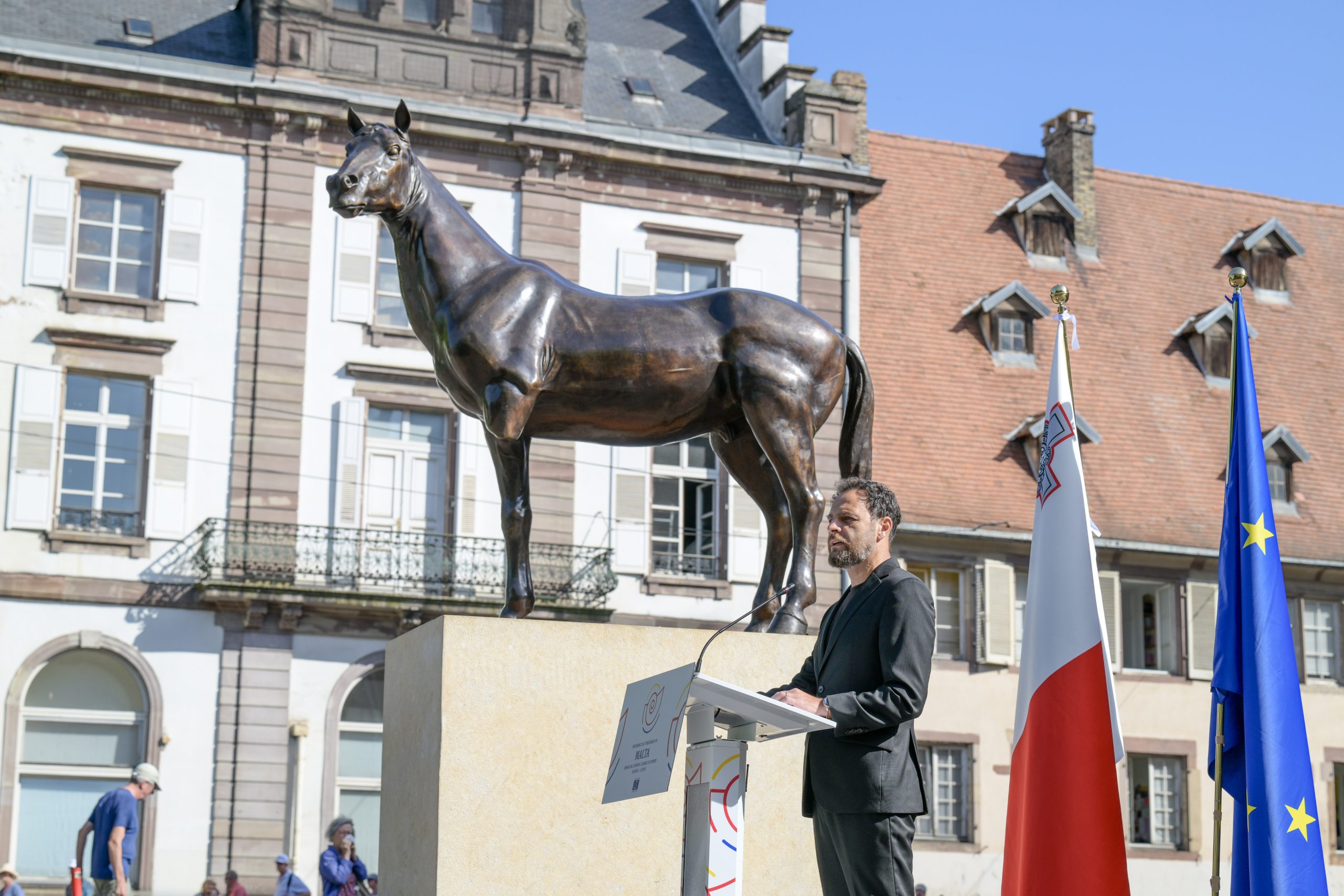
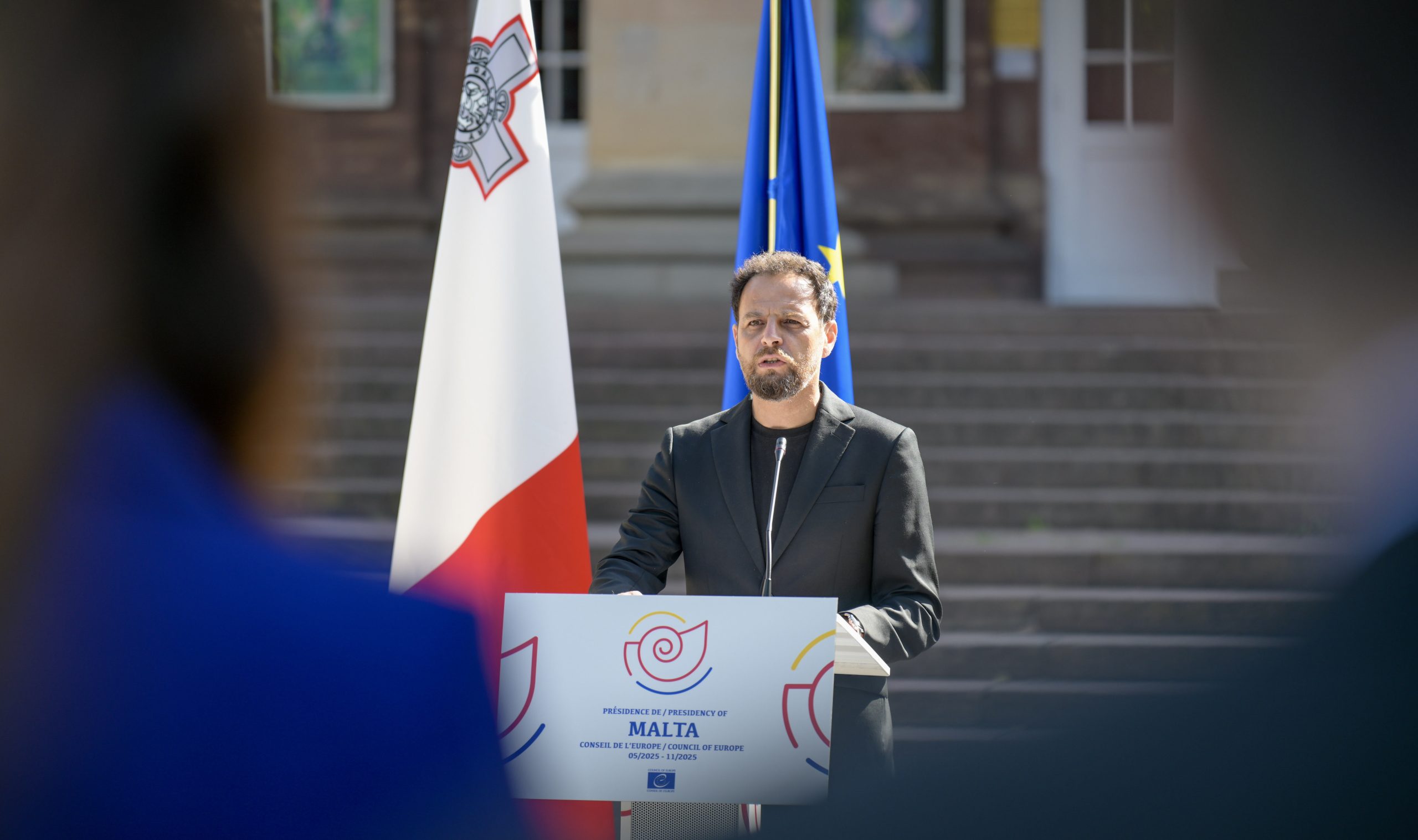
The bronze sculpture was unveiled as part of the cultural programme for Malta’s Presidency of the Council of Europe, which kicked off in May and runs until 14th November.
The programme included an immersive concert by Kor Malta held inside the Notre-Dame Cathedral of Strasbourg, celebrating 500 years of influential composers of Renaissance music. A commemorative stamp was also presented to mark Malta’s Presidency as well as its 60th anniversary since accession into the Council of Europe.
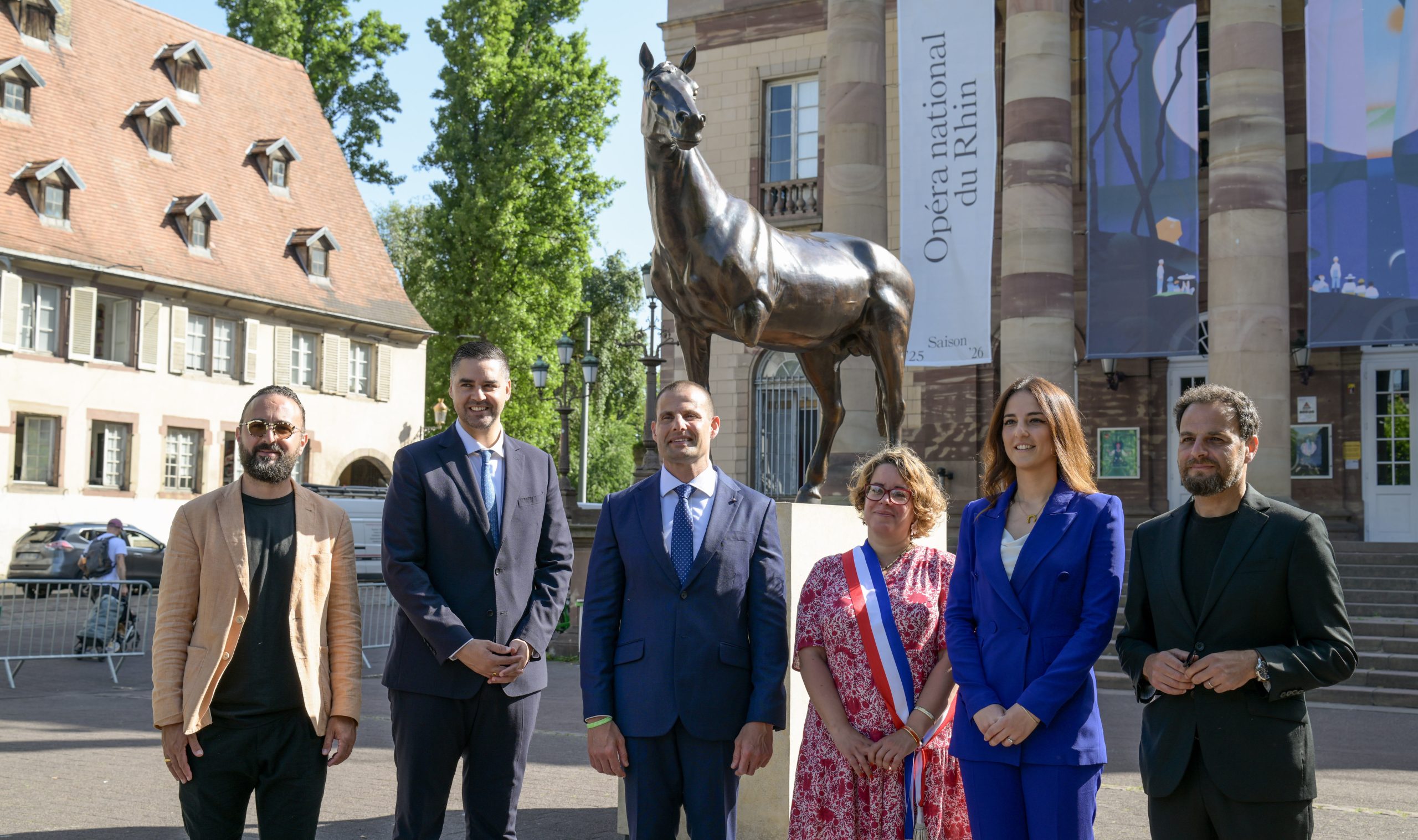
In his curatorial statement, Sean Buhagiar, the cultural programme’s Artistic Director, noted “In a city defined by Europe’s most enduring institutions — the Council of Europe, the European Court of Human Rights, the Parliament — Żieme arrives not as ornament but as interruption.”
“Originally unveiled at the threshold of Valletta’s Parliament in 2014, Żieme was never merely a sculpture. It was an intervention. A question mark cast in bronze at the foot of national power,” he stated.

At the time of its unveiling over a decade ago, Żieme caused a stir, drawing admiration and criticism in equal measure over its intended statement and placing outside the newly-constructed Parliament building. The horse – a symbolic reference of power and conquest – with the missing leg was interpreted by some as an affront, while others hailed it as one of the best Maltese artworks in recent decades.
“Żieme divided opinion. And in doing so, it did what public art must: it unsettled, lingered, stained the collective gaze,” says Sean. “Now, more than a decade later, Żieme comes to France – not as a relic of Maltese dissent, but as a participant in a broader European dialogue.”
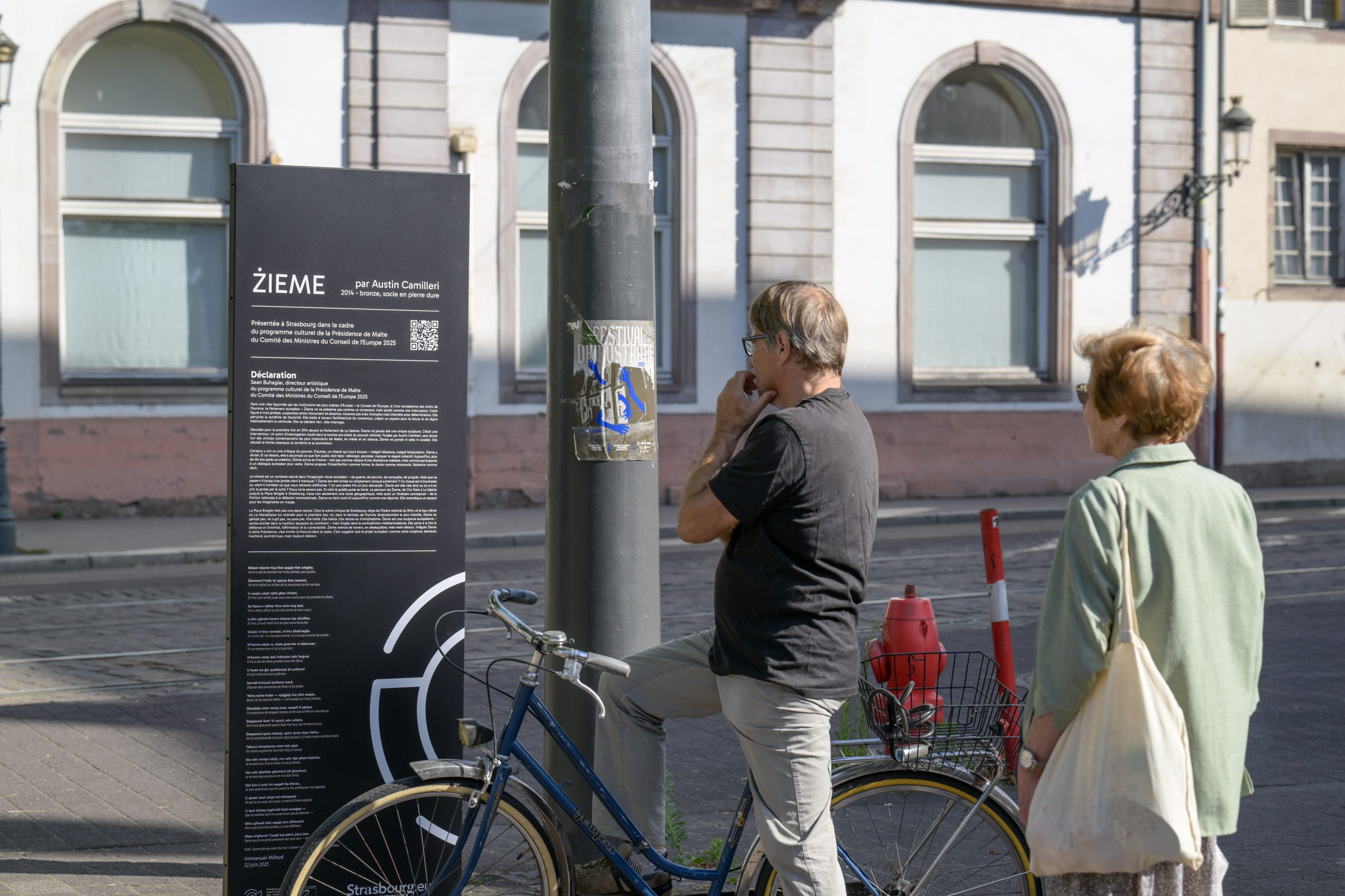
He adds that the sculpture’s journey from Valletta’s City Gate to Strasbourg’s Place Broglie traces not only a geographic route but a conceptual one – from national friction to transnational reflection.
“Place Broglie is no neutral square. It is the civic stage of Strasbourg, home to the Opéra national du Rhin, and the very site where La Marseillaise was first sung,” the Artistic Director states. “Żieme is a European sculpture, yes – rooted in the continent’s equestrian tradition – but forged in Mediterranean contradiction.”
“To curate Żieme into this Presidency is to invite fracture into the frame. To suggest that the European project – like this sculpture – remains unfinished, asymmetrical, but still standing tall.”
Photography: Permanent Representation of Malta to the Council of Europe